(2).png)
ABC sues FCC over alleged retaliation for coverage
JournalismPakistan.com | Published: 19 August 2026 | JP Global Monitoring
Join our WhatsApp channel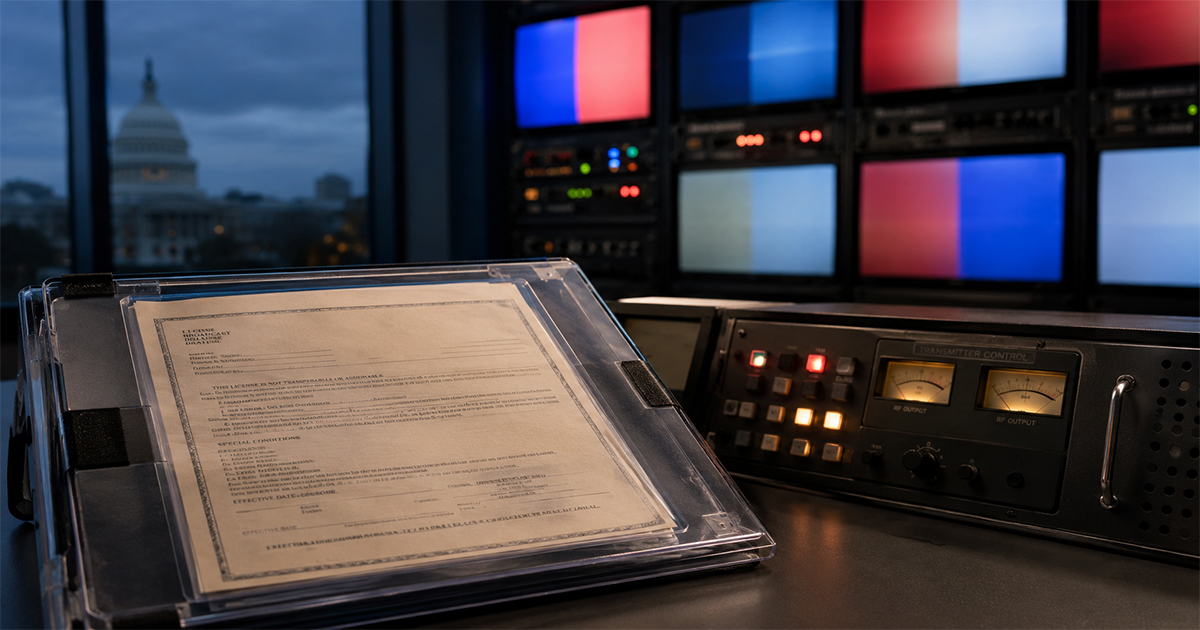
ABC and Walt Disney Company sued the FCC, alleging the agency used its licensing authority to retaliate for news coverage and programming criticized by President Donald Trump. The lawsuit seeks to halt an unprecedented early review of eight ABC station licenses.Summary
WASHINGTON — ABC and its parent company, The Walt Disney Company, have sued the Federal Communications Commission, alleging that the regulator used its licensing powers to retaliate against the broadcaster over news coverage and programming criticized by President Donald Trump.
The lawsuit, filed August 18 in the US District Court for the District of Columbia, asks the court to halt the FCC's early review of licenses held by eight ABC-owned television stations. The plaintiffs argue that the proceedings violate the First Amendment and pose an "existential threat" to the network.
Early license reviews challenged
The FCC ordered the stations in April to submit renewal applications years ahead of their scheduled expiration dates. The licenses ordinarily run until dates ranging from December 2028 to August 2031, according to the court filing.
ABC contends that the commission had not demanded an early renewal application in more than 50 years and had never simultaneously ordered such applications from all stations owned by one network. These assertions form part of ABC's complaint and have not yet been tested in court.
FCC rejects ABC's allegations
An FCC spokesperson rejected the claim of political retaliation, saying broadcasters have a legal duty to operate in the public interest. The commission said it had been examining allegations that Disney engaged in unlawful discrimination through its diversity, equity and inclusion policies and would continue to follow the facts and the law.
ABC argues that the stated regulatory concerns are a pretext for punishing protected speech. Its complaint traces a series of public attacks on the network's journalism and entertainment programs, as well as demands that its stations lose their licenses over content unfavorable to the administration.
The dispute intensified after ABC chose not to carry a July 16 presidential address on its main broadcast network, although it streamed the speech on ABC News Live. FCC Chair Brendan Carr later said that decision would be considered during the station-license proceedings. Democratic FCC Commissioner Anna Gomez disputed the agency's authority to penalize broadcasters for editorial judgments and supported ABC's decision to challenge the commission in court.
The FCC licenses individual local television stations rather than national broadcast networks. ABC's case covers KABC-TV in Los Angeles, KFSN-TV in Fresno, KGO-TV in San Francisco, KTRK-TV in Houston, WABC-TV in New York, WLS-TV in Chicago, WPVI-TV in Philadelphia and WTVD in Durham, North Carolina.
The lawsuit asks the court to declare the FCC's conduct unconstitutional and prevent the agency from taking or threatening action connected to the early renewal proceedings. No judicial determination has been made on ABC's allegations.
The case has wider implications for broadcast journalism because the FCC's public-interest authority applies to stations using the public airwaves. A ruling could help define the boundary between legitimate regulatory oversight and unconstitutional pressure on editorial decision-making.
ATTRIBUTION: Based on ABC and Disney's federal court complaint filed on August 18, 2026, the FCC's publicly reported response, and documentation published by the US Press Freedom Tracker on August 18, 2026. Additional verification from Associated Press reporting.
PHOTO: AI-generated; for illustrative purposes only.
Key Points
- ABC and Walt Disney filed suit Aug. 18 in US District Court for the District of Columbia.
- The plaintiffs allege the FCC used its licensing authority to retaliate over news coverage and programming.
- The commission ordered eight ABC-owned stations to submit renewal applications years before their scheduled expirations.
- The FCC rejects allegations of political retaliation, citing public-interest obligations and an inquiry into diversity policies.
- ABC seeks a court order to halt the early license reviews and says the proceedings violate its First Amendment rights.
Key Questions & Answers
Why did ABC and Disney sue the FCC?
They allege the commission used its licensing review powers to retaliate over news coverage and programming criticized by President Donald Trump.
Which stations are affected by the FCC action?
The FCC ordered early renewal applications from eight ABC-owned television stations with license expirations normally between 2028 and 2031.
How does the FCC respond to the lawsuit?
The commission rejects claims of political retaliation, saying it must enforce broadcasters' public-interest obligations and is looking into alleged discriminatory DEI policies.
What relief are ABC and Disney seeking?
The companies ask the court to halt the FCC's early review of the eight station licenses and to block what they call a First Amendment-threatening proceeding.
Ask AI: Understand this story your way
AI EnabledDig deeper, ask anything — get instant context, background, and clarity.
Disclaimer: This feature is powered by AI and is intended to help readers explore and understand news stories more easily. While we strive for accuracy, AI-generated responses may occasionally be incomplete or reflect limitations in the underlying model. This feature does not represent the editorial views of JournalismPakistan. For our full, verified reporting, please refer to the original article.