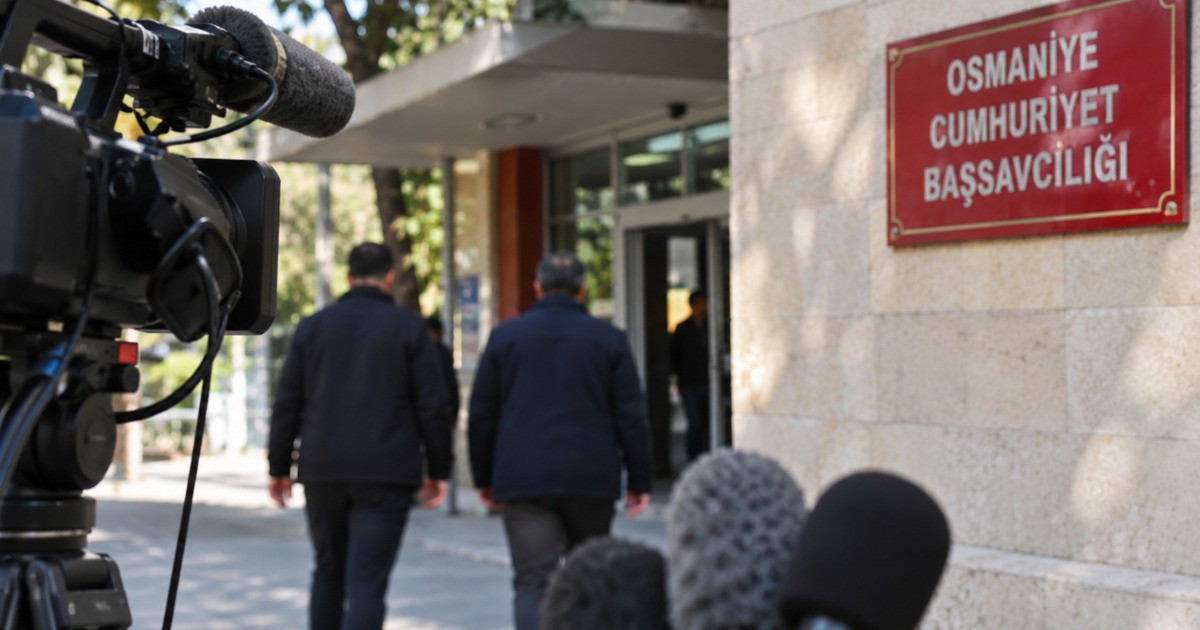


Who gets to decide what journalists can film?
JournalismPakistan.com | Published: 29 November 2026 | JP News Desk
Join our WhatsApp channel
Tracker (Nov 23-29) records threats, detentions and legal actions: five Afghan reporters held after filming a Taliban event; a Pakistani journalist on bail as a PECA case proceeds; a disclosure order for PTV records; and Iranian outlets suspended.Summary
Tracking the threats, pressures, and developments affecting press freedom and journalists worldwide.
Editor’s note
Five journalists in Afghanistan’s Uruzgan province spent about 10 hours in detention after filming a mosque inauguration attended by a senior Taliban official. According to the Afghan Media Support Organisation, they were warned that their outlets could be shut down if they filmed again. The warning carried consequences for people who had never been detained. Editors and colleagues would have to weigh the risk of closure the next time they sent someone out with a camera.
That is one of the questions behind this week’s Tracker. What happens to the reporting after the immediate incident is over? In Pakistan, Shahid Maitla secured bail, but his case under the Prevention of Electronic Crimes Act remains pending. A disclosure order gave journalist Saddia Mazhar a way to obtain PTV’s foreign travel records, with the broadcaster given 10 days from receipt of the order to comply. In Iran’s Ilam province, five outlets were suspended indefinitely after covering a fatal bus accident, leaving residents with fewer local sources to follow the story.
The Tracker covers developments reported from November 23 to 29, including updates on earlier cases. Where accounts depend on witnesses or relatives, we attribute them. Where attacks are confirmed and the motive remains unclear, we say so. Those distinctions matter because they determine what families, journalists and the public can reasonably ask authorities to explain.
Arrests, detentions and suspected abductions
AFGHANISTAN — Taliban vice and virtue officials detained five local journalists in Tarinkot, Uruzgan, on November 28 after they filmed a mosque inauguration attended by Deputy Prime Minister Mullah Abdul Ghani Baradar. The journalists were released after about 10 hours. The Afghan Media Support Organisation said they were warned that their outlets could be shut down if they filmed again. (Afghanistan Journalists Center, Hasht-e Subh and The Kabul Tribune, November 28, 2026)
Why it matters: A threat to shut down an outlet can deter an entire newsroom from filming public events.
AFGHANISTAN — Taliban authorities detained four women journalists and two media workers during a November 14 raid on Kawoon Ghag Radio in Laghman province, reportedly citing workplace gender segregation rules. All six were subsequently released. (International Federation of Journalists, November 25, 2026)
Why it matters: Raids tied to gender segregation rules make it harder for women to work in radio and for stations to employ them.
IRAN — Freelance photojournalist Majid Saeedi remained in detention more than two months after his September 9 arrest at his home in Tehran. The Committee to Protect Journalists and Getty Images called for his immediate and unconditional release. Saeedi was believed to be held in Kerman, although authorities had given no public confirmation of his location. (Committee to Protect Journalists and Getty Images, November 24, 2026)
Why it matters: Without confirmed information about where Saeedi is held, it is harder for his family and lawyers to check on his welfare and secure access to him.
IRAN — Security forces arrested freelance journalist Mehdi Mahmoudian at his Tehran home on November 25, a day after he reported on imminent executions. A source close to Mahmoudian told the Committee to Protect Journalists that he was beaten during the arrest. He was subsequently transferred to Greater Tehran Prison. (Committee to Protect Journalists, November 26, 2026)
Why it matters: The reported beating warrants investigation. The timing of the arrest also raises concerns about the safety of journalists covering death penalty cases.
PAKISTAN — The families of South Waziristan journalists Shabbir Ahmed and Arfatullah said uniformed men took the two journalists and an office worker from a gathering place in Peshawar. Police opened an inquiry. Their whereabouts were unknown when the case was reported. (TNN English, November 23, 2026)
Why it matters: Establishing where the three people are and who took them is central to determining what happened and whether the journalists were targeted for their work.
PALESTINE — The Committee to Protect Journalists reported that Israeli forces detained Palestine TV cameraman Mohammad Anaya and Palestinian Khabar news agency cameraman Amjad al-Arabeed in the occupied West Bank on November 18. Al-Arabeed was released four days later, while Anaya remained in custody as of the report. Two Al-Ghad TV journalists detained on November 19 while covering an Israeli bulldozing operation near Hebron were released after about two hours. CPJ also renewed its call for the release of AFP contributor Mohammad Ateeq and journalist Islam Amarneh. (Committee to Protect Journalists, November 23, 2026)
Why it matters: Detaining journalists at the scene of military operations interrupts independent coverage while events are unfolding.
TURKEY — Television journalists Ece Üner and Deniz Bayramoğlu were among nine people detained on November 27 in the third wave of operations linked to the Halk TV investigation. Prosecutors alleged that the journalists were paid to broadcast false reports. The allegations have yet to be proven in court. (Euronews and Deutsche Welle, November 27, 2026)
Why it matters: The case puts scrutiny on the grounds for detaining journalists over allegations about what they broadcast.
Attacks and threats
ECUADOR — Journalist Omar Toledo Floreano, director of Toledito TV and El Observador, was shot in Santa Elena on November 21 and remained in critical condition on November 23. Reporters Without Borders said two other journalists in the province received death threats on the day of the shooting. Press freedom groups called on authorities to determine whether Toledo Floreano was targeted for his reporting. (Committee to Protect Journalists and Reporters Without Borders, November 23, 2026)
Why it matters: A shooting and two reported death threats in the same province put local newsrooms under pressure ahead of elections, when communities need independent coverage.
PAKISTAN — Karachi police ordered the immediate arrest of suspects after an armed assault on journalist Ahsan Chandio in Gulshan-e-Iqbal. Karachi Press Club officials urged investigators to use CCTV footage to identify the attackers. A link to Chandio’s journalism has yet to be established. (UrduPoint and NNI, November 24, 2026)
Why it matters: Identifying the attackers and establishing their motive would help authorities assess whether Chandio or other journalists face a continuing threat.
Legal and regulatory pressure
BURKINA FASO — Prosecutors announced arrest warrants on terrorism-related allegations for six journalists, including five Burkinabè journalists living in exile and France 24 journalist Wassim Nasr. Authorities also barred the investigative newspaper Courrier Confidentiel from publishing and blocked its website. Reporters Without Borders called for the measures to be reversed. (Reporters Without Borders, November 23, 2026)
Why it matters: The warrants extend the legal risks of covering Burkina Faso to journalists working abroad, while the ban cuts off a source of investigative reporting at home.
IRAN — Freelance journalist Ali Pourdarab was sentenced to one year in prison and barred from practicing journalism or traveling abroad for two years. His custody and appeal status remained unclear. (Committee to Protect Journalists, November 26, 2026)
Why it matters: The professional ban gives the court’s decision a direct effect on Pourdarab’s livelihood and ability to report.
TUNISIA — A year after the conditional release of political commentator and lawyer Sonia Dahmani, the Committee to Protect Journalists urged Tunisian authorities to free journalists imprisoned for their work, overturn convictions and end judicial harassment of independent media. Dahmani continues to face prosecutions under Tunisia’s cybercrime law. CPJ also raised concerns about the use of telecommunications and counterterrorism laws against the press. (Committee to Protect Journalists, November 26, 2026)
Why it matters: Ongoing prosecutions leave Dahmani at risk of returning to prison and show how legal pressure can continue after a journalist is released.
UGANDA — Journalist John Kenneth Odele remained in custody after being charged with criminal libel under a provision Uganda’s Constitutional Court struck down in March 2026, according to the Committee to Protect Journalists. CPJ called for his release and for the charge to be dropped. (Committee to Protect Journalists, November 24, 2026)
Why it matters: Using an invalidated criminal libel provision against a journalist weakens a safeguard that reporters should be able to rely on when covering matters of public interest.
Access to information and reporting restrictions
IRAN — Five local news outlets in Ilam province were suspended indefinitely after covering a fatal bus accident. Provincial judicial authorities also confirmed criminal investigations against media personnel over allegations of false and inflammatory reporting. (Committee to Protect Journalists, November 26, 2026)
Why it matters: Taking five local outlets out of operation limits the sources residents can turn to for information about the crash and its aftermath.
Policy and court developments
PAKISTAN — The Pakistan Information Commission upheld journalist Saddia Mazhar’s appeal and ordered state broadcaster PTV to disclose records of publicly funded foreign travel within 10 days of receiving the order. The commission rejected PTV’s grounds for withholding the records. (JournalismPakistan, November 24, 2026)
Why it matters: The ruling gives Mazhar a deadline for obtaining records that could help the public scrutinize PTV’s spending.
PAKISTAN — A Quetta court granted post-arrest bail to senior journalist Shahid Maitla, who was detained on November 17 in a case under the Prevention of Electronic Crimes Act (PECA). Pakistan Federal Union of Journalists President Afzal Butt credited the efforts of Balochistan journalists and legal representatives in securing bail. (JournalismPakistan, November 25, 2026)
Why it matters: The bail order provides immediate relief for Maitla while the criminal case remains pending.
PAKISTAN — Interior Minister Mohsin Naqvi outlined plans for mandatory registration of social media platforms, streaming services and major content creators under the country’s new social media regulator. The announcement gave no criteria for determining which creators would have to register. (Associated Press of Pakistan and Arab News, November 24, 2026)
Why it matters: The eligibility criteria will determine whether independent journalists and small digital newsrooms face new obligations.
TURKEY — An Istanbul court acquitted Sözcü.com.tr editor Mustafa Balcı on November 27 and sentenced journalist Şaban Sevinç to 15 months in prison for publicly disseminating misleading information. Both were released after being held since October 9 in a case concerning reporting and social media posts about an investment fund scandal. Sevinç denied committing the offense. (Sözcü and Medyascope, November 27, 2026)
Why it matters: The time both journalists spent in custody and the sentence imposed on Sevinç illustrate the legal risks of covering financial scandals under Turkey’s misleading-information law.
Media labor and viability
PAKISTAN — Journalists in Quetta began a two-day protest on November 23 over newsroom closures, dismissals, unpaid wages and restrictions on journalism. The Balochistan Union of Journalists organized the protest as part of a wider Pakistan Federal Union of Journalists campaign. It followed a provincial assembly resolution calling for closed television bureaus to reopen and dismissed employees to be reinstated. (JournalismPakistan, November 23, 2026. Balochistan Assembly resolution, November 20, 2026. Dawn, November 21, 2026.)
Why it matters: When a provincial bureau closes, local journalists lose jobs and communities lose a regular route into national news coverage.
UNITED KINGDOM — Restructuring at The Telegraph put about 100 jobs at risk, while senior editorial changes added to uncertainty at the newspaper. The changes followed Axel Springer’s acquisition and came amid plans to expand through digital products, international markets and artificial intelligence. (The Guardian, October 23 and November 21, 2026, updated November 22. Telegraph Media Group, November 19, 2026. InPublishing, November 20, 2026.)
Why it matters: The effect on coverage will depend on where jobs are cut and whether the newspaper can retain enough staff for specialist and original reporting.
Press freedom review
Pakistan’s entries show how differently the system can respond when journalists seek relief. A Quetta court granted Shahid Maitla bail, and the Pakistan Information Commission upheld Saddia Mazhar’s appeal against PTV. Both decisions provide a specific outcome that can be followed. The criminal proceedings against Maitla remain unresolved, while PTV’s compliance can be measured against the deadline in the order. For the families of Shabbir Ahmed and Arfatullah, the immediate question is more basic. Police opened an inquiry, but the whereabouts of the two journalists and an office worker were still unknown when the case was reported.
Turkey’s two cases underline why custody deserves scrutiny at each stage of a prosecution. In the Halk TV investigation, prosecutors alleged that two television journalists were paid to broadcast false reports, claims that remain unproven in court. In a separate case, an Istanbul court acquitted editor Mustafa Balcı and sentenced journalist Şaban Sevinç to 15 months in prison. Both were released after almost seven weeks in pretrial detention. Balcı’s acquittal resolved the charges against him, but the weeks he spent in custody are part of the case’s press freedom record.
Ecuador’s Santa Elena province presents a different accountability test. The shooting of Omar Toledo Floreano left him in critical condition as of November 23, and two other journalists reportedly received death threats on the day of the attack. Investigators still need to establish whether the shooting was linked to Toledo Floreano’s reporting. The reported threats also warrant attention in their own right, especially in a province heading into local elections.
Global context
The week’s cases show how interference at the scene can shape the public record. In the occupied West Bank, two Al-Ghad TV journalists were detained for about two hours while covering an Israeli bulldozing operation. In Uruzgan, the five detained journalists had been filming an official visit to a mosque inauguration. These were different events in different settings. In both, taking journalists away from the scene interrupted their ability to document an event as it happened.
Pressure can also reach journalists and audiences far from the scene. In Burkina Faso, arrest warrants extended to journalists living abroad, while a publishing ban and website block restricted access to the investigative newspaper Courrier Confidentiel. In Iran, the two-year ban on Ali Pourdarab practicing journalism reaches beyond the prison sentence itself. These measures affect different parts of the reporting process, from a journalist’s ability to keep working to a reader’s ability to find the work once it is published.
The Quetta protest points to another condition for independent reporting. Someone has to be paid to stay on the beat. When television bureaus close and salaries go unpaid, national outlets can lose reporters who know the local institutions and have sources to call when official accounts need checking. That loss falls hardest on communities whose concerns already struggle to reach national newsrooms.
ATTRIBUTION: Compiled and analyzed by JournalismPakistan.
ABOUT THIS TRACKER: The Press Freedom Tracker is a weekly product of JournalismPakistan.com, published every Sunday. Read previous editions here.
Key Points
- Five reporters in Uruzgan, Afghanistan, were detained for about 10 hours after filming a mosque event attended by a Taliban official.
- The Afghan Media Support Organisation said the five journalists were warned that their outlets could be shut down if they filmed again.
- In Pakistan, Shahid Maitla secured bail while his case under the Prevention of Electronic Crimes Act remains pending.
- A disclosure order allowed journalist Saddia Mazhar to seek PTV's foreign travel records with a 10-day compliance window.
- In Iran's Ilam province, five outlets were suspended indefinitely after covering a fatal bus accident, reducing local reporting options.
Key Questions & Answers
Who decides what journalists can film?
Decisions often rest with local authorities or armed groups on the ground; legal frameworks and broadcaster policies also shape what reporters can cover. Enforcement varies by jurisdiction and the balance of power.
What happened to journalists in Uruzgan?
Five local reporters were detained for about 10 hours after filming a mosque inauguration attended by a senior Taliban official and were later warned their outlets could face closure if they filmed again.
What legal risks do Pakistani journalists face in the Tracker?
Some face prosecutions under the Prevention of Electronic Crimes Act; one journalist named in the Tracker secured bail but the case remains pending in court.
How have authorities in Iran responded to coverage of a fatal bus accident?
In Ilam province, authorities suspended five outlets indefinitely after they reported on the crash, limiting the number of local sources available to residents.
Relevant Topics
Ask AI: Understand this story your way
AI EnabledDig deeper, ask anything — get instant context, background, and clarity.
Disclaimer: This feature is powered by AI and is intended to help readers explore and understand news stories more easily. While we strive for accuracy, AI-generated responses may occasionally be incomplete or reflect limitations in the underlying model. This feature does not represent the editorial views of JournalismPakistan. For our full, verified reporting, please refer to the original article.