
The newsroom traditions that quietly disappeared
JournalismPakistan.com | Published: 15 November 2026 | JP Special Report
Join our WhatsApp channel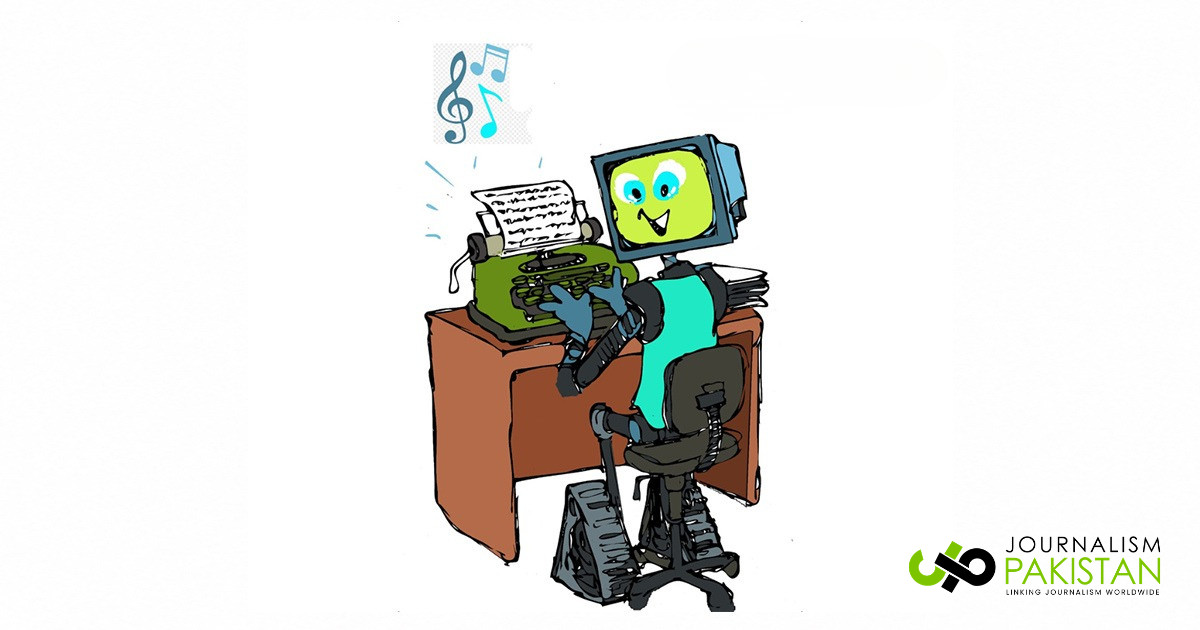
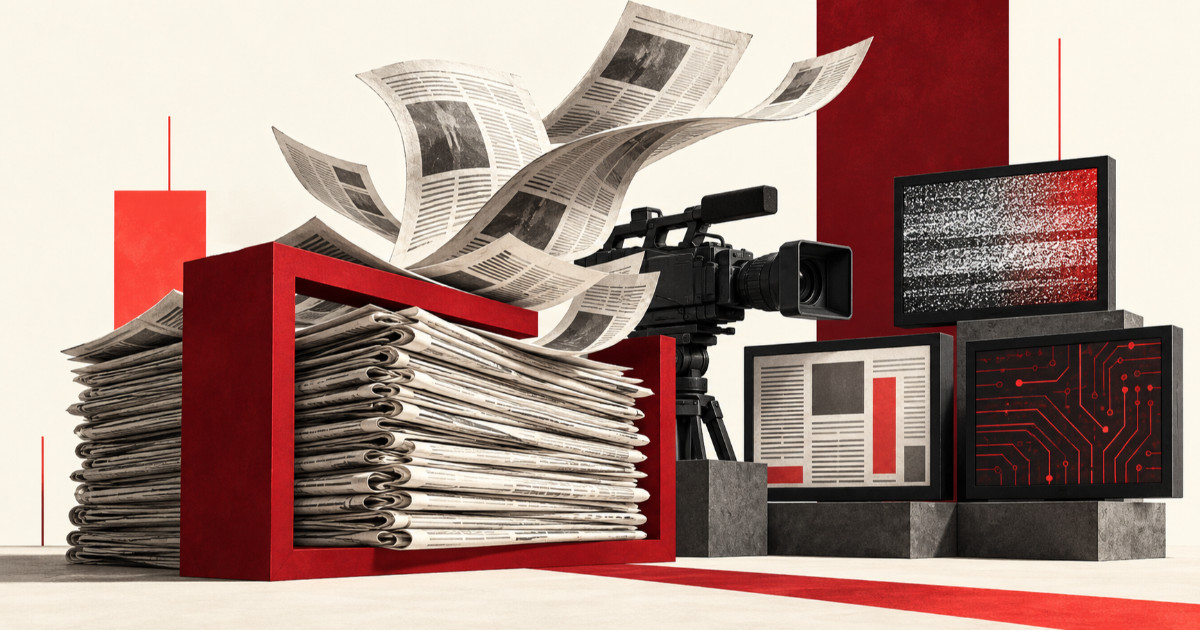
Over four decades, Pakistan's newsrooms have lost many familiar sounds, routines and traditions. Digital workflows have largely replaced typewriters, teleprinters, shouted deadlines, and face-to-face mentoring, transforming how journalists work, learn, and interact.Summary
There was a time when newsrooms echoed with typewriters, teleprinters, ringing telephones, and shouted deadlines. From Islamabad's The Muslim to the newspaper offices of Karachi and Lahore, journalism had its own rituals, characters and unwritten rules. Many have vanished in the digital age, leaving behind more than memories of outdated technology.
ISLAMABAD — There was a time when you could identify a newspaper office without seeing its nameplate. The clatter of typewriters, the relentless chatter of teleprinters, ringing telephones and the occasional raised voice of an impatient news editor were unmistakable. Somewhere, a sub-editor was arguing over a headline, a reporter was defending a story, and somebody was shouting for tea.
Those newsrooms were often overcrowded, untidy and noisy. They were also places where young journalists learned their profession by watching experienced colleagues at work, where arguments over a single word could become heated, and where the newspaper was a collective achievement rather than a collection of files moving silently between computer screens. Over the past four decades, technology has transformed that world. Some changes have made journalism faster and more efficient. Others have quietly erased traditions that once gave the newsroom its distinctive character.
The sounds that defined a newsroom
One of the most revealing accounts of this transformation appeared on JournalismPakistan in November 2012. In an article titled Lost in transition, veteran journalist Stephen Manuel described the disappearance of the objects, sounds, and routines inseparable from newspaper production.
Manuel recalled visiting the compositing department of The Pakistan Times in Rawalpindi in 1983. There, he watched a worker assemble a column of metal type with remarkable speed and precision. The printing machinery was enormous, the surroundings were filled with unfamiliar smells, and the entire process seemed almost magical to a young journalist.
It was a world in which news existed physically. Agency reports arrived on long strips of paper. They were cut into separate stories, arranged, edited, checked, and passed along. Headlines were written on special pads. Paperweights prevented pages from scattering beneath ceiling fans. Rulers, scissors, pencils and spikes were essential newsroom equipment.
Then came computers.
The teleprinters fell silent. Typewriters disappeared. The handwritten corrections, marked proofs and bundles of paper gave way to digital files. Eventually, the production process that once required several departments could be managed by a much smaller team sitting in front of screens.
Few journalists would seriously advocate returning to manual typesetting. But something less tangible disappeared with the machinery: the constant movement of people, the conversations between departments and the shared sense that everyone was working towards the same physical deadline.
When the news desk was a classroom
In Pakistan's older newspaper offices, the news desk was more than a place where reports were edited. It was an informal training institution.
Young reporters learned quickly that submitting a story was only the beginning. A demanding chief sub-editor could question its opening paragraph, challenge its facts, remove unnecessary passages and insist that the reporter explain what the story was actually about.
The process was not always pleasant. There were arguments, bruised egos and occasional confrontations. Yet reporters and sub-editors were forced to engage with one another.
JournalismPakistan's May 2012 retrospective Nothing quite like The Muslim recalled how the Islamabad newspaper trained journalists across several disciplines. Staff learned reporting, sub-editing, headline writing, page layout, picture selection and the practical details of newspaper production.
The Muslim, published from 1978 to 1999, became an important training ground for journalists who later established prominent careers across Pakistan's media.
The value of that experience was not simply technical. A young journalist could observe how an editor weighed competing stories, how a senior colleague challenged questionable information, or how a headline was rewritten to avoid misleading readers.
Today, many of those lessons can still be taught, but the opportunities for informal observation are different. Digital workflows allow stories to pass between individuals with limited personal interaction. Smaller editorial teams may leave experienced journalists with less time to mentor newcomers.
When the copy desk loses its place in newsroom culture, journalism risks losing a valuable system of practical education.
The forgotten people behind the newspaper
Old newsrooms depended on people whose names rarely appeared in print.
There were proofreaders who spotted mistakes before the pages went to press, compositors who transformed edited copy into printable type, and production workers who understood the machinery better than many of the journalists whose words it carried.
There were also the office assistants, tea boys and daftaris who moved constantly between departments.
In May 2013, Stephen Manuel wrote a memorable JournalismPakistan feature, The league of extraordinary multi-taskers, recalling these often-overlooked newsroom personalities.
They delivered tea, carried headlines to the printing department, collected finished pages, sorted agency copy and transported proofs between the newsroom and production staff. They also knew the personalities, disputes and unwritten routines of the entire office.
Manuel remembered Iqbal, popularly known as Bala, from The Pakistan Times in Rawalpindi. His account captured how a newsroom assistant could become an indispensable colleague, trusted for information and remembered long after the newspaper's physical routines had changed.
These workers were not merely background figures. They helped keep the newspaper moving, although their long hours and modest pay also exposed the inequalities within the newsroom.
Technology removed much of the physical work they performed. The disappearance of those jobs may have been inevitable, but their contribution deserves a place in Pakistan's journalism history.
The art of making a newspaper by hand
The transformation was particularly striking in Urdu newspapers.
For decades, skilled calligraphers, commonly known as katibs, were central to newspaper production. They prepared handwritten text and headlines with an artistry that required years of practice.
In a July 2019 account published by Dawn and reproduced by the Pakistan Press Foundation, veteran calligrapher Ghulam Mohiuddin recalled working for Hurriyat in Karachi, where speed and the beauty of a headline were both matters of professional pride.
He remembered an era when major Urdu newspapers employed large teams of calligraphers. The arrival of computer-based publishing gradually changed the demand for their skills.
The disappearance of newspaper calligraphy was not simply the replacement of one production technique by another. It marked the decline of a specialist craft that had helped define the visual identity of Urdu journalism.
Modern publishing software has made Urdu newspaper production far more flexible. Yet the artistry of those earlier newspaper pages remains part of the country's media heritage.
The tea, the arguments and the friendships
Not every disappearing tradition involved technology.
There was the evening tea that brought reporters and desk staff together. There were the arguments over headlines, the newsroom nicknames that sometimes lasted entire careers, and the jokes that spread from one desk to another.
In July 2012, JournalismPakistan published another Stephen Manuel reflection, Ramadan in the newsroom. He described how the atmosphere of newspaper offices changed during the fasting month.
The usual tensions softened, colleagues gathered for Iftar, and people who might otherwise disagree over work found themselves sharing a meal.
These experiences were part of a broader newsroom culture built around long shifts and close working relationships.
The tradition of newsroom humour also survives in JournalismPakistan's more recent historical writing.
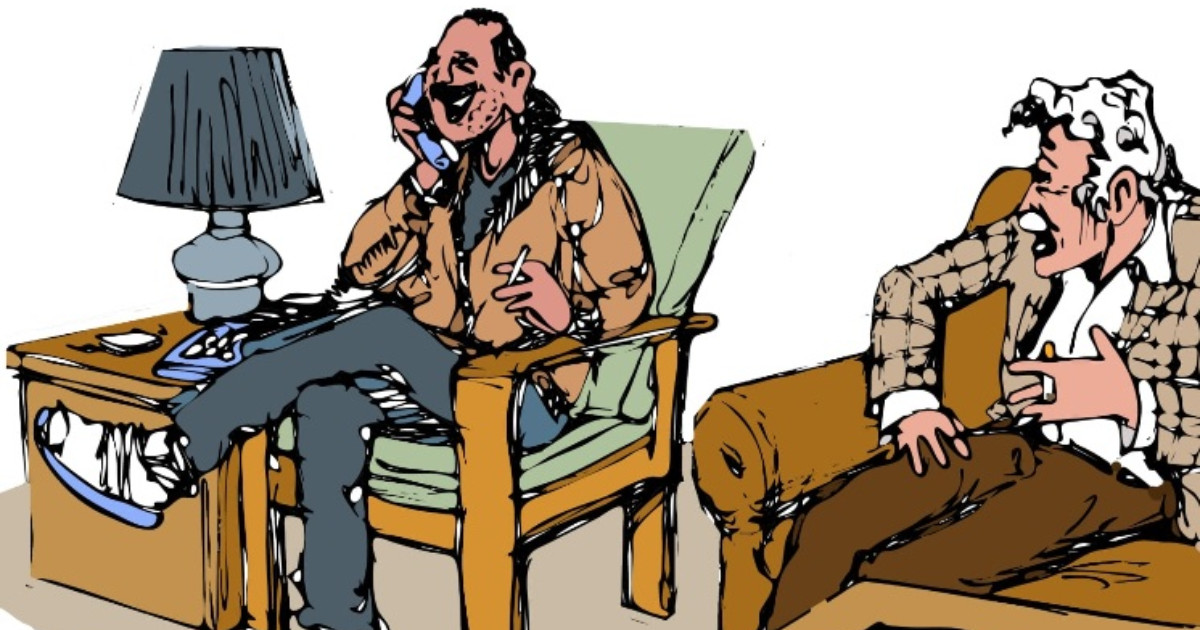
In August 2026, cartoonist and writer Akhtar Shah recalled an incident from his days at The Muslim in the early 1990s. A casual telephone call during a gathering at foreign correspondent Sunil Narula's Islamabad home became the source of a running newsroom joke.
It was a small incident, but precisely the kind that could become part of a newspaper's collective memory.
Such stories remind us that journalism was also a social world. The people working together through difficult deadlines developed friendships, rivalries and shared experiences that could endure for decades.
The night the paper finally went to bed
Among the most distinctive traditions of print journalism was the moment a newspaper finally went to bed.
For younger journalists accustomed to publishing a report immediately, the phrase may sound strange. In the traditional newsroom, however, it signalled the completion of another exhausting production cycle.
Until the final pages were cleared, editors, sub-editors, proofreaders and production staff remained tied to the newspaper.
A late-breaking story could force headlines to be rewritten, pages to be rearranged and carefully prepared material to be discarded. The deadline was a shared event.
In June 2016, senior journalist Daud Malik captured another version of this collective newsroom experience in his JournalismPakistan article Inside the newsroom on budget day.
He described editors arriving early, reporters preparing different angles, sub-editors checking figures, and page makers getting ready for tables and graphics. Even the customary newsroom dinner formed part of the occasion.
Malik's account is a reminder that journalism was organised around collective editorial responsibility, with each department dependent on the work of others.
Today's digital newsroom operates differently. Stories can be revised continuously, updated after publication and distributed across multiple platforms.
That flexibility is a major advantage. But it has also weakened the idea of a single finishing line when everyone could look around the room and recognise that another day's newspaper had been completed.
What nostalgia should not conceal
It would be misleading to suggest that the old newsroom was an ideal workplace.
The same newspapers remembered for their camaraderie frequently demanded long and exhausting hours. Hierarchies could be rigid. Junior staff were not always treated fairly, and support workers often carried heavy responsibilities for little recognition.
Women journalists also encountered barriers in a profession whose newsroom culture was frequently dominated by men.
Nor were the older newsrooms free from political interference, censorship or commercial pressure. The Muslim's reputation for resisting censorship during General Zia-ul-Haq's martial law was shaped by the restrictions under which journalists worked.
In May 2012, Daud Malik warned in another JournalismPakistan article that sub-editors were losing recognition despite their essential editorial role. His concerns were about professional status, working conditions and the consequences for editing standards.
That argument remains relevant to any discussion of newsroom change.
The purpose of revisiting journalism's past should not be to romanticise its hardships. It should be to recognise what was valuable while acknowledging what needed reform.
What should never disappear
The newsroom of 2026 looks very different from the offices that produced Pakistan's newspapers in the 1970s, 1980s and 1990s.
Journalists can report from remote locations, access information almost instantly, publish across platforms and collaborate without sharing a physical office. These are considerable gains.
There is no reason to bring back the teleprinter, handwritten page layouts or the exhausting manual processes that once defined newspaper production.
But the traditions of mentoring younger colleagues, challenging weak reporting, respecting the copy desk and recognising the people behind the published story are worth preserving.
JournalismPakistan itself recognised the importance of this history when it announced Once Upon a Newsroom in November 2025, an ongoing initiative intended to preserve recollections of The Muslim and the journalists who worked there.
Those memories are more than amusing accounts of another age. They are records of how journalists learned, worked, argued, supported one another, and sometimes stood up to pressure.
The machines that once filled newspaper offices have largely disappeared. The people who operated them are retiring, and many of their stories remain undocumented.
Perhaps the greatest loss would not be the disappearance of the old newsroom itself, but the failure to preserve what it taught those who worked there.
A newspaper was never just its machinery, its pages or its headlines.
It was also the people who stayed until the presses began to roll.
ATTRIBUTION: Analysis by JournalismPakistan, drawing on its archival reporting and recollections by Stephen Manuel (July 23 and November 29, 2012; May 4, 2013), Daud Malik (May 19, 2012, and June 2, 2016), the May 3, 2012 retrospective on The Muslim, Akhtar Shah (August 29, 2026), and JournalismPakistan's November 11, 2025 announcement of Once Upon a Newsroom. Additional historical context: Dawn's reporting on Urdu newspaper calligraphy, July 29, 2019, reproduced by the Pakistan Press Foundation.
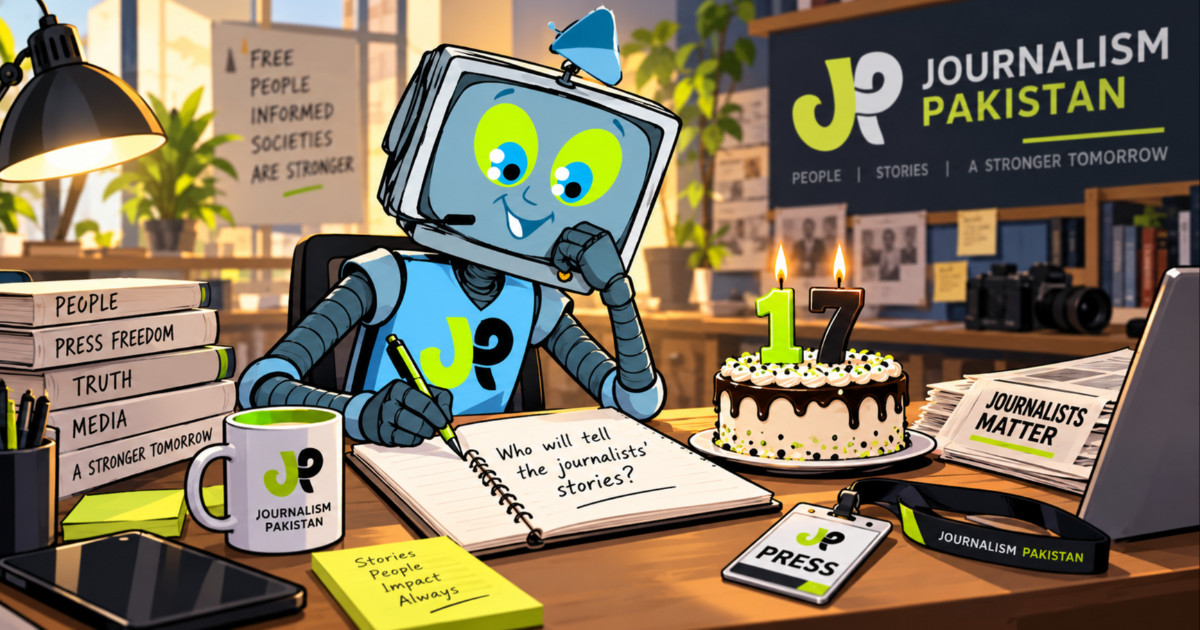
ILLUSTRATION: Janu Journalism, the JournalismPakistan mascot created by cartoonist Akhtar Shah, revisits the typewriter era, when the clatter of keys was part of everyday newsroom life.
Key Points
- Distinctive newsroom sounds and machines-typewriters, teleprinters and ringing phones-have largely disappeared.
- Unwritten rules and daily rituals once supported on-the-job mentorship for young reporters.
- Physical newsroom layouts encouraged immediate collaboration, headline debates and collective production.
- Digital workflows increased speed and efficiency but reduced informal apprenticeship and audible culture.
- The loss of these practices has affected newsroom identity and the way journalists learn their craft.
Key Questions & Answers
What newsroom traditions have disappeared?
Traditional sounds and practices-typewriters, teleprinters, constant ringing phones, shouted deadlines, tea runs and face-to-face headline debates-have largely faded.
Why did these traditions vanish?
The shift to digital production, remote workflows, cost pressures and changing management structures replaced many physical and social newsroom routines.
How has this affected the training of journalists?
Informal mentoring and learning-by-watching declined, reducing everyday on-the-job coaching and forcing greater reliance on formal training and online guidance.
Can any traditions be preserved or revived?
Certain practices can be retained through mentorship programs, storytelling and hybrid newsroom arrangements, but a full revival of the old soundscape is unlikely.
Ask AI: Understand this story your way
AI EnabledDig deeper, ask anything — get instant context, background, and clarity.
Disclaimer: This feature is powered by AI and is intended to help readers explore and understand news stories more easily. While we strive for accuracy, AI-generated responses may occasionally be incomplete or reflect limitations in the underlying model. This feature does not represent the editorial views of JournalismPakistan. For our full, verified reporting, please refer to the original article.