
Somaliland arrests journalists, bans TV stations
JournalismPakistan.com | Published: 1 June 2018
Join our WhatsApp channel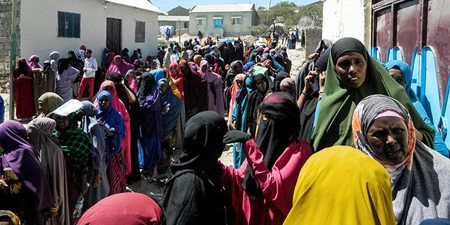
Authorities in Somaliland arrested journalists and imposed a ban on two television stations following conflict-related coverage. The move has raised concerns over media freedom.Summary
NAIROBI- Authorities in the breakaway region of Somaliland should desist from detaining and harassing journalists covering a conflict with Puntland and lift an operations ban on two television stations, the Committee to Protect Journalists said on Saturday.
Two journalists, Abdirahman Keyse Mohamed, also known as Tungub, and Mohamed Ahmed Jama, also known as Bidhaanshe, were arrested on May 27 and May 28, respectively, in the town of Las Anod in the contested Sool Region, according to Yahye Ahmed, the executive director of the Somaliland Journalists Association, and Guleid Ahmed Jama, the chairperson of the advocacy organization the Human Rights Centre.
Abdirahman told CPJ that he and Mohamed were detained at a police station in Las Anod until May 30, when they were transferred to the main detention center in the city. Neither was charged, and they were not brought to court until yesterday, when they were granted bail and released, Abdirahman told CPJ. This is in contravention of Article 27 of Somaliland's constitution, which stipulates that arrested individuals must be produced in court within 48 hours.
Abdirahman, a reporter with the privately owned Bulsho TV, told CPJ that local authorities did not explain why they had arrested him. In a May 26 report, he had interviewed members of the public about the conflict between Puntland and Somaliland, Abdirahman, Yahye, and Bulsho TV's deputy manager, Abdirashid Nour Wais, told CPJ.
On the morning of May 28, police had prevented Abdirahman and other journalists from covering a local council meeting about the conflict between the two regions. Abdirahman said the officers also broke his camera. He was arrested later that morning at the Bulsho TV offices in Las Anod; he told CPJ. Mohamed, a journalist with privately owned SBS TV, told CPJ that he was arrested while covering a demonstration in Las Anod.
On May 29, Somaliland's information ministry banned SBS TV and another privately-owned station, SOMNews, from operating in Somaliland, according to Guleid, Yahye, and a government statement.
The Ministry of Information accused the stations of inaccurate reporting and carrying out a "propaganda war" against Somaliland, according to the government statement and a statement by the Human Rights Centre. The ministry ordered the police to close all SOMNews and SBS branches in Somaliland and threatened individuals that send information to the two stations with legal action, according to the government statement. Though news gathering operations were banned in Somaliland, viewers in Somaliland could still access the satellite content of the two stations yesterday afternoon, according to Guleid.
"During times of conflict, the government ought to be creating a conducive environment for journalists to communicate diverse information to the public, not stifling the press," said CPJ Africa Program Coordinator Angela Quintal from New York. "We call on the Somaliland authorities to lift the operations ban on SOMNews and SBS TV, and to stop detaining and harassing journalists."
Somaliland and Puntland have both vied for control of the Sool region for over ten years. In recent weeks fighting over the disputed region has taken dozens of lives, according to media reports. On May 28, anti-Somaliland protesters took to the streets in Las Anod in support of Puntland and the Mogadishu-based government of the Federal Republic of Somalia, according to reports by Reuters and the privately-owned Garowe Online.
In a press conference the same day, the Sool regional police commissioner, Abdirisak Mohamed Faarah, told journalists that authorities had arrested 57 protesters, including the two journalists, according to a statement from the Human Rights Centre. The regional police commissioner also said police were looking for two more journalists in connection to the demonstrations, according to Yahye Ahmed and Guleid. CPJ could not immediately establish the identity of the other two journalists.
Somaliland's minister of information, Abdirrahman Abdullahi Farah, did not respond to a call and text messages from CPJ on May 29. A spokesperson in his office, Yonis Ali, on May 29 referred CPJ to the government statement issued on the shutdown of the two stations. He did not respond to questions May 30 asking for clarity on the legality of banning the two television stations nor did he address questions about the arrests of the two journalists.
Somaliland Deputy Police Commissioner Abdirahman Liban Fohle on the morning of May 30 said he did not know why the journalists were arrested and asked CPJ to call him back later in the day. He did not respond to a call and two text messages in the afternoon. CPJ could not reach Sool Governor Abdi Khayre Dirir.
The arrests of the two journalists and the shutdown of SOMNews and SBS operations are not the first action the Somaliland government is taking against the media in connection to the conflict in Puntland. According to a statement from the Human Rights Centre, parliamentarians on May 23 banned unauthorized press conferences and meetings in the Sool region. – A CPJ News Alert/Photo: AFP
Key Points
- Somaliland authorities arrested two journalists covering Puntland conflict.
- Operations of SBS TV and SOMNews banned due to alleged inaccurate reporting.
- Reports indicate rising tensions and violence in the Sool region between Somaliland and Puntland.
- The arrests and bans contradict Somaliland's constitutional protections for free speech.
- Human Rights organizations call for the lifting of bans and the release of detained journalists.
Relevant Topics
Ask AI: Understand this story your way
AI EnabledDig deeper, ask anything — get instant context, background, and clarity.
Disclaimer: This feature is powered by AI and is intended to help readers explore and understand news stories more easily. While we strive for accuracy, AI-generated responses may occasionally be incomplete or reflect limitations in the underlying model. This feature does not represent the editorial views of JournalismPakistan. For our full, verified reporting, please refer to the original article.