
.jpg)
Pakistan in England: From Kardar to Babar
JournalismPakistan.com | Published: 14 August 2026 | Dr. Nauman Niaz
Join our WhatsApp channel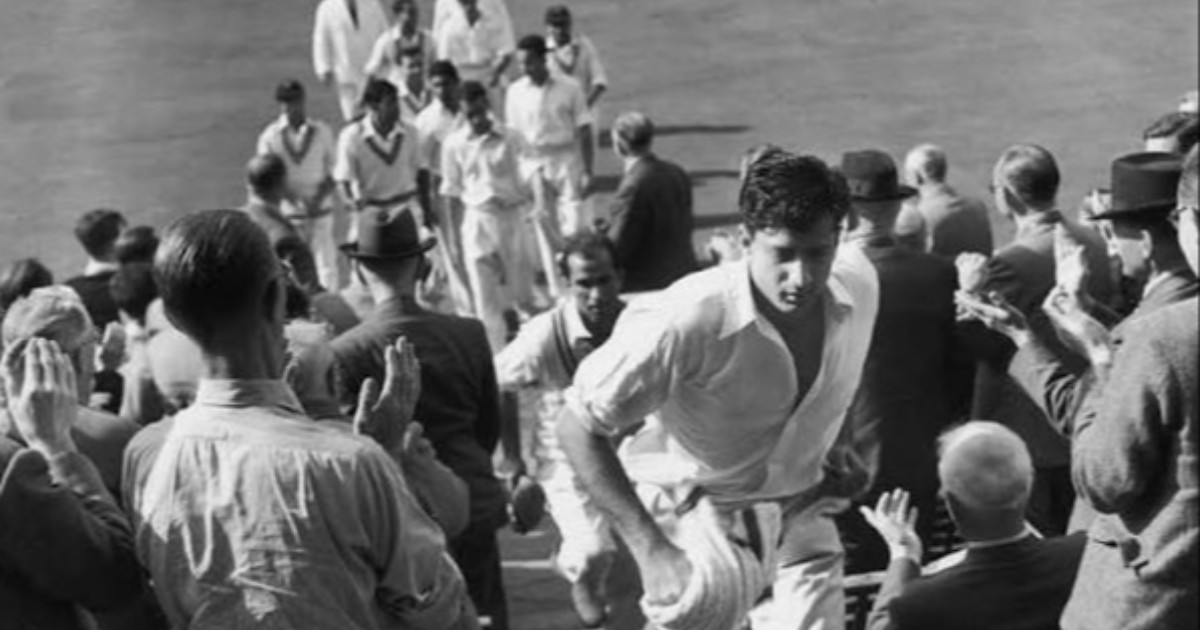
Framing Pakistan's England tours since 1954 as musical performances, the essay compares captains' temperaments and revisits the 1978 squad weakened by an Australian television magnate, asking whether Babar Azam's young side is now the weaker, and tracing decades of changing fortunes.Summary
I have always believed that a cricket tour is less an itinerary than a piece of music waiting to be performed, and that a touring team, stepping off its aeroplane into the pale, apologetic English sun, is in truth an orchestra arriving to play a symphony whose ending not even the composer can yet foresee. Some tours are played allegro, all confidence and brightness of stroke; others limp through in adagio, mournful, halting, the strings out of tune before the interlude is finished.
I have watched, or read myself into the watching of, every one of the tours Pakistan has made to this old, damp, self-satisfied cricketing motherland since 1954, and I confess that no other country's visits to the United Kingdom have moved me quite so much, nor taught me so much about the strange kinship between a nation's cricket and a nation's soul. Here, then, is the story of the men who conducted that orchestra, captains all, though scarcely two of them alike in temperament and of a question that has followed me, unresolved, through every one of these seventy-two summers: whether the threadbare, orphaned side that came in 1978, robbed of its finest players by a distant Australian television magnate, was the weakest ever to make this crossing, or whether that unhappy distinction now belongs to the young men Babar Azam leads onto the boat today.
To ask it at all is to confess something a little sad about this cricketing nation, which I say with affection rather than malice: that its history in England does not rise like a stave of ascending notes but beats, rather, like a pulse, systole and diastole, glory and collapse in endless alternation as though Pakistan were fated to relearn, every decade or so, in the forbidding English summer, that greatness is never inherited. It must be won afresh, each generation, by men who do not yet know whether they possess it.
The founding note: 1954
Let us begin, as the story itself begins, in the wet, grey June of 1954, a summer so sodden that the sun itself seemed a rumour rather than a fact, and with a tour so improbable in its resolution that I have never been able to describe it to myself without reaching for a word cricket writers are supposed to renounce: providence. Abdul Hafeez Kardar led that first team out, a spare, Oxford-schooled personality, austere as a closed record, a man who had played for India partition and in his own style, he had led his new country and England's press regarded his team, I imagine, rather as one regards a promising but unproven young musician invited, out of courtesy, to share the concert bill: an interesting novelty, nothing more.
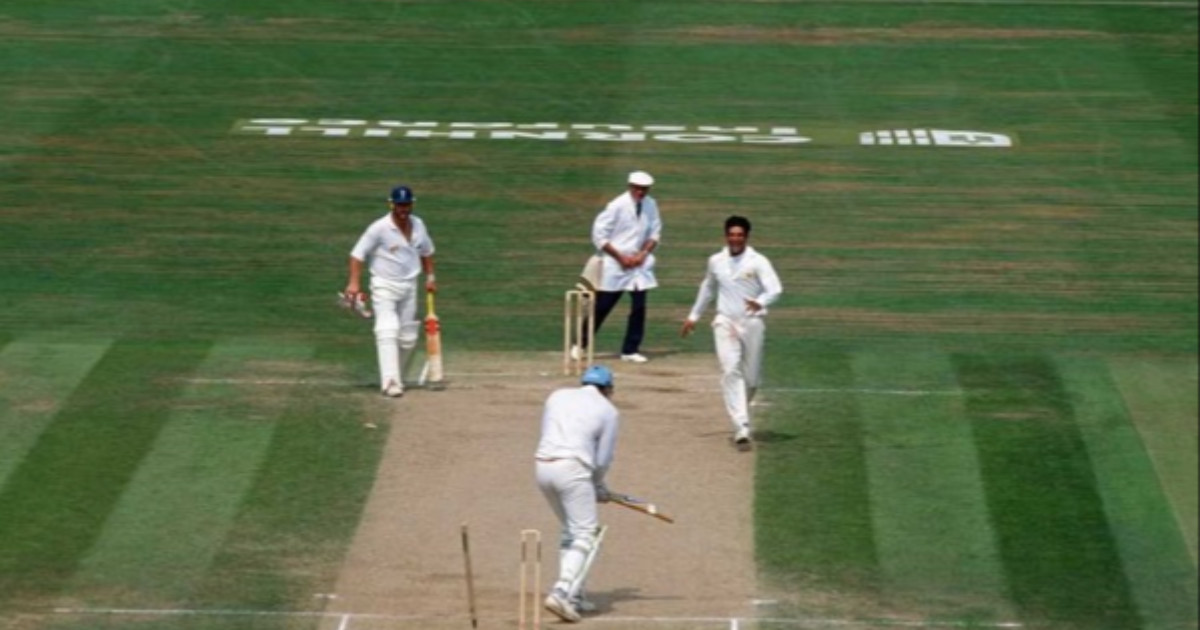
Four Test matches were played that damp summer, and it took only the last of them, at the Oval, for the novelty to reveal itself as something else entirely. Fazal Mahmood, whose command of the ball on a responsive English pitch had in it something of the conjuror as much as the craftsman, bowled Pakistan to victory by twenty-four runs and in that single afternoon a country not yet three years old, a country that had scarcely finished drawing its own borders, became the first team in the whole history of the game to win a Test match on its very first tour of England. No one before had done it.
No one, in the seventy-two years since, has done it again. The series itself ended level, one match apiece, but I have never thought the numbers mattered half so much as the music of the thing: a young nation had proven, in one golden hour at the Oval, that it could out-think and outlast the game's own inventors on the inventors' own soaked turf. It was less a result than an overture, and every captain who has sailed for England since has walked out, whether he knew it or not, to the distant, ineradicable echo of that single afternoon.
The long struggle after 1954
But a nation cannot live forever on the memory of one perfect chord, and the silence that followed was long and, at times, humiliating. In 1962 the baton passed to Javed Burki, an elegant young man, Oxford-educated as Kardar had been, promoted rather more by the intrigues of a fractious young board than by any accumulated cricketing wisdom, and what followed was not so much a defeat as a rout, four Tests lost out of five, only the rain at Trent Bridge sparing Pakistan the ignominy of a clean sweep. England's batsmen, I am told, played that summer with the unhurried contempt of men swatting flies; the English newspapers wrote of the tourists with a condescension that must have stung a great deal more than the scoreline itself. So chastened was Lord's by what it had seen or so satisfied, perhaps, that its own supremacy required no further demonstration that Pakistan was not permitted a full five-Test series in England again for the best part of a quarter-century.
The years that trickled through afterward have about them, in my imagining, the quality of a slow movement played by musicians not quite sure of the score. In 1967, it was old Hanif Mohammad, the Little Master, whose 187 not out at Lord's, an innings of such monastic, unhurried patience that one pictures him almost meditating between deliveries alone stood between his country and total collapse; at the Oval that same tour, a defiant ninth-wicket stand of 190 between Asif Iqbal and Intikhab Alam salvaged from the wreckage something that might, charitably, be called honour.
By 1971, under Intikhab's own captaincy, Pakistan came within the width of a raindrop of its first true series victory on English soil: Zaheer Abbas compiled 274 of such command at Edgbaston that the match should, by every reasonable law of cricket, have been won outright, and only a conspiracy between the English weather and an infuriating follow-on denied him. Three summers later, in 1974, Intikhab's men returned for a tour so waterlogged, so thoroughly drowned in draws, that I confess I can recall almost nothing distinct about it at all, which is itself, perhaps, the most fitting epitaph such a tour could have. These were the years of the near-miss raised almost to an art form: a country that could never quite bring itself to win in England, and yet could never quite be dismissed either. Zaheer, with 240 at the Oval, left the spectators and connoisseurs equally.
1978: The orchestra is stripped bare
And so we come to the tour this essay was written to interrogate, and I must say at once, before passing any judgement upon it, that the weakness of that 1978 side was not a fault in the composition but a theft from the orchestra pit itself for in the space of a single off-season, the distant thunder of Kerry Packer's World Series Cricket had carried off five musicians who would, individually, have taken first chair in any composite orchestra the cricketing world could then have assembled. Mushtaq Mohammad, the captain, banned. Asif Iqbal, gone. Majid Khan, gone. Zaheer Abbas, gone. And a young all-rounder, not yet the finished article he would soon become, but already unmistakably a coming force, Imran Khan gone as well.
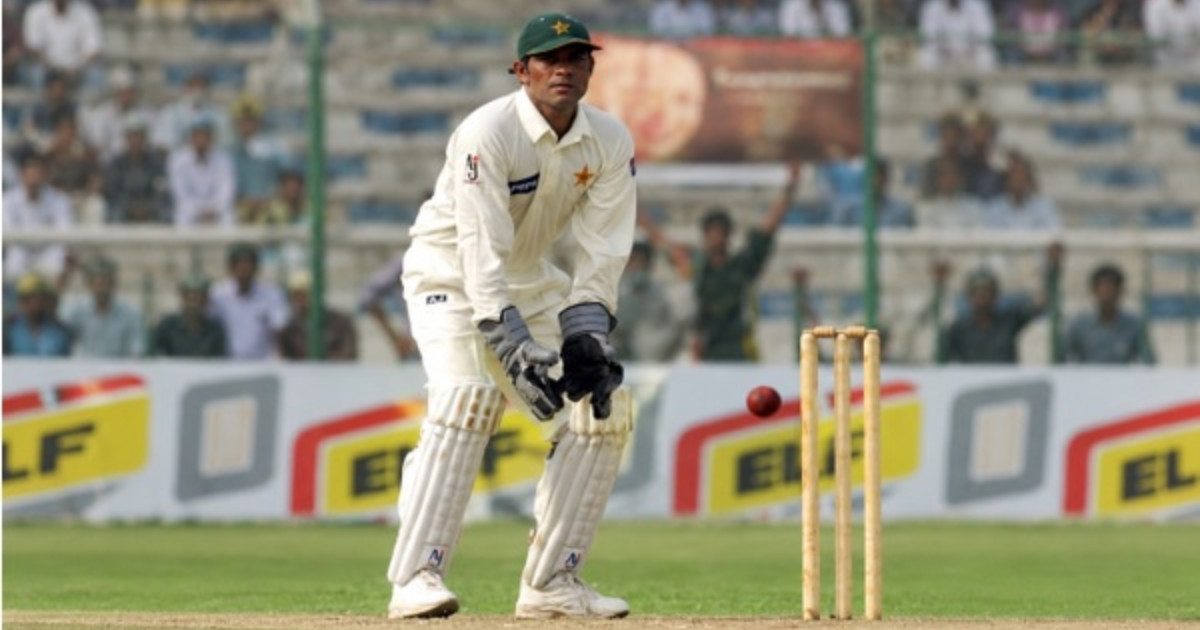
Into the silence left by their departure stepped Wasim Bari, the gifted wicketkeeper whom circumstance rather than any ambition of his own had thrust toward the podium, and I have always felt history has judged him with unusual gentleness, recognising that no conductor alive could have drawn a symphony from an orchestra with half its principal players removed by a court order signed on another continent. At home that winter, on pitches deliberately starved of all life, his depleted band had at least contrived to hold its own, drawing its series with England through sheer defensive discipline. In England itself, exposed on livelier, greener wickets with no such artificial mercy to hide behind, the performance collapsed entirely, two Tests lost by an innings, the third saved only by rain at Headingley, the whole tour possessing the unmistakable sound of an orchestra playing gamely on though its finest instruments had, quite literally, been repossessed mid-performance. It was defeat without disgrace: a side sent to war having already lost half its officers to a court-martial convened by an authority entirely separate from the war itself. I think often of a small, human detail from that unhappy summer, Wasim Raja, unsettled at the prospect of Mushtaq's eventual return costing him his place, is said to have shaved off his beard in agitation and spoken, half in jest, of giving up the game altogether. It tells one more about the atmosphere of that ruined dressing room than any scorecard ever could.
Imran Khan changes the music
If 1978 was Pakistan cricket at its most helplessly diminished, the decade that followed gave us, in Imran Khan, something closer to a single instrument capable of carrying an entire orchestra upon its own back. He arrived in England as captain for the first time in 1982, and the tour was lost, honourably, one match to two; Mohsin Khan's imperious 200 at Lord's was the single most eloquent sentence spoken all summer, but even in defeat one sensed a different temperament announcing itself. Imran complained, loudly and often, about umpiring he considered hostile; he complained that his side had been sent into the first Test short of proper hard cricket. These were not, I think, the complaints of a man reconciled to losing. They were the complaints of a man already composing his next visit in his head.
That visit came in 1987, and it delivered what fifty-five years of trying had failed to produce: Pakistan's first series victory ever on English soil, sealed at Headingley in the very match in which Imran claimed his three-hundredth Test wicket as though the record books themselves had conspired to arrange the timing. At the Oval, Javed Miandad played an innings of 260, helping his country to 708, still the highest total Pakistan has ever compiled in a Test match, though England, with the sort of maddening obstinacy peculiar to sides fighting for their lives, somehow escaped with a draw. Kardar, in 1954, had proven that Pakistan could compete on this soil. Imran, thirty-three years later, proved the harder thing: that Pakistan could be expected to win here not through the mercy of rain or the accident of circumstance, but as the natural consequence of a captain who had simply decided, with something like an act of will, that his orchestra would not be permitted to play out of tune.
Wasim, Waqar and the age of reverse swing
Under Miandad's own baton in 1992, Imran having by then departed into the golden evening light of a World Cup lifted at Melbourne, Pakistan won again, by the narrower margin of two Tests to one, and did so by means of a discovery that would haunt English cricket's imagination for a generation. Wasim Akram and Waqar Younis, bowling in tandem, had by now perfected the dark and beautiful art of reverse swing, and an old, roughened ball in their hands late in an innings behaved as though it had been touched by something not quite of this world. England's batsmen, undone repeatedly by deliveries that seemed to defy the very physics they had grown up trusting, began to murmur and then to say outright that the enchantment was not entirely legitimate.
The buzz never entirely subsided; it followed Pakistan's fast bowlers for the rest of their careers, an uninvited undertone beneath every subsequent triumph. Four summers later, under Wasim's own captaincy, a second consecutive series was won with rather less controversy and rather more unclouded splendour: Saeed Anwar's wristy elegance, Inzamam-ul-Haq's languid, unhurried power, a team that had, by now, entirely shed the diffidence of the wilderness years and begun to play like men who expected to win. Mushtaq Ahmad made the difference with his leg spin and googly bowling.
A new century and missed opportunities
The 2001 tour reads, in retrospect, like a hinge creaking between two very different eras. Waqar Younis, the captain, containing Wasim Akram, and the mystery spinner Saqlain Mushtaq bowling of real and rare quality, could not translate that talent into victory, and came home carrying the quieter, less dramatic frustration of an opportunity simply allowed to slip through open fingers: the win at Old Trafford. Inzamam was in full flow, Saqlain picked a haul of five, and Rashid Latif also batted with evident intrepidity. It was not the humiliation of 1962 or 1978, but a different, thinner sort of disappointment at Lord's; nonetheless, the series ended 1-1, and it was somewhat an unexpected triumph.
And then, as though the game itself had wearied of watching Pakistan compose its own difficulties, the new century produced two passages so dissonant that no purely cricketing explanation could account for them. In 2006, Inzamam-Ul-Haq, by then among the most serene captains his country had given the world, led his players from the field at the Oval in protest at an allegation of ball-tampering, and would not bring them back, the first forfeiture in the long history of Test cricket, an act of wounded pride that cost Pakistan the match and cost Inzamam something of his own good name, even as it revealed, starkly, how deeply the question of honour had lodged itself in a team that had spent half a century being silently suspected, in England, of not quite playing by the rules. Tampering allegations were being spilt all over the tabloid press, even in the mainstream.
Worse, far worse awaited in 2010. Salman Butt, a fluent, promising young opener handed the captaincy with every expectation of a long and settled reign, presided instead over the darkest single passage this whole history has to offer: a spot-fixing conspiracy, arranged during the Lord's Test itself, which saw Butt and two of his bowlers, Mohammad Amir and Mohammad Asif, tried and imprisoned by an English court for conspiracy to defraud. I find I still cannot write the sentence without a kind of wince: a Pakistan Test captain, jailed in the very country his team had travelled to play, for crimes committed on the most venerable ground the game possesses. Every reverse-swing wicket taken by a Pakistani bowler for years afterward carried, fairly or not, some faint residue of that ruined summer. Amir, youngest of the three, would serve his sentence and his ban and return, chastened, still gifted, forgiven by degrees by a public that never entirely forgot; Butt's own path back was slower, and the captaincy he had held so briefly was never his to reclaim.
Misbah and the work of repair
It fell, as it has so often fallen in this story, to an unfashionable and initially doubted man to begin the long, patient work of mending. Misbah-Ul-Haq, appointed captain in the immediate wreckage of the spot-fixing scandal at an age most conductors would have considered past retirement, brought to the 2016 tour a side rebuilt, quite literally, in exile, Pakistan, unable to host cricket at home since the attack on the Sri Lankan team bus in Lahore in 2009, had spent years playing what home cricket it had upon the dead pitches of the United Arab Emirates, a diaspora orchestra rehearsing far from its own concert hall.
That tour, played with a granite, unhurried discipline entirely characteristic of the man conducting it, produced one of the gentlest and most moving images in this entire history: Misbah, having led his side to victory at Lord's, dropping to the turf to perform a set of press-ups before a crowd that had, not so very many years before, watched his predecessor march his players off that same ground in disgrace. Pakistan rose, before the year was out, to the very top of the world Test rankings, an ascent achieved not by the sovereign genius of an Imran nor the sorcery of a Wasim and Waqar, but by the humbler, cumulative discipline of a man who had simply refused to let a broken institution break him in turn.
What followed carries the particular sadness of an orchestra that keeps changing its own conductor before any single interpretation can properly settle. Sarfraz Ahmed's side drew its shortened 2018 series, competitive without ever quite seizing the advantage it created; Azhar Ali's team arrived in 2020 into the surreal, echoing silence of a pandemic-bound bio-secure bubble, cricket stripped of its crowds and, with them, of something like its soul, and went home beaten. Between Misbah's press-ups and the present day lies a familiar Pakistani pattern I have watched repeat itself now for the better part of forty years: gifted individual voices, an ever-changing baton, a board seemingly constitutionally incapable of allowing a good thing simply to continue, the same old restlessness, dressed now in a more modern uniform.
Babar Azam and the present reckoning
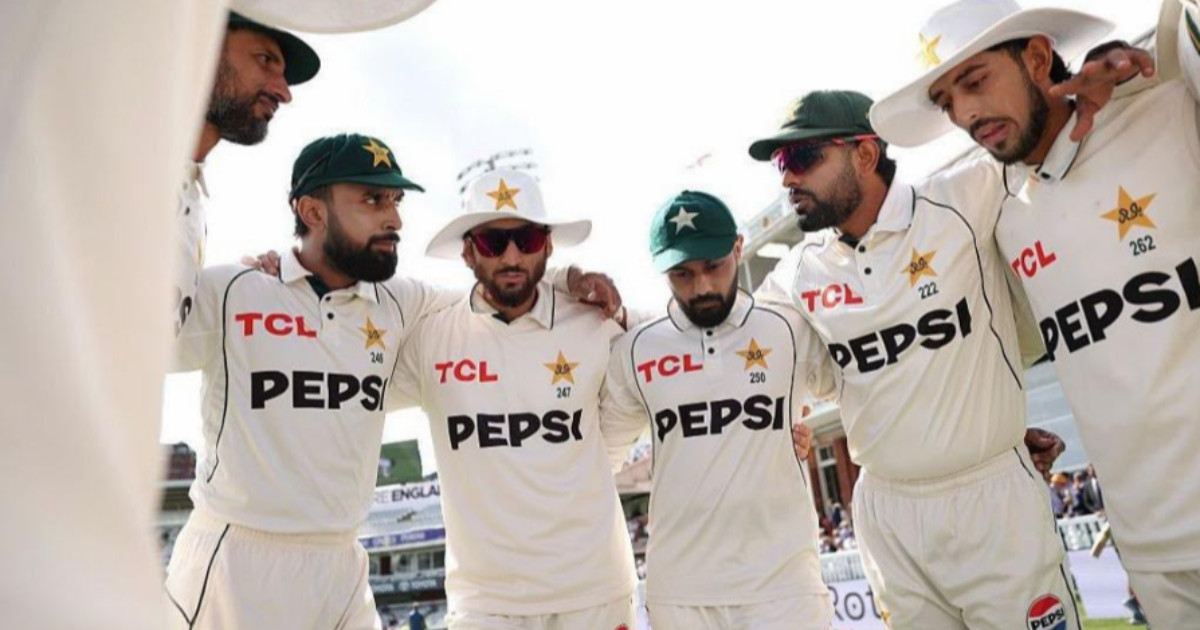
Which brings this long procession, at last, into the present tense, and to the question I set out honestly to answer rather than to flatter. Babar Azam, the finest Pakistani batsman of his generation, a player whose classical correctness at the crease invites comparison, unbidden, with the great stylists who came before him returns now to the captaincy for a third distinct spell, having twice already laid the office down amid the same familiar exhaustion of results, boardroom pressure, the backended intrigues and public patience that has claimed so many before him. He leads a party to England this August containing four cricketers entirely uncapped at this level, a left-arm spinner, a middle-order batsman, a fast bowler, a wicketkeeper sent to sit cricket's oldest and most exacting examination with scarcely a first-class reputation between them. The bowling that must operate beneath grey Headingley skies carries promise but painfully little proven substance; the batting beneath Babar himself remains, for the most part, unverified against a moving Dukes ball in conditions that have humbled far more experienced men.
1978 versus 2026
Here, then, is the honest reckoning this essay promised. The 1978 orchestra was the weaker in the purest, most measurable sense: it had been stripped by an act of external commercial warfare, entirely outside cricket's own jurisdiction, of five players of genuine and undisputed world class, men who would return, within a season or two, to lead Pakistan to the very summit of the game. That was a wound, not a condition; sudden, externally inflicted, and, as it proved, entirely reversible.
The uncertainty surrounding the 2026 touring party, if uncertainty it is, belongs to a different species of trouble altogether: not the sudden amputation of proven greatness but the slow, accumulated consequence of a domestic structure that has failed, across a full cricketing generation, to produce sufficient depth to insure the side against injury, loss of form, or the ordinary erosions of a long tour. Bari's 1978 side was weak because history had, for one punishing season, fleeced it of men it already possessed. Babar's 2026 side may be weak, if weak it proves to be because the institution behind it has not, across many patient years, produced enough men worth possessing in the first place.
It is, if you will permit the distinction, the difference between an injury and an illness, and illnesses are always the crueller diagnosis, because they cannot be blamed upon a distant Australian television magnate, and because they do not resolve themselves the instant the immediate crisis has passed. Should Babar's side falter now at Headingley, at Lord's, at Edgbaston, the reckoning that follows will not have the comfort 1978 could claim, the comfort of knowing better days had just been postponed by circumstance. It will have to ask the harder question: whether the postponement has, this time, become permanent; whether a nation that once produced, within a single cricketing generation, Fazal and Kardar and Hanif and Miandad and Imran and Wasim and Waqar has simply, quietly, stopped composing music of that quality at all.
The weight carried by every captain
There is a particular stillness, I have always imagined, that descends upon any cricketer stepping off an aeroplane into an English summer wearing his country's cap, a species of dread and hope so entangled that he could not separate them if he tried because he knows, whether anyone has troubled to tell him so, that he carries upon his back the whole unwieldy weight of every man who wore that cap before him. Kardar's austerity. Imran's sovereignty. Miandad's street-wise cunning. Misbah's patient, unglamorous repair. And the two darker ghosts that no subsequent triumph has ever quite managed to lay to rest: Inzamam's wounded walk from the Oval, and Salman Butt's disgrace at Lord's. Babar Azam will feel that weight this August exactly as every captain before him has felt it, standing beneath the same honours board at Lord's that records, in the same patient gold lettering, both the glory of 1954 and the humiliation of 1962; both Miandad's 260 and the verdict read out in a London courtroom in 2011.
What history cannot tell him, what it has never once been able to tell any of his eighteen predecessors before they walked out to face it is which movement of this long, unresolved symphony his own tour is destined to become. Perhaps his callow, largely uncapped orchestra will discover what Bari's broken one never had the chance to: that adversity composes its own unlikely music, and that some Headingley or Lord's afternoon yet to come will produce an innings from a batsman nobody outside Lahore has yet troubled to learn the name of some reincarnation of Mohsin Khan in 1982, tht majestic 200 hundred at Lord’s arriving from nowhere to play the innings of his life. Or perhaps the reckoning this essay has tried, as honestly as it knows how, to anticipate will simply arrive unadorned, in the plain shape of a heavy defeat that confirms what the team sheet already half-whispers: that the institution has, this time, sent its captain to the examination hall without having taught him enough to pass it. Imran’s bowling and Mudassar Nazar, after a haul of six, termed ‘Man of the Golden Arm’.
The unfinished symphony
Consider, one last time, the whole magnitude of it, if dynamics is even the right word for something so close to elegy. Kardar sailed in 1954 with an orchestra nobody expected anything from, and came home holding a nation's founding myth in his two hands. Bari sailed in 1978 with an orchestra from which history itself had torn out the strings, and came home beaten but unashamed, having played, with what remained, as well as any man honestly could. Imran sailed twice, each time with a band he had personally willed into believing itself equal to anyone alive, and came home both times vindicated. Butt sailed in 2010 and came home in handcuffs, the only captain in this entire history for whom the word tragedy is not embellishment but simple, necessary fact. And now Babar sails again, not with an orchestra broken by some distant, external hand as Bari's was, but with one shaped for better, though I fear for worse, by the silence, accumulated choices of the very institution that sent him.
That, in the end, is the only note this long history can sound with any real confidence, not which tour was weakest, for that argument must remain exactly what it has always been, an argument rather than a verdict, but that every one of these eighteen men, from Kardar in his blazer to Babar in his, walked out into that pale, grudging English light carrying something a great deal heavier than a bat, and that the weight of it has not, in all these seventy-two years, grown one ounce lighter. Whatever now unfolds at Headingley, at Lord's, at Edgbaston, will be entered, without mercy and without exception, into the same unbroken score and somewhere, in some essay not yet written, a generation hence, another captain will sail for England carrying all of it, Babar's tour among the rest, upon his own uncomplaining shoulders.
ABOUT THE WRITER: Dr. Nauman Niaz, a postdoctoral scholar (Oxford) and recipient of Pakistan's Tamgha-i-Imtiaz for sports broadcasting and journalism, has covered 54 international cricket tours and three ICC Cricket World Cups. He has written more than 3,700 articles, authored 19 books, including the official history of Pakistan cricket, Fluctuating Fortunes, and is the Sports Editor at JournalismPakistan.
PHOTO: From the author's personal collection. The photograph was presented to him by the late Fazal Mahmood.
Key Points
- Frames a cricket tour as a musical performance and an orchestra of players.
- Surveys Pakistan's England tours from 1954 onward.
- Compares differing temperaments and leadership styles of Pakistan captains.
- Highlights the 1978 team weakened by an Australian television magnate.
- Raises the question whether Babar Azam's young side is now the weakest to tour.
Key Questions & Answers
What is the main theme of the piece?
The essay treats Pakistan's tours of England as a long, evolving performance, reflecting on captains' temperaments and the nation's cricketing character over decades.
Which tours does the author examine?
It surveys Pakistan's visits to England beginning in 1954 and traces patterns and moods across subsequent decades.
Why is the 1978 team specifically mentioned?
The 1978 side is noted for being robbed of key players by an Australian television magnate, leaving it depleted and a point of comparison in the narrative.
What unresolved question does the author pose?
The author asks whether the 1978 weakened team or Babar Azam's current young side should be considered the weakest Pakistan team to tour England.
Ask AI: Understand this story your way
AI EnabledDig deeper, ask anything — get instant context, background, and clarity.
Disclaimer: This feature is powered by AI and is intended to help readers explore and understand news stories more easily. While we strive for accuracy, AI-generated responses may occasionally be incomplete or reflect limitations in the underlying model. This feature does not represent the editorial views of JournalismPakistan. For our full, verified reporting, please refer to the original article.