.jpg)
How Asian newsrooms are adapting to AI and what Pakistan can learn
JournalismPakistan.com | Published: 9 November 2026 | JP Special Report
Join our WhatsApp channel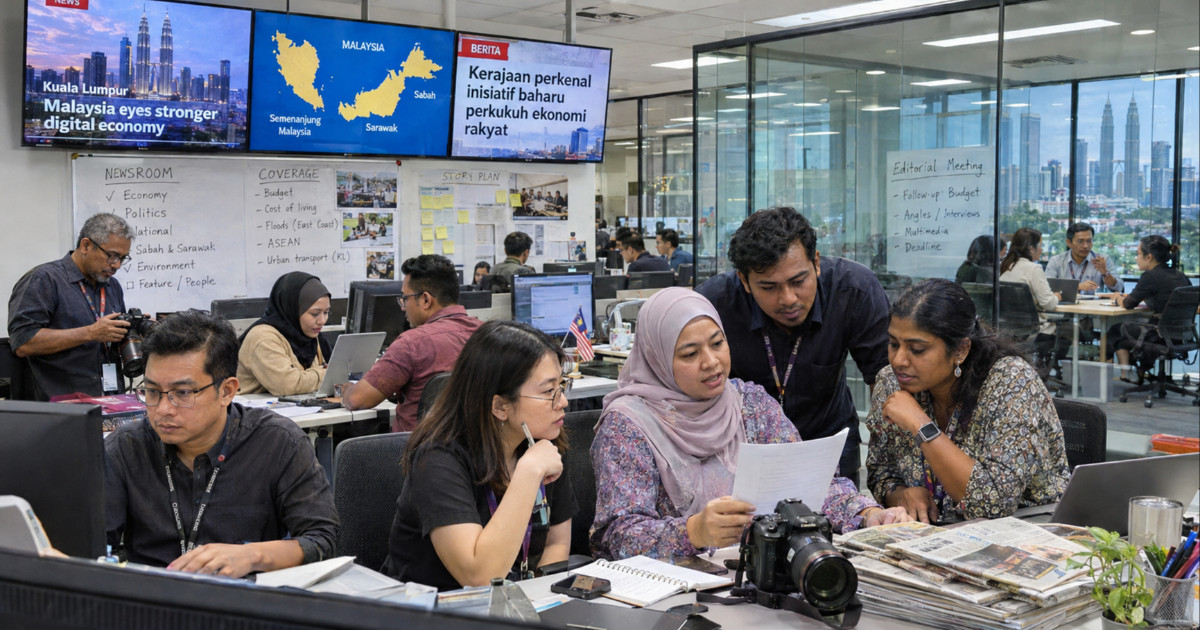
Across Asia, newsrooms use AI to cut routine tasks, support investigations and expand multilingual reach; emphasis is on assistance, not full automation. Pakistani outlets can adopt tools with training, clear policies and editorial oversight.Summary
From India's data-driven investigations to Malaysia's cautious newsroom experiments, artificial intelligence is changing how journalism is produced across Asia. Recent research reveals growing adoption alongside concerns about accuracy, training and editorial oversight. For Pakistani newsrooms facing financial and technological constraints, the regional experience offers lessons in using AI without compromising journalistic standards.
ISLAMABAD — Artificial intelligence is becoming part of everyday newsroom operations across Asia, but its growing use is not necessarily turning journalists into automated content producers. News organizations are experimenting with tools that reduce repetitive work, assist investigations, process large amounts of information and help journalists reach audiences in different languages and formats.
The shift comes as publishers confront financial pressures, changing audience habits and demands to produce more journalism with limited resources. Recent studies and newsroom initiatives in India, Malaysia and other Asian markets suggest that AI can improve efficiency, but its value depends on how carefully organizations integrate the technology into editorial work.
Asian newsrooms favor assistance over automation
A report published by the World Association of News Publishers (WAN-IFRA) on September 9, 2026, offers a snapshot of this transition. Based on a survey of 42 media professionals from 12 markets, conducted between September 2025 and May 2026, the State of Asian Newsrooms report found that approximately two-thirds of respondents said their organizations allowed journalists to use generative AI in producing stories.
The most common applications were proofreading and grammar correction, cited by 52.4 percent of respondents, and transcription, also at 52.4 percent. Background research accounted for 50 percent, translation for 47.6 percent, and summarization for 42.9 percent. Only 11.9 percent reported using generative AI to produce written content. The relatively small sample means the findings cannot represent every Asian newsroom, but they provide useful evidence of emerging practices.
The survey also revealed uncertainty about the technology's reliability. Although 77.5 percent of respondents agreed that AI helps journalists, 65 percent expressed distrust in the quality of its output. The findings suggest that recognizing AI's usefulness does not necessarily mean trusting its accuracy.
India demonstrates practical newsroom innovation
India provides examples of news organizations moving beyond basic AI-assisted writing and editing.
At The Hindu, journalists have used large language models to support investigations and data journalism. According to an April 10, 2026, report by the Global Investigative Journalism Network, the newspaper's journalists processed nearly 22 million voter records across three Indian states, developed an election results interface, and used AI-assisted tools to manage complex information.
The significance lies in the division of responsibilities. Journalists determined the investigative questions, assessed the political and social context, and interpreted the findings. AI helped process documents, generate code and handle the scale of the work.
Other Indian publishers are experimenting with audience-facing formats. The Reuters Institute's Digital News Report 2026 noted that Scroll.in developed a tool to convert material from text articles into short videos for social platforms. Broadcasters, including Aaj Tak and Odisha TV, have experimented with AI-generated presenters or digital versions of news anchors.
These initiatives demonstrate different approaches to innovation. AI-assisted investigations may help journalists examine information that would otherwise require extensive technical resources, while automated presenters and video production raise questions about transparency, authenticity, and audience trust.
Malaysia highlights the limits of adoption
Malaysia's experience shows that AI adoption is neither uniform nor necessarily rapid.
A study published in the academic journal Media and Communication on October 15, 2026, examined AI use through interviews with 20 journalists across six Malaysian news organizations. It found that adoption was selective and often constrained by limited training, resources, and formal editorial rules.
Journalists primarily used AI for transcription, translation, summarization, and headline generation. Although these tools could accelerate certain tasks, they did not eliminate the need for human verification.
In some cases, automation simply transferred work from production to checking and correction. A transcript produced quickly by AI still needed review, while machine-generated summaries required journalists to confirm that important facts and context had not been lost.
The researchers identified different newsroom approaches, ranging from cautious experimentation to more structured adoption with human editorial controls. Their findings underline an important concern for smaller media organizations: investing in AI without training journalists or establishing clear procedures may create new responsibilities rather than reduce workloads.
Pakistan faces similar challenges
Pakistan's media industry confronts many of the same pressures, including financial instability, changing digital audiences, shortages of technical expertise, and the need to publish journalism in multiple languages.
A study titled AI & Public Interest Journalism: Mapping Readiness of Pakistani Independent Digital Newsrooms, published in October 2025 through a collaboration involving International Media Support, Mediastan and IRADA, examined the readiness of independent digital news organizations.
Around 80 percent of the 39 responding outlets reported using AI tools. However, much of this activity involved individual use of generative AI chatbots for relatively basic tasks, including generating ideas and copy-editing. Fewer than one-third of the surveyed organizations had formal editorial policies governing AI use.
The findings highlight a key distinction between journalists experimenting with readily available applications and news organizations developing systematic approaches to AI.
JournalismPakistan has consistently examined the opportunities and risks associated with AI adoption in newsrooms. In an August 9, 2025, special report, JP highlighted the dangers of inaccurate AI-generated content and the need for editorial safeguards. Its January 24, 2026, report explored how news organizations were using AI to support journalists without replacing human reporting and editorial judgment.
The website returned to these concerns on March 24, 2026, examining the development of newsroom AI ethics guidelines, and again on May 30, when it questioned who verifies AI-assisted journalism. Most recently, on November 8, JP analyzed the accountability issues raised by inaccurate AI-generated news summaries, drawing on the dispute over USA Today Co.'s DeeperDive tool.
Together, these reports reflect a recurring concern in JournalismPakistan's coverage: technological efficiency must not come at the expense of accuracy, transparency or editorial responsibility.
For Pakistani news organizations, the immediate challenge is therefore not simply acquiring AI tools. It is determining which applications genuinely improve journalism and whether newsrooms have the resources, training and safeguards to use them responsibly.
Language could become Pakistan's biggest opportunity
One potentially valuable application of AI in Pakistan is multilingual journalism.
News organizations routinely work with English and Urdu, while regional reporting involves Punjabi, Sindhi, Pashto, Balochi and other languages. Translating reports, interviews, and public documents is often time-consuming and requires specialist knowledge.
AI could help journalists prepare preliminary translations, compare documents and make reporting accessible to wider audiences. It could also assist smaller newsrooms in transcribing interviews and organizing information collected in different languages.
However, linguistic errors present serious risks. Incorrect translations of legal terminology, political statements, or sensitive allegations can change the meaning of a report.
The usefulness of AI translation therefore depends on reliable source material and review by journalists who understand both the language and the subject.
This is particularly important in reporting on courts, security matters, religious issues and political disputes, where a mistranslated word or missing qualification can have serious consequences.
Editorial accountability remains essential
The regional evidence also raises questions about newsroom governance.
WAN-IFRA's survey found that 57.5 percent of respondents said their organizations had ethical guidelines for AI use. Another 25 percent reported having no such guidelines, while 17.5 percent were uncertain.
These findings suggest that written standards have not kept pace with the growing availability of AI tools in some newsrooms.
For Pakistani publishers, an editorial framework should define which tasks can be assisted by AI, what information journalists may enter into external systems, how generated material must be checked and when readers should be informed about AI involvement.
Confidential interviews, unpublished investigations and sensitive personal information require particular care because sharing material with third-party tools can introduce privacy and source-protection risks.
Responsibility for published journalism must also remain clear. An AI-generated error cannot simply be attributed to software when a newsroom has approved the content for publication.
JournalismPakistan's November 8 analysis addressed this issue directly, examining the responsibilities of reporters, editors, publishers and technology providers when automated summaries introduce factual inaccuracies into otherwise verified reporting.
The concern is especially relevant to smaller news organizations, where financial pressures may encourage automation without corresponding investment in editorial supervision.
What Pakistani newsrooms can learn
The Asian experience offers several practical lessons.
First, AI adoption does not need to begin with expensive systems. News organizations can identify repetitive tasks that consume editorial time, test appropriate tools, and measure whether those applications genuinely improve accuracy, efficiency or audience service.
Second, training matters as much as technology. Journalists need to understand what AI systems can accomplish and where they are likely to fail. Editors require similar knowledge to assess AI-assisted reporting and establish effective checks.
Third, organizational policy is essential. Even small digital publishers can establish straightforward rules covering verification, disclosure, confidentiality, corrections, and editorial responsibility.
Fourth, AI should strengthen journalism rather than simply increase output. The Hindu's data journalism experiments demonstrate how the technology can help journalists examine records and pursue investigations that might otherwise require substantial technical resources.
For Pakistan, this could include AI-assisted examination of public budgets, environmental information, court records and government datasets, provided the material is lawfully available, and the findings are independently verified.
There is also an important audience dimension. The Reuters Institute's June 2026 Digital News Report found that 10 percent of respondents across its surveyed markets used standalone AI chatbots for news each week, compared with 7 percent the previous year.
Although these tools remain a relatively small source of news compared with established platforms, their growing use means publishers must consider how audiences encounter, summarize and interpret journalism through AI-powered services.
Technology must serve journalism
Asia's changing newsrooms demonstrate that artificial intelligence is not a single model of innovation. Some organizations are developing sophisticated data and workflow systems, while others are experimenting with basic editorial assistance under considerable financial constraints.
The differences are significant, but the underlying challenge is shared: how to use new technology without weakening the professional standards that make journalism credible.
For Pakistan, the central lesson is not to imitate every innovation emerging elsewhere in Asia. It is to identify applications that genuinely strengthen reporting, improve accessibility and make better use of limited newsroom resources.
AI may help journalists work faster and examine more information. It cannot independently establish public trust, replace accountable editorial judgment or guarantee the accuracy of published reporting.
The future of AI in Pakistani journalism will depend less on the number of tools newsrooms adopt than on whether those tools help produce more reliable, independent and useful journalism.
ATTRIBUTION: Analysis by JournalismPakistan. This feature draws on JournalismPakistan's reporting and analysis published on August 9, 2025; January 24, March 24, May 30 and November 8, 2026. Additional sources include WAN-IFRA's State of Asian Newsrooms report (September 9, 2026); Global Investigative Journalism Network (April 10, 2026); Reuters Institute's Digital News Report 2026 (June 16, 2026); Media and Communication's Malaysian newsroom study (October 15, 2026); and research by International Media Support, Mediastan and IRADA (October 2025).
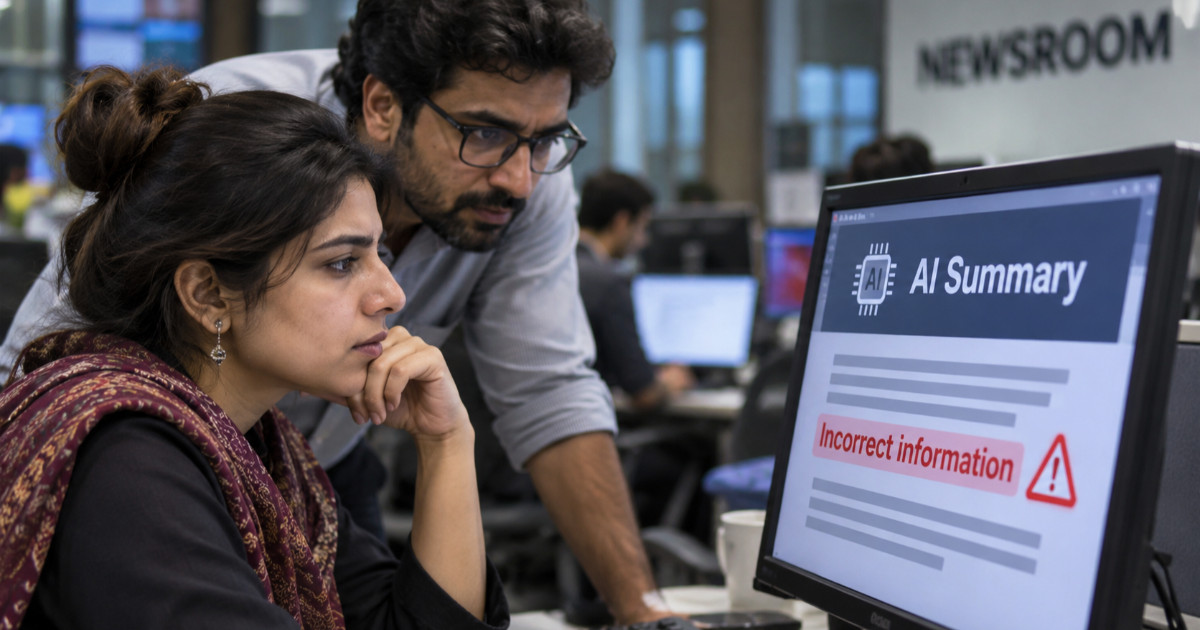
PHOTO: AI-generated illustration; not an actual newsroom.
Key Points
- Asian newsrooms prefer AI as an assistive tool rather than replacing journalists.
- Common uses include automating repetitive tasks, data-driven investigations and multilingual distribution.
- Concerns persist around accuracy, training, editorial oversight and newsroom capacity.
- Successful adoption hinges on governance: policies, staff training and transparency.
- Pakistan can adapt lessons from regional pilots while prioritizing ethical and editorial safeguards.
Key Questions & Answers
How are Asian newsrooms using AI?
They mostly use AI to automate repetitive tasks, process large datasets for investigations, translate or repurpose content for other languages and formats, and to assist audience engagement.
What risks do newsrooms face when adopting AI?
Key risks include errors and misinformation, biased outputs, loss of editorial control, insufficient staff training and dependence on opaque third‑party tools.
What should Pakistani newsrooms prioritize when experimenting with AI?
Start with low‑risk, high‑value use cases, invest in staff training, establish editorial policies and transparency practices, and monitor accuracy and impact closely.
What governance measures help mitigate AI risks in journalism?
Clear editorial guidelines, accountability for outputs, documented workflows, regular audits, and public disclosure of AI use help maintain trust and standards.
Relevant Topics
Ask AI: Understand this story your way
AI EnabledDig deeper, ask anything — get instant context, background, and clarity.
Disclaimer: This feature is powered by AI and is intended to help readers explore and understand news stories more easily. While we strive for accuracy, AI-generated responses may occasionally be incomplete or reflect limitations in the underlying model. This feature does not represent the editorial views of JournalismPakistan. For our full, verified reporting, please refer to the original article.