

Headingley rout lays bare Pakistan cricket's decline
JournalismPakistan.com | Published: 22 August 2026 | Dr. Nauman Niaz
Join our WhatsApp channel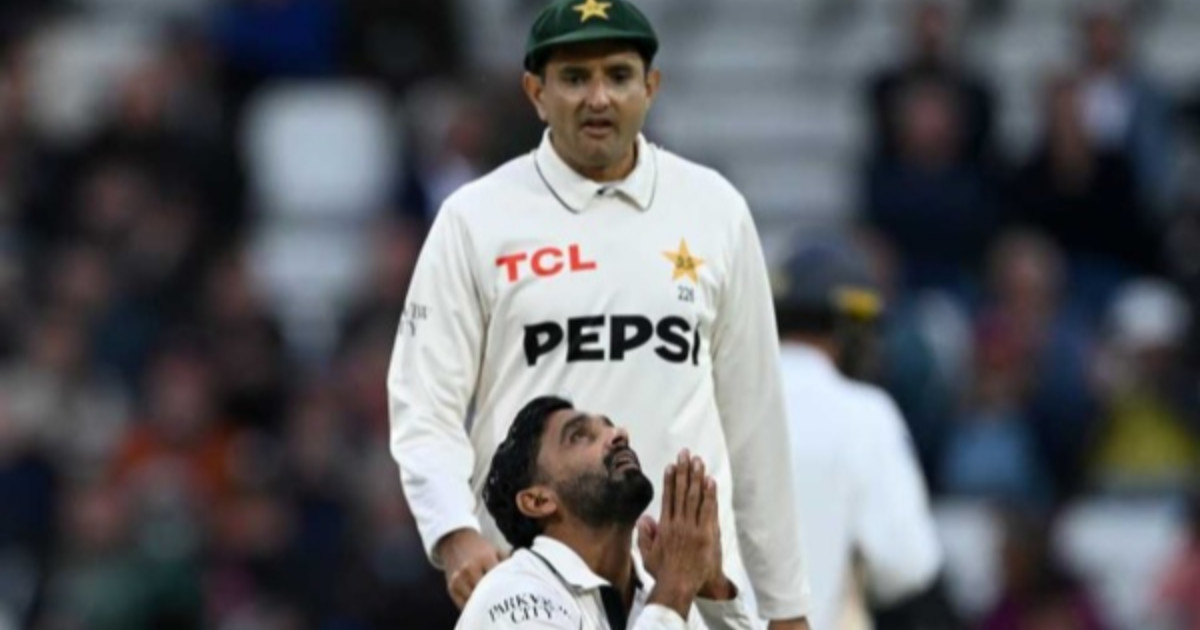
At Headingley England overwhelmed Pakistan in under three days as Pakistan were bowled out for 171 and 135, with Ollie Robinson and Josh Tongue sharing 16 wickets; the crushing defeat exposed severe flaws across Pakistan's bowling, selection and fight.Summary
There is a particular species of humiliation that arrives not with a bang but with a stopwatch, and Headingley furnished Pakistan cricket with precisely such an annihilation yesterday: a Test match that required, when the rain had taken its cut and gone home satisfied, barely two and three-quarter days to complete, a morning session and more surrendered to weather on the second day, and the whole grim business finished before tea had been properly poured on the third.
England did not so much win this match as process it, the way a factory processes raw material: efficiently, without malice, and without the faintest need to break stride. Ollie Robinson and Josh Tongue shared sixteen wickets between them across the match, eight apiece, Joe Root's restored captaincy marking itself with the joint-second fastest victory of his sixty-six Tests in charge. Pakistan were bowled out for 171 in the first innings and 135 in the second, the whole wretched enterprise exterminated in 1,053 balls.
A rout measured in hours
One is entitled to ask, and this write-up intends to ask without the customary softening of professional courtesy, how a nation that once produced Fazal Mahmood, Imran Khan, Wasim Akram and Waqar Younis, even Sarfraz Nawaz and Mohammad Asif, now cannot occupy a cricket pitch in England for the length of a long weekend. Let the record state plainly what happened, because a plain statement is itself an indictment. England won the toss, put Pakistan into bat, and were undone not by any single devastating spell but by an accumulating, almost bureaucratic erosion: five wickets to Ollie Robinson, five to Josh Tongue, the sort of shared butchery that speaks less to individual brilliance than to a batting unit offering itself up in installments.
Abdullah Shafique, to his enormous credit, resisted: a sixth Test half-century, eighty-two deliveries of genuine application, arriving off the back of a warm-up fifty and an unbeaten 160 in the West Indies only weeks before, the innings of a batsman who has, alone among his colleagues, retained something recognisable as method. He and Imam-ul-Haq added ninety-one for the sixth wicket, a partnership rescued from the ruins of an early top-order collapse rather than built upon any foundation of security. It was, in other words, Pakistan's version of good news: a fine innings played into a crumbling house, the way one might admire the brushwork on a painting hanging in a burning building.
No consolation in the second innings
The second innings offered no such consolation. Saud Shakeel, of whom more will be said shortly, fell to a piece of what the match reports charitably termed ‘funky captaincy’, a deep-set fielder stationed by Root exactly where Shakeel's careless flick off the toes would find him, the sort of dismissal that indicts preparation as much as execution. Shan Masood, ostensibly the senior professional in this fragile order, pushed too hard at a length ball and departed in the same over that so nearly claimed a hat-trick. Tongue took four wickets in eleven balls, then three more in twenty-two, the innings folding not with drama but with the dull inevitability of a structure whose load-bearing walls had already been quietly removed. Jofra Archer, it should be noted for the sake of honest record-keeping rather than the convenient mythology already forming around this match, actually bowled poorly in the first innings, wayward enough to be withdrawn after two overs, a bowler still finding his rhythm after a diet of white-ball cricket before ‘topping and tailing’ the second innings with sufficient menace to claim three wickets across the match. The intimidation this Pakistani order suffered was real, but it should be attributed honestly: less to Archer's specific hostility on this occasion than to a batting unit that had already, by its own technical and temperamental deficiencies, made itself intimidatable by whichever fast bowler happened to be standing at the top of his mark.
Consider, first, Imam-ul-Haq, whose continued presence in this touring party remains one of Pakistani cricket's more durable mysteries, not because he lacks all merit, but because the selection rationale offered for his inclusion has never risen above the vaguely gestural. He is, by common and rarely contradicted report, close to the captain in a manner selection committees the world over have learned to be wary of; whether that proximity has purchased him a place a purely runs-based audit would not support is a question this essay is not the first to ask, and will certainly not be the last.
A touring party is meant to represent the best fifteen or sixteen cricketers a nation can assemble for the specific examination English conditions pose. When the composition of that party instead advertises comfort and familiarity over hard-nosed recent form, the selectors have not built a team; they have curated a social arrangement, and English bowling attacks have shown no inclination to respect the distinction.
The erosion of Saud Shakeel’s method
Then there is Saud Shakeel, whose decline is worth dwelling upon at length precisely because it need not have happened at all. Here was a red-ball batsman of genuine, demonstrated class, a player equipped, unusually among his contemporaries, with the technique and temperament to play high-quality spin with real assurance, a craftsman whose Test batting once carried the unmistakable stamp of a serious cricketer building a serious career. And then, somewhere in the last eighteen months, the focus visibly shifted: an attempt to forge a parallel career in Twenty20 cricket, a discipline demanding an entirely different set of reflexes, a different relationship with risk, a different dynamics of the bat swing altogether.
The consequence has been not a broadening of his game but a quiet, corrosive erosion of the very method that made him valuable in the first place. The numbers are not flattering and do not require embellishment: across his last sixteen innings, stretching back to January 2025, Shakeel has managed 317 runs at an average of 19.81, with only two half-centuries to show for it, a collapse in output so severe, and so exactly mirrored by his tame dismissal at Headingley, that it reads less like misfortune than like documented cause and effect. A middle-order batsman who once threatened permanence has become, within two years, a batsman whose selection now requires justification rather than assumption.
Azan Awais presents a sadder, more open-ended case, precisely because the verdict on him is not yet fully written. This essay confesses to having believed, before this series began, that English conditions would prove the making or the breaking of him, that a young opener with genuine attacking method, unafraid to play his shots even in the corridor where older heads counsel patience, would either discover in Headingley's grey light the substance beneath his promise or be found, briefly and correctably, wanting. So far, on the evidence available, he appears broken rather than made: a talent that has met the moving Dukes ball and, for now, come away diminished by the match rather than sharpened by it. Whether this proves a permanent decision or just a difficult first phase remains genuinely open, but the early returns offer little comfort to those who hoped this tour would announce him.
Rizwan’s method turns to guesswork
Mohammad Rizwan's struggles complete this quartet of unravelling method, and they are, if anything, the most puzzling, because Rizwan built his reputation on a compact, unfussy technique ideally suited to exactly these conditions. What has followed him into this English summer instead is noise, footwork that arrives a fraction late, a trigger movement that seems to change from innings to innings, often falling forward, the visible uncertainty of a batsman who has accumulated too many voices in his ear and too few clear answers from within. His recent run of Test scores does not require detailed rehearsal here; it is outrageous chiefly in its contrast with what came before, a wicketkeeper-batsman who once offered Pakistan's most reliable middle-order method now offering something closer to guesswork.
Around this collapsing batting order, Pakistan's fast bowling can, at its most generous assessment, be termed pop-gun artillery, persistent, occasionally accurate, entirely lacking the sustained hostility that troubles a settled English top order across a full and testing spell. Only Ali Usman, the left-arm orthodox spinner, appeared genuinely to be syncing into the flows and demands of Test cricket, a rare note of encouragement in an attack otherwise notable chiefly for its exhaustion by the fourth session of any given day. That a touring seam attack in English conditions should find its most convincing performer in a slow left-armer tells its own quiet story about where this bowling group's actual competitive advantage now lies, and how little that advantage resembles the fearsome fast-bowling inheritance this country once took for granted.
Broad’s verdict survives the evidence
Into this wreckage stepped Stuart Broad, ahead of the series, with a verdict delivered in the flat, unadorned language of a man entirely confident he would not be contradicted by events: "They are a poor side, they are not a really good side." England, he ventured, should win the series three-nil, and comfortably. It was not a subtle assessment, and it was not intended to be. What followed at Headingley did not just fail to contradict Broad's brutal forecast; it actively confirmed it, with interest, inside three days.
What makes this whole sorry episode still more instructive is the character of the defence Pakistan mounted, not on the field, where no defence was mounted at all, but in the press. It fell, of all people, to Salman Butt to take up Pakistan's cause: a man of genuine cricketing intelligence, a shrewd and frequently perceptive analyst, now aligned with the board's own apparatus, who pushed back at Broad by pointing, not unreasonably, to England's own repeated capitulations in Australia five-nil whitewashes, no series win Down Under in over a decade and to the historical asymmetry of a team that had, in an earlier and more dangerous era, faced a Pakistani attack of genuine hostility rather than the gentle medium pace England now sometimes encounters from touring sides.
Butt's specific rebuttals were not without their own logic; his broader instinct, however, was the wrong one entirely. You cannot answer a true and demonstrated weakness with a whataboutism concerning a rival's away form in a different hemisphere. Broad's charge was not that England were flawless. He charged that this specific Pakistani side, assembled by this specific set of selectors, was not good enough, and the scoreline at Headingley did not only fail to rebut that charge; it also delivered it a standing ovation.
Defending the institution instead of diagnosing it
This is the deeper rot this article wishes to name plainly: the reflex, now embedded at every level of Pakistan's cricketing establishment, to defend the institution rather than diagnose it. When a respected former captain speaks an uncomfortable truth about a touring party's quality, the correct response is not indignant rebuttal but honest audit. You do not get to select carelessly, indulge proximity over form, prioritise white-ball ambition over red-ball method, and then complain when an old adversary, however impolitely, states the obvious. You get, as any selector anywhere in the cricketing world eventually learns, exactly as good a team as you select. To blame the players for a collapse substantially engineered in the selection room is not merely unfair; it is a documented case of intellectual dishonesty, dressed up as loyalty.
It was not always thus, and it is worth remembering, briefly and without indulgent nostalgia, that Pakistan once toured England and returned with genuine credit even when the scoreline did not always cooperate. In 1954, a country not yet three years old won at the Oval on its maiden visit, the first side in the history of the game to manage the feat. In 1971, Zaheer Abbas's 274 at Edgbaston was denied outright victory only by rain, a near-miss of real substance rather than just a consolation. The dour, defensive draws of 1974 at least held their ground rather than surrendering it. Mohsin Khan's imperious double-century at Lord's in 1982 arrived in a losing cause but announced a team rebuilding with genuine intent. By 1987, under Imran Khan, that intent had matured into Pakistan's first-ever series victory on English soil. The reverse-swing mastery of Wasim Akram and Waqar Younis carried the side to further series wins in 1992 and 1996, and even as late as 2001, under Waqar's own captaincy, Inzamam-ul-Haq's twin masterclasses secured a hard-fought drawn series against an England side finding its own feet. This is not the record of a cricketing nation congenitally incapable of competing in England. It is the record of a nation that, for the better part of half a century, generally could.
Individual brilliance within collective decline
What has followed since has been, with only occasional and increasingly rare exception, a story of individual brilliance embedded within collective decline, a Mohammad Yousuf scoring 631 runs in a losing, controversy-scarred 2006 series; a Misbah-ul-Haq dropping for celebratory press-ups at Lord's in 2016 even as the series finished drawn rather than won. Pakistan has continued, sporadically, to produce cricketers of genuine world-class. What it has stopped producing, with any reliability, is a team, a coherent, well-selected, properly prepared collective in which individual talent compounds rather than merely coexists with institutional dysfunction. Headingley 2026 is not an aberration in this longer story. It is its logical, entirely foreseeable conclusion.
When criticism needs no embellishment
There is a particular and uncomfortable irony worth noting here, because this essay has elsewhere had to observe how frequently the English cricketing press has, across the decades, reached first for controversy and framing rather than honest cricketing analysis when confronted with a struggling or a threatening Pakistani touring side, ball-tampering allegations deployed as much to unsettle as to adjudicate, reverse swing treated with more suspicion than admiration, whole tours remembered for their scandals rather than their cricket.
On this occasion, however, that old reflex has simply not been required. Broad did not need to manufacture a controversy or frame an injustice; he needed only to state, in the plainest terms available to him, what any honest observer of this touring party could already see for themselves. When the criticism is this accurate, manufacturing grievance becomes entirely unnecessary, a genuinely damning marker of how far the substance of the team itself has fallen, that no exaggeration was required to diminish it.
A narrative written by the scorecard
The seasoned voices of the English press box, men who have watched Pakistan tour this country across four decades and more, who remember Wasim and Waqar reducing English batting orders to guesswork, who covered the ball-tampering storms and the spot-fixing disgrace and the slow, patient rebuilding under Misbah, did not need to invent a narrative this time either. The narrative wrote itself, in overs rather than column inches, in a scorecard that required no interpretation. That is, perhaps, the cruellest indignity of all: not that Pakistan was criticised unfairly, as it so often has been across this long and complicated cricketing relationship, but that on this particular occasion, in this particular English August, there was nothing unfair left to say.
The men now presiding over this decline, in various capacities across the board's coaching and selection apparatus, carry names that once commanded genuine respect in this country's cricketing memory: Aaqib Javed, Misbah-Ul-Haq, Asad Shafiq, Sarfraz Ahmed, Wahab Riaz among them. That so many capable former cricketers should now preside, collectively, over policies that have reinforced rather than arrested this decline is perhaps the most damning detail of all, proof that talent as a player confers no automatic wisdom as an administrator, and that institutional dysfunction can survive, and even flourish beneath, the stewardship of men who once knew exactly what a properly functioning Pakistani cricket team looked like from the inside.
The choices behind the defeat
Pakistan cricket was not conquered at Headingley. It was not undone by superior resources, or by conditions it could not reasonably have prepared for, or even, in truth, primarily by Jofra Archer's reputation or Josh Tongue's seam movement, formidable as both were. It was undone by choices made long before a ball was bowled in Leeds, choices about who to select and why, about which format to chase and at what cost to the other, about which uncomfortable truths to confront and which to defend against instead of absorbing.
A nation that once out-thought and outlasted England on its own soil, that produced Fazal and Imran and Wasim in successive generations, has not been conquered from without. It has been slayed from within, by its own hand, one indefensible selection and one deflected criticism at a time, and until that hand is stayed, no amount of individual brilliance, however genuine, will be enough to save it.
ABOUT THE WRITER: Dr. Nauman Niaz, a postdoctoral scholar (Oxford) and recipient of Pakistan's Tamgha-i-Imtiaz for sports broadcasting and journalism, has covered 54 international cricket tours and three ICC Cricket World Cups. He has written more than 3,700 articles, authored 19 books, including the official history of Pakistan cricket, Fluctuating Fortunes, and is the Sports Editor at JournalismPakistan.
Key Points
- England completed a dominant win at Headingley inside three days.
- Pakistan were dismissed for 171 and 135 across the two innings.
- Ollie Robinson and Josh Tongue shared 16 wickets between them.
- Joe Root's captaincy oversaw one of his fastest Test victories.
- The result highlighted systemic weaknesses in Pakistan's bowling and resilience.
Key Questions & Answers
What happened at Headingley?
England completed a comprehensive Test win in under three days as Pakistan were bowled out for 171 and 135, leading to a heavy defeat.
Who were the key performers?
Ollie Robinson and Josh Tongue dominated with the ball, sharing sixteen wickets across the match.
Why is this result significant for Pakistan?
The rout underlined persistent problems in Pakistan's bowling, selection and ability to compete for the full duration of a Test match.
What are likely consequences after this loss?
Expect scrutiny of bowling combinations, selection decisions and preparation as Pakistan seek to address the structural issues exposed.
Ask AI: Understand this story your way
AI EnabledDig deeper, ask anything — get instant context, background, and clarity.
Disclaimer: This feature is powered by AI and is intended to help readers explore and understand news stories more easily. While we strive for accuracy, AI-generated responses may occasionally be incomplete or reflect limitations in the underlying model. This feature does not represent the editorial views of JournalismPakistan. For our full, verified reporting, please refer to the original article.