
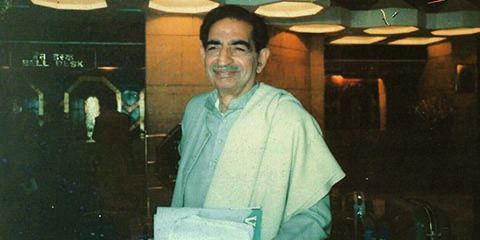
Minhaj Barna (1925-2011)
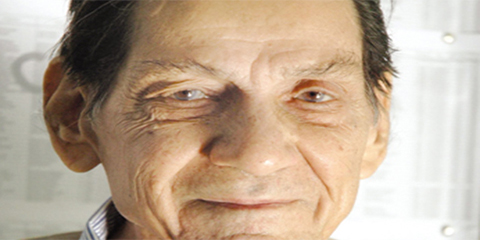
The death of Minhaj Barna in Rawalpindi at the age of 87 on January 14, 2011 marked the end of an era.Even journalists who had never met him in person were familiar with his name and his status as the founder of the trade union movement for newspaper employees in the country.
Barna commanded huge respect as the founder of the Pakistan Federal Union of Journalists and the All-Pakistan Newspaper Employees Confederation. He played a key role, in the early 1970s, in establishing a viable wage structure for newspaper staffers.
He was more than a union activist, however. From 1977 to 1988, he led the journalists’ movement against repressive policies of Gen Ziaul Haq with great courage. His leadership kept the media united.
A chant among his followers Tere saath marna, there sath jina Minhaj Barna became the battle cry throughout the encounter between him and censoring authorities.
In life he was considered a legend and his death grieved thousands of media personnel and press workers. To both, he was a great leader and always worked for their welfare.
He also published a book of poetry, Marsia: Chouthay Satoon Ka, elegy of the Fourth Estate which is more or less a sequel to Zameer Niazi’s study lamenting the curbs placed on free press by authoritarian governments.
Barna became interested in upholding freedom of speech as a student in pre-Independence New Delhi of Jame Millia. He joined the All-India Youth Federation and began to take interest in the Communist Party.
His career started with Urdu newspaper Inqilab at Bombay (now Mumbai). After Independence Barna came to Pakistan and started as a journalist anew by turning to English press and became famous as a fierce trade union leader upholding the cause of press workers and journalists.
At one time he led a 10-day strike against low wages during which no newspaper could be published. He led a hunger strike to keep alive the Pakistan People’s Party newspaper Musaawat but could not keep it from folding up. – The News; JournalismPakistan.com

Asaf Jilani
Asaf Jilani was born in Aligarh in 1934. He got his primary education at Jamia Millia Islamia in Delhi where Dr. Zakir Hussain was Shaikh ul Jamia. Dr. Hussain later became the third President of
Ahmed Ali Khan (1924-2007)
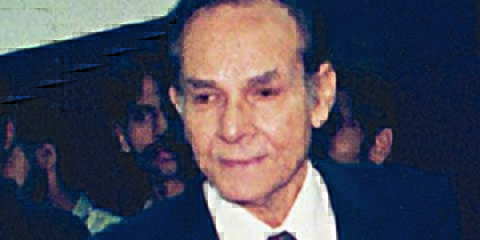
Born in 1924 in Bhopal, Ahmed Ali Khan's association with Dawn began in Delhi in 1946 and ended in Karachi in 2004. He remained with the newspaper for nearly 42 years - 28 of them as editor
Yawar Hayat (1943-2016)
Born on October 18, 1943, Yawar Hayat is celebrated as one of the chief architects of Pakistan Television (PTV). The son of Brigadier Azmat Hayat Khan, he was the grandson of Sir Sikandar Hayat Khan
Farooq Mazhar
Farooq Mazhar was Pakistan's most prominent sports journalist, television commentator and former Editor of The News. He died on April 28, 2001 in Bahrain enroute to America after a short illness.
Riaz Batalvi (1937-2003)
Riaz Batalvi, a journalist, became a writer and a dramatist, giving PTV two of its best productions - Aik Haqeeqat, Aik Afsana and Dubai Chalo. Born as Riazul Hasan in February 1937 in Gurdaspur

Altaf Husain (1900-1968)
One of the pioneers of journalism in Pakistan, Altaf first came to notice with his forceful advocacy of Indian Muslims' case in colonial India through articles in the press (as a government servant he
Omar Kureishi (1928-2005)
Omar Kureishi was a distinguished Pakistani writer. He worked in advertising, aviation and journalism, writing for many newspapers, including Dawn, The Pakistan Times, Morning News and The Guardian, London.
Mazhar Ali Khan (1918-1993)
Mazhar Ali Khan served as the Editor-in-Chief of the newspapers Pakistan Times from 1951 to 1959, Dawn in 1972, and the journal Viewpoint. He graduated from the Punjab University in Lahore in 1939
Newsroom

Pele to Messi: How World Cup finals wrote football's greatest story
June 15, 2026 From Pele to Messi, World Cup finals shaped football's global story, tracing triumphs and heartbreaks and showing how the game became a shared language.

Press freedom review: From jail cells to cyberspace, threats to journalists multiply
June 14, 2026 Press freedom faces mounting challenges worldwide as journalists confront arrests, legal pressure, cyberattacks, online harassment, deportations, and reporting restrictions across multiple countries.

The right to know: Comparing access-to-information laws across Asia
June 14, 2026 Across Asia, RTI laws range from effective tools for journalism and accountability to paper laws weakened by bureaucracy, broad exemptions and poor enforcement.

Open-Source Intelligence (OSINT): How journalists verify information in the digital age
June 14, 2026 OSINT helps journalists verify social media, photos, videos, maps and public records to improve reporting accuracy and detect misinformation.

Ethiopia expels French journalist after Tigray reporting
June 13, 2026 Ethiopia expelled French reporter A. Passilly after Tigray reporting, drawing criticism from press groups as retaliatory and damaging to press freedom.
Popular Stories

Why publishers want AI companies to pay
Jun 06, 2026