
Test cricket's greatest brotherhoods: The complete history
JournalismPakistan.com | Published: 4 August 2026 | Dr. Nauman Niaz (TI)
Join our WhatsApp channel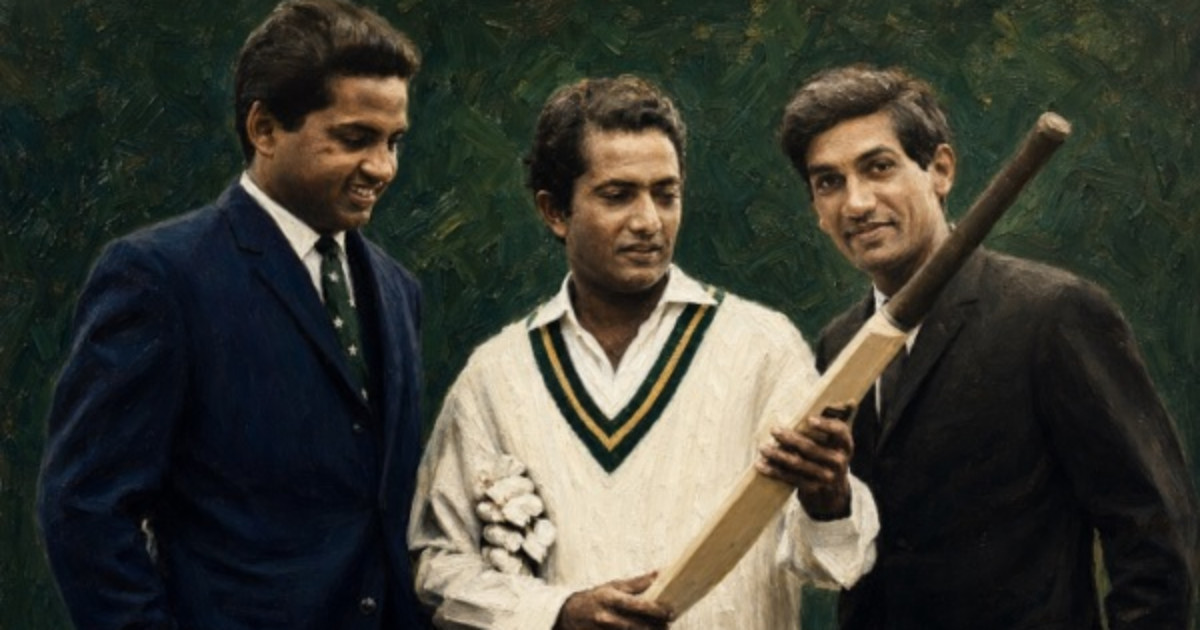
This comprehensive history records every pair and family of brothers who have played Test cricket since 1877, spotlighting households with multiple internationals and the varied stories of sibling partnerships, rivalries and cross-national representation.Summary
As Ubaid Shah crossed the hallowed threshold of Test cricket, it was not just another debut adorned upon the ever-lengthening landscape of Pakistan's international game. It was, rather, the silent consummation of a family destiny, the completion of a circle first traced years earlier by his elder brother, Nasim Shah. Together they entered that most exclusive fraternity of cricketing kinship, becoming the eleventh pair of brothers to have represented Pakistan in Test cricket, a distinction that belongs not just to statistics but to inheritance itself, where talent descends like an heirloom and ambition passes silently from one generation to the next.
There is, perhaps, in the vast role-playing of organised sport, no companionship more naturally at home than brotherhood within the measured cadences of cricket. From the moment the inaugural Test match commenced at Melbourne in March 1877, the game has borne witness to this peculiar fraternity. Brothers have walked to the crease side by side, have followed one another across generations, have succeeded one another with scarcely an interval between careers, and, in the rarest and most poignant of circumstances, have even found themselves arrayed against each other underneath different national flags.
It is, so far as diligent enquiry permits, the most complete account yet assembled of every family in which two or more brothers have worn the coveted Test cap, arranged first according to the extraordinary households that produced three or four internationals before proceeding nation by nation through the larger fraternity of two-brother families.
The unparalleled Mohammad dynasty
No family occupies a loftier eminence in this remarkable fraternity than the Mohammads of Pakistan. They stand alone, untouched by comparison and unlikely ever to be equalled, for no other household in the long history of Test cricket has produced four brothers who each rose to represent their nation in the game's supreme arena. Wazir Mohammad, Hanif Mohammad, Mushtaq Mohammad, and Sadiq Mohammad transformed a single family into a dynasty whose influence extended across almost a quarter of a century of Pakistan's formative Test existence. Their story belongs not just to cricket but to the cultural history of a young nation discovering its sporting identity.
Theirs was a household shaped by discipline, ambition, and remarkable athletic inheritance. They were the sons of the celebrated badminton champion Ameer Bee, and from that singular domestic environment emerged four cricketers whose collective contribution remains unparalleled. Wazir, the eldest, became the pioneer; Hanif, the second son, evolved into the architect of Pakistan's batting tradition; Mushtaq illuminated the game with exuberant brilliance; while Sadiq, the youngest, completed the extraordinary procession of brothers into Test cricket. A fifth brother, Raees Mohammad, ventured to the very threshold of international recognition, serving as twelfth man during only Pakistan's second home Test series, yet fate withheld from him the coveted cap that distinguished his siblings. Nor did the lineage conclude with that remarkable generation alone, for Hanif's son, Shoaib Mohammad, carried the family's inheritance into a second generation of Test cricket, ensuring that the Mohammad name became almost synonymous with Pakistan's earliest cricketing identity.
Hanif Mohammad, inevitably, towers over even such illustrious company. His monumental innings of 337 against the West Indies at Bridgetown in 1958 remains one of cricket's greatest monuments to endurance. Occupying the crease for an astonishing 970 minutes, he fashioned not only a triple century but an act of sustained resistance so extraordinary that, after more than six decades, it remains the longest innings ever played in the history of Test cricket. There have been innings of greater violence, others of greater fluency, but none have demanded such inexhaustible reserves of concentration and resolve. Time itself seemed to surrender before Hanif's patience.
Equally evocative was that unforgettable Karachi Test against New Zealand in 1969. On that singular occasion, Hanif, Mushtaq, and Sadiq appeared together upon the same field, creating one of the most remarkable tableaux in cricket's familial history. The match possessed an emotional symmetry that scarcely any novelist would have dared invent, for it marked the Test debut of the youngest brother and the farewell appearance of the eldest, Wazir Mohammad. One brother stepped into the light even as another quietly departed it. It was an afternoon upon which joy and melancholy embraced one another with uncommon tenderness, reminding all who witnessed it that cricket, for all its statistics and scorebooks, is ultimately a profoundly human narrative.
Families spanning more than one nation
If the Mohammads occupy the summit by virtue of numbers, the Curran family presents an altogether different curiosity. Here the story ceases to belong wholly to one nation and instead traverses political frontiers, demonstrating that cricketing inheritance may remain constant even when national allegiance diverges. Kevin Curran himself represented Zimbabwe, yet his three sons found their destinies unfolding beneath two separate flags. Tom and Sam qualified for England, owing in no small measure to the influence of their foster father, Allan Lamb. Tom established himself as a probing fast-medium bowler of intelligence and discipline, while Sam developed into a left-arm all-rounder whose accomplishments in limited-overs cricket frequently overshadowed his contributions within the longer form of the game. Ben, however, followed his father's original path and represented Zimbabwe itself. Thus a single household bestowed Test cricketers upon two nations simultaneously, anticipating a recurring theme that this document shall come across again before its conclusion: families divided not by affection but by geography and eligibility.
Australia's own contribution to this distinguished fraternity is embodied most memorably in the Chappells, whose surname has become inseparable from the nation's cricketing consciousness. Grandsons of the celebrated Test captain Vic Richardson, Ian, Greg, and Trevor Chappell each reached the highest level, although history has remembered them in markedly different ways. Ian captained Australia through the early 1970s with uncompromising authority, a leader whose stern pragmatism restored much of the side's competitive edge. Greg, perhaps the family's most naturally accomplished batsman, succeeded his elder brother as captain and amassed more Test runs than any Australian before him. Trevor, the youngest, has too often been reduced to a single unfortunate episode. Though he possessed a respectable Test career in his own right, public memory has attached him almost exclusively to the infamous underarm delivery bowled to Brian McKechnie under Greg's explicit instruction, an act that remains, more than four decades later, perhaps the most disputed captain's command ever issued upon a cricket field. Such is history's occasional injustice: entire careers may become overshadowed by a solitary moment.
England's celebrated "Three Graces" occupy an altogether different place within the game's mythology. Edward, Fred, and William Gilbert Grace opened this entire account, for all three brothers represented England together in its first home Test match against Australia at The Oval in 1880. Edward Mills Grace and George Frederick Grace each played but a single Test; William Gilbert Grace scarcely requires introduction. He stands among cricket's founding colossi, the first true genius of the sport, his extraordinary career extending across forty-four years of first-class cricket. His appearance at the crease during that August afternoon established not just a personal legacy but a pattern of familial participation that subsequent generations would emulate across every Test-playing nation.
The Hearne family, meanwhile, offers perhaps the rarest narrative contained within the whole history of Test cricket. Alec Hearne and George Hearne remained steadfast servants of England throughout their international careers. Frank Hearne, however, emigrated to South Africa, qualified to represent his adopted country, and during the Cape Town Test of 1891–92 found himself confronting his own brothers across the divide of international competition. It remains the only occasion in the annals of Test cricket upon which brothers have opposed one another while representing different countries in the same match. Around this extraordinary episode grew an even greater dynasty, strengthened further by cousins J. T. Hearne and J. W. Hearne, ensuring that no family has contributed more broadly to Test cricket than the Hearnes.
Pakistan's other remarkable cricketing households
If the Mohammads stand alone in the history of Test cricket by virtue of their extraordinary fraternity of four, and the Chappells have long occupied Australia's cricketing imagination, there remain other households whose stories, though perhaps less celebrated, possess an equal claim upon the historian's affection. Cricket has never been merely a procession of great individuals; it has often flourished through families in whom the game seemed almost hereditary, as though instinct itself travelled from one generation to the next with the quiet certainty of inheritance. In such households the youngest brother rarely discovered cricket independently. Rather, he inherited worn bats, polished boots, and impossible expectations, each passed down with equal tenderness and severity.
Among Pakistan's own remarkable cricketing households, the three Elahi brothers occupy a distinguished, if sometimes understated, place. Manzoor Elahi was spoken of with unmistakable admiration by Imran Khan himself, who regarded him as the hardest striker of a cricket ball he had ever encountered. Such praise, emanating from one who had witnessed generations of extraordinary batsmen, elevates Manzoor beyond mere statistical remembrance into the realm of cricketing folklore. His power became part of domestic legend, his stroke-making spoken of with the affectionate exaggeration that often accompanies genuinely exceptional gifts.
His brother Zahoor Elahi experienced a markedly different international existence. His Test career occupied no more than a fleeting three-month interval during the 1996–97 season before giving way to a long and honourable life in league cricket and coaching. Yet brevity has never been the sole measure of significance. Many cricketers have served the game more enduringly beyond the international arena than within it, and Zahoor's subsequent contribution ensured that his association with cricket extended far beyond the narrow confines of his Test appearances.
The youngest brother, Saleem Elahi, emerged as perhaps the most naturally gifted batsman of the three. His arrival upon the international stage was immediate and unforgettable. Becoming the first Pakistani and only the fourth cricketer anywhere in the world to score a century on One-Day International debut, he completed his hundred with characteristic audacity, striking a six before he had even accumulated sufficient first-class experience to complete the traditional apprenticeship expected of international batsmen. It was a beginning that promised immeasurable heights, even if destiny would ultimately chart a more modest course.
If the Akmals came to define much of Pakistan's cricket during the first two decades of the twenty-first century, Sri Lanka's Ranatunga family, South Africa's Tancreds and Zimbabwe's Masakadzas similarly demonstrated how cricketing excellence could flourish across generations and continents.
Australia's great brotherhoods and Bangladesh's cricketing family
Among Queensland's fertile contribution to Australian cricket during the 1950s stand Ken and Ron Archer, brothers whose careers belonged to an era when interstate cricket served as the principal nursery of the Baggy Green. They emerged from that rich provincial tradition which supplied Australia with an abundance of cricketers whose reputations rested less upon celebrity than upon reliability. The Archers formed part of the deep and enduring current of cricketing families through whom Australian cricket quietly replenished itself during the post-war decades.
The Bannerman brothers belong not just to Australian cricket but to the game's very genesis. Alec and Charles were contemporaries of the Gregory family during the earliest formative years of Test cricket and numbered among the first brothers ever to appear in the format. Their careers unfolded when every Test match represented unexplored territory and when the conventions that now define international cricket were themselves still taking shape. To write of the Bannermans is to write of cricket's infancy, when history itself remained unwritten, and every appearance upon the field established precedents for those who would follow.
Australia's longest gap between brothers
Few fraternal relationships illuminate the changing generations of Australian cricket more elegantly than that of Jack and Richie Benaud. Their Test debuts were separated by no fewer than twenty years, the longest interval recorded between Test-playing brothers, an extraordinary measure of both longevity and changing eras. Richie Benaud transcended the boundaries of ordinary greatness. As captain, he led Australia in twenty-eight Test matches with calm intelligence and understated authority, reshaping not just the team's fortunes but the very spirit in which Australian cricket approached victory. Retirement only elevated his stature further, for behind the microphone he became perhaps the most trusted and universally admired broadcasting voice the game has ever known. His measured observations, delivered with economy and quiet wit, educated generations of cricket lovers across the world.
Jack, by contrast, experienced a shorter and more turbulent international career. Capped only three times, he nevertheless produced an innings of unforgettable courage, scoring 142 in only his second Test despite already knowing that he had been omitted from the team selected for the following match. There is a peculiar nobility in such performances, fashioned not from security but from resignation, and Jack's finest innings remains one of Australian cricket's quieter acts of defiance.
George and Walter Giffen emerged from South Australia's vigorous cricketing culture during the robust Victorian age. They belonged to the generation that strengthened Australia's cricketing foundations during the final decades of the nineteenth century, when colonial rivalries gradually evolved into a coherent national identity.
Few families possess a claim upon cricketing history equal to that of the Gregorys. Dave and Ned Gregory, two among six cricket-playing brothers, entered immortality together by making their Test debuts in the very first Test match ever contested, at Melbourne in March 1877. Their simultaneous appearance transformed a single family into an inseparable part of cricket's foundational narrative.
The family's contribution did not conclude there. Ned Gregory's own son, Syd Gregory, and his son-in-law, Harry Donnan, subsequently extended the Gregory presence within Australian cricket, ensuring that successive generations continued to enrich the national side. Few households have sustained such prolonged intimacy with Australian cricket's earliest history.
More Australian cricketing dynasties
The Harvey brothers represented Australia together throughout the 1950s, an era often regarded as one of Australian cricket's golden ages. Neil Harvey became one of the game's supreme left-handed stylists, his batting combining grace with fearless adventure, while Merv contributed honourably beside him. The family's devotion to cricket extended beyond playing alone, for a third brother, Mick Harvey, achieved distinction not with bat or ball but as a respected Test umpire. Thus, within one household, nearly every aspect of cricket's life found representation.
The Marsh brothers inherited cricket almost as a birthright, being sons of Australia's dependable Test opener Geoff Marsh. Shaun announced himself spectacularly by scoring 142 on Test debut against Sri Lanka in 2011, immediately vindicating the expectations that had accompanied his surname since childhood. Mitchell followed a different path, developing into the genuine all-round cricketer his father had once aspired to become. Together they prolonged yet another distinguished Australian cricketing lineage into a new century.
Charlie and Bob McLeod belonged to the same pioneering generation as the Giffens and Bannermans, inhabiting Australia's crowded first quarter-century of Test cricket.
Few stories illustrate the unpredictable dynamics of modern cricket more vividly than that of Darren and James Pattinson. Darren, born in England but raised principally in Melbourne, was unexpectedly summoned from comparative county obscurity to represent England in a single, famously controversial Test match against South Africa in 2008.
His younger brother James, meanwhile, grew to maturity entirely within Australia following the family's migration and became an established Australian fast bowler from 2011 onwards, eventually representing his adopted nation in seventeen Test matches. Long before international cricket separated their careers, the brothers had sharpened one another's skills in the family backyard, hurling tape-ball deliveries with the merciless competitiveness known only to siblings. Darren himself later confessed, with characteristic humour, that many of those youthful deliveries had been aimed directly at his younger brother's head. Such recollections remind us that behind every polished international career lies an untidy childhood filled with laughter, bruises, and relentless rivalry.
Albert and Harry Trott provide another striking example of divided international allegiances. Albert first represented Australia before subsequently qualifying to play for England, while his elder brother Harry remained loyal throughout to the country of their birth. Unlike the Hearne brothers, however, the Trotts never found themselves opposing one another in Test cricket. Instead, theirs became a subtler illustration of cricket's evolving imperial landscape, where a single family might legitimately belong to more than one nation without ever becoming adversaries upon the field.
The Victorian brothers Hugh and John Trumble belonged to the same rich reservoir of colonial-era Australian cricketing families that also produced the Bannermans and the Giffens. Their careers reinforce a striking truth that echoes repeatedly throughout this chronicle: Australia's earliest cricket was not fashioned by isolated individuals but by interconnected families whose influence extended from one generation to another.
The Waugh twins: A record-breaking partnership
If any modern brothers may claim comparison with cricket's greatest familial partnerships, it is surely the Waugh twins. Between them they amassed an astonishing 296 Test appearances, the greatest combined total achieved by any pair of brothers representing a single country. Such numerical magnitude alone secures their place in history, yet statistics scarcely convey the profound contrast in their cricketing personalities.
Steve Waugh symbolized relentless determination. As captain, he cultivated an Australian team defined by uncompromising competitiveness and famously dismissed aesthetic concerns with the blunt observation that what ultimately mattered was "how many runs you get," not the elegance with which they were scored. His younger twin, Mark, represented almost the opposite philosophy. Few batsmen have ever appeared so effortlessly graceful, his stroke-play so naturally fluent that it occasionally invited the unfair accusation of indolence. Watching Mark Waugh bat was to witness elegance distilled into movement; watching Steve bat was to observe resilience transformed into greatness. Together they remain perhaps the finest demonstration that identical birth need never produce identical character.
Australia's remarkable procession of cricketing brothers reveals something deeper than coincidence. Across nearly one hundred and fifty years, the Baggy Green has repeatedly passed through families as naturally as it has passed through generations. Fathers inspired sons, elder brothers instructed younger, and household rivalries forged international excellence long before selectors ever intervened. In Australia, cricket has rarely been just a game; it has often been a family inheritance, transmitted with quiet inevitability from one brother to another.
Bangladesh's famous cricketing brothers
Among Bangladesh's foremost cricketing families stand Nafees and Tamim Iqbal, nephews of the former national captain Akram Khan. It was Nafees who first opened the family's account in Test cricket, paving the way for his younger brother's far more celebrated career. Tamim Iqbal matured into one of the finest batsmen Bangladesh has produced, becoming the cornerstone of the nation's Test batting for almost two decades. His fearless stroke-play and unwavering commitment transformed him into the standard by which subsequent Bangladeshi opening batsmen would inevitably be judged. Nafees's own international career proved considerably shorter, yet history ought never to overlook pioneers only because successors attained greater distinction. Every enduring cricketing lineage begins with a first cap, and within the Iqbal family that honour belongs to Nafees.
The Ashes summer of 1997 produced one of the rarest manifestations in Test history when Adam and Ben Hollioake made their Test debuts together in the Fifth Test. Only the third pair of brothers ever to receive their maiden Test caps in the same match, they immediately assumed a unique place within cricket's fraternal chronicle. Shared debuts are among the game's rarest blessings, allowing two brothers to begin their international journeys upon precisely the same afternoon, beneath the same sky, before the same crowd.
England's cricketing brothers and India's enduring family legacies
The Gilligan brothers belonged to England's distinguished cricketing generation of the 1920s. Arthur Gilligan captained England during the celebrated Ashes tour of Australia in 1924–25, his leadership reflecting both tactical intelligence and the gentlemanly ideals of his age. Harold, though enjoying a less prolific international career than his elder brother, nevertheless secured his own honourable place within England's Test history, ensuring that the Gilligan name occupied a respected position throughout one of English cricket's defining decades.
Few English cricketing brothers displayed more contrasting public personalities than Tony and Ian Greig. South African by birth yet English by international allegiance, the brothers represented England with distinction while retaining unmistakable echoes of their African upbringing. Tony remained the quieter figure, content largely to pursue his cricket without attracting extraordinary attention. Ian, by contrast, became one of the defining personalities of modern cricket. As England captain during the mid-1970s, he brought uncommon charisma and fearless ambition to the role, while his later involvement in the creation of World Series Cricket permanently altered the commercial and professional landscape of the game. Few cricketers have influenced cricket's evolution quite so profoundly beyond their own playing careers.
The Gunn brothers represented Nottinghamshire with distinction before carrying their talents into England's Test side. George, particularly, enjoyed a long and deeply admired career that extended across both the Edwardian period and the difficult years following the First World War. His longevity reflected not merely technical excellence but remarkable adaptability across rapidly changing eras of cricket.
England's enduring cricketing families
The Worcestershire brothers Dick and Peter Richardson belonged to England's cricketing generation of the 1950s. Peter emerged as the more accomplished Test cricketer, yet together they continued England's long tradition of fraternal representation within the national side, adding another distinguished surname to an already extensive catalogue.
Chris and Robin Smith carried another distinctly South African inheritance into English cricket. Born in South Africa before qualifying to represent England, they demonstrated once more how cricket frequently transcends political geography while remaining deeply rooted in family tradition. Chris, the elder brother, preceded Robin into England's Test side, their combined careers illustrating the increasingly international character of modern cricketing families.
The Studd brothers belonged to one of Victorian England's most distinguished sporting and missionary families. Charles and George each appeared during cricket's earliest formative decade, contributing to the foundations upon which English Test cricket gradually established itself. Though later generations inevitably overshadowed their individual achievements, their place within cricket's pioneering years remains secure.
The Tyldesley brothers exemplified Lancashire cricket at its finest. Johnny represented England in thirty-one Test matches between 1899 and 1909, while his younger brother Ernest appeared in fourteen Tests from 1921 until 1929. Contemporary obituarists affectionately remarked that Ernest had been nurtured under "the boy's guidance and tuition" of his elder brother, a phrase that captures the essence of cricketing inheritance perfectly. Before selectors ever recognised younger brothers, elder brothers had already become their first coaches, sternest critics, and most devoted companions.
The Wilson brothers belonged to cricket's earlier amateur tradition. Of the two, Rockley Wilson attained the greater distinction through his achievements as an accomplished Kent and England off-spinner, while Clem contributed alongside him to another phase in England's rich tradition of cricketing families.
Modern England's twin brothers
Identical twins from Somerset, Jamie and Craig Overton offer another fascinating variation upon cricket's recurring theme of brotherhood. Craig established himself first within England's Test side before Jamie's own cap completed a matching pair seldom encountered even within this already remarkable documentation. Identical in appearance yet distinct in cricketing personality, they remind us once more that genetics may shape opportunity without ever determining destiny.
India's pioneering cricketing families
The sons of the legendary Lala Amarnath, Mohinder and Surinder, inherited cricket almost as a family obligation. Both proudly represented India in Test cricket, while Surinder achieved the singular distinction of following his father by scoring a century on Test debut. A third brother, Rajinder, remained confined to first-class cricket, demonstrating once again how even within exceptional families destiny does not distribute opportunity equally.
Amar Singh and Ladha Ramji belonged to India's earliest Test-playing generation. Amar, especially, remains revered among historians as one of the finest fast bowlers of the pre-independence era, his all-round excellence placing him among the game's earliest genuine greats. His younger brother Ladha shared the family's proud contribution to India's formative cricketing years.
Bombay's rich cricketing tradition
Bombay's rich cricketing tradition produced Arvind and Madhav Apte, with Madhav emerging as the more accomplished Test batsman. Their careers reflected the city's extraordinary ability to nurture technically gifted batsmen whose influence extended far beyond domestic cricket.
Separated by an entire generation, Baloo and Subhash Gupte nevertheless belong to the same distinguished family. Baloo represented an earlier era as a batsman, while Subhash matured into one of India's greatest leg-spinners, his artistry with the ball earning admiration throughout the cricketing world.
The Madras brothers Kripal Singh and Milkha Singh each served Indian cricket with distinction. Kripal established himself as a genuine all-rounder throughout the 1950s and 1960s, while the family's cricketing tradition extended yet further when his own son continued the lineage within first-class cricket.
The Nayudu brothers and India's first Test family
Few surnames resonate more deeply within Indian cricket than Nayudu. C.K. Nayudu, celebrated as independent India's first Test captain in every practical sense, became one of the nation's earliest sporting heroes. His brother C.S. Nayudu proved an accomplished all-rounder in his own right, ensuring that the family's contribution extended beyond the singular brilliance of one extraordinary individual.
The Alis, Syed Wazir and Syed Nazir brothers, secured an everlasting place within Indian cricket simply by making their Test debuts together in India's inaugural Test match against England at Lord's in 1932. Their simultaneous appearance symbolised not only the beginning of two international careers but the birth of India's own Test journey.
New Zealand's cricketing dynasties and Pakistan's enduring brotherhood
Among New Zealand's most enduring cricketing dynasties stand Brendon and John Bracewell. Their significance extends beyond the accomplishments of two brothers alone, for the family thread continued into yet another generation when Brendon's son, Doug Bracewell, earned his own Test cap. Thus three generations of one household came to serve New Zealand in Test cricket, illustrating the remarkable continuity through which cricket often perpetuates itself. In the Bracewell family, the game became less a pastime than a hereditary vocation, transmitted from father to son with the quiet inevitability of inheritance itself.
The Crowe brothers inherited cricket through their father, Dave Crowe, himself an accomplished first-class cricketer. Yet it was Martin Crowe who ascended to extraordinary heights, becoming, in the judgement of many contemporaries, the finest batsman New Zealand had produced. His batting combined elegance with profound technical assurance, his stroke-play possessing an effortless authority that elevated him beyond statistics alone. Jeff, though often overshadowed by his younger brother's brilliance, nevertheless contributed honourably to New Zealand's Test history, reminding us that greatness within one family need never diminish the significance of another's achievements.
Few families have bestowed a greater gift upon New Zealand cricket than the Hadlees. Walter Hadlee's five sons became immersed in the game, yet it was Dayle and Richard who ultimately reached Test cricket. Richard Hadlee requires scarcely any introduction. By almost universal consent he remains the greatest cricketer New Zealand has ever produced, a fast bowler whose relentless accuracy, subtle intelligence, and unwavering competitiveness transformed not merely matches but the fortunes of an entire nation. His achievements became so exceptional that he was knighted for services to cricket while still an active international player, an honour of the rarest distinction.
A third brother, Barry Hadlee, represented New Zealand during the inaugural Cricket World Cup of 1975 and enjoyed a distinguished domestic career, though he never appeared in a Test match. Even so, the Hadlee household remains one of cricket's finest illustrations of sustained family excellence, its influence extending well beyond Richard's extraordinary individual achievements.
More New Zealand cricketing brothers
Matthew and Robbie Hart represented another phase in New Zealand's aristocratic tradition of cricketing brothers. Matthew established himself as the more accomplished Test cricketer, serving New Zealand with distinction as a left-arm spinner whose control and perseverance reflected the virtues long associated with New Zealand cricket. Robbie's own contribution, though less extensive, nevertheless secured the family's place within this distinguished fraternity.
The Horne brothers likewise carried their family name into New Zealand's Test annals. Matt enjoyed the longer international career, while Phil's own appearances proved considerably fewer. Yet every Test cap, whether earned once or a hundred times, enters permanently into cricket's history, and together the brothers added another respected household to New Zealand's growing catalogue of cricketing families.
Geoff and Hedley Howarth both captained with distinction at domestic level before representing New Zealand during the 1970s and 1980s. Their careers reflected a generation in which New Zealand steadily transformed itself from spirited underdogs into a side capable of competing consistently against cricket's established powers. Leadership, resilience, and quiet professionalism became hallmarks of both brothers, qualities that mirrored New Zealand cricket itself during those formative decades.
Identical twins Hamish and James Marshall carried into the new millennium yet another fascinating variation upon cricket's enduring fascination with brotherhood. Both earned Test caps during the early years of the twenty-first century, demonstrating once more that even identical birth seldom produces identical cricketing destinies. Shared beginnings frequently diverge into separate careers, each shaped by opportunity, circumstance, and individual temperament.
John and Murray Parker belonged to an earlier generation of New Zealand cricket, contributing during the country's gradual accumulation of Test-playing experience through the middle decades of the twentieth century. Their careers reflected the patient, almost methodical evolution of New Zealand cricket itself, where progress was seldom spectacular yet almost always enduring.
Pakistan's remarkable cricketing brothers
No pair of brothers carries a more melancholy distinction than Saeed and Younis Ahmed. Together they remain the only brothers in the entire history of Test cricket each to have received life bans from their own national board. Saeed's suspensions were rescinded within months on both occasions, while Younis suffered the consequences of participating in an unauthorised tour of apartheid South Africa, an exile that removed him from international cricket for seventeen years and one hundred and eleven days, the third-longest absence ever recorded. Their story serves as a poignant reminder that cricketing history is fashioned not only through triumph but equally through misfortune.
Imran Farhat established himself among Pakistan's finest opening batsmen of his generation and achieved the rare distinction of becoming only the second Pakistani, after Hanif Mohammad, to compile two triple-centuries in first-class cricket. His elder brother Humayun experienced a dramatically shorter Test career, confined to a solitary appearance. Yet even within that lone match he secured an extraordinary place in cricket's statistical history, remaining the only wicketkeeper ever to complete an entire Test career without effecting a single dismissal. Few records are quite so singular or likely ever to be repeated.
The Khan, Raja and Rana families
Among Pakistan's most beloved cricketing personalities stands Moin Khan. His defining contribution to national folklore arrived amid the emotional closing overs of the 1992 World Cup semi-final, yet his influence extended beyond victories alone. From behind the stumps, he is widely credited with coining the term "doosra" to describe Saqlain Mushtaq's revolutionary delivery, a phrase now permanently embedded within cricket's vocabulary.
His elder brother Nadeem Khan followed a less conspicuous path. A left-arm spinner, he appeared in only two Test matches before devoting much of his subsequent life to cricket administration.
Among Pakistan's most gifted batting families stand the Raja brothers. Wasim Raja, by almost unanimous judgement, possessed the finest natural stroke-play of his generation. Against the fearsome West Indian pace attacks of the 1970s and 1980s he averaged an astonishing 58.69, a figure unmatched by any contemporary batsman confronting the same formidable opponents. His younger brother Ramiz Raja followed him into the Test side and, in a remarkable coincidence, completed precisely the same number of Test appearances, fifty-seven each. Unlike Wasim, however, Ramiz would later captain Pakistan before eventually assuming the chairmanship of the Pakistan Cricket Board, extending his influence over the game long after his playing career had concluded.
The Rana brothers occupy a unique corner of Pakistan's cricketing narrative. Azmat and Shafqat themselves represented the national side, yet their family story reaches far beyond their own performances. Their brother, the celebrated umpire Shakoor Rana, became immortalised through his dramatic confrontation with England captain Mike Gatting during the Faisalabad Test of 1987. Even earlier family lore recounts how their ancestors sheltered a poor Hindu boy in Lahore during the 1920s, a child who would later become India's legendary Lala Amarnath.
Pakistan's eleven Test-playing brother combinations
Few cricketing families possess a historical narrative quite so rich or so unexpectedly intertwined with the destinies of two nations. So for Pakistan Wazir Mohammad, Hanif Mohammad, Mushtaq Mohammad and Sadiq Mohammad, Waqar Hasan and Pervez Sajjad, Wasim Raja and Ramiz Raja, Shafqat and Azmat Rana, Manzoor Elahi, Zahoor Elahi and Salim Elahi, Moin Khan and Nadim Khan, Saeed Ahmad and Younis Ahmad, Imran and Hamyun Farhat, Shaeen Afridi and Riaz Afridi, Nasim Shah and Ubaid Shah, Kamran, Umar and Adnan Akmal remain the eleven set of brothers having represented Pakistan in Tests.
West Indies, Zimbabwe, Ireland, Afghanistan and legacy of brotherhood
The history of West Indian cricket is itself a magnificent example, intertwining many islands, languages and traditions. Denis and Eric Atkinson belonged to the distinguished generation of the 1950s, representing another accomplished West Indies household whose contribution coincided with the period during which West Indies steadily evolved into one of the world's dominant cricketing powers.
The Cameron brothers pursued parallel careers as spin bowlers during the years immediately before and after the Second World War. Cyril and Robert Christiani both attained Test honours, while two additional brothers, Harry and Ernest, reached distinguished first-class careers without crossing the final threshold into international cricket. Their household therefore serves as another reminder that cricketing excellence often extends beyond the narrow boundaries of Test selection.
Bryan and Charlie Davis represented West Indies during the 1960s, contributing to an era in which Caribbean cricket steadily gathered the momentum that would eventually culminate in its extraordinary dominance during the following decades.
The Grant family and other Caribbean greats
Few families occupy a more distinguished place within early West Indian cricket than the Grants. Remarkably, both Jackie and Rolph Grant captained the West Indies. Jackie led the side during its pioneering tour of Australia in 1930–31 and subsequently guided West Indies to its first-ever series victory over England in 1934–35. Rolph later inherited the captaincy for the 1939 tour of England, while a third brother, Lindsay Grant, contributed to Test cricket not as a player but as an umpire. Thus a single household participated in virtually every dimension of the international game.
The Marshall brothers belonged proudly to Barbados' rich cricketing tradition, another household whose contribution reinforced the remarkable depth of West Indian cricket across successive generations.
Edwin and Wilton St Hill enjoy the distinction of being the very first pair of West Indian brothers to represent their region in Test cricket. Though they did not appear together, each participated during the inaugural home series against England in 1929–30, ensuring that the St Hill name occupies a permanent place within West Indies' cricket's earliest times.
Robert Samuels introduced his younger brother Marlon to the game, nurturing a talent that would eventually blossom into one of the most technically accomplished batting careers of its generation. Marlon's measured temperament and compact technique enabled him to become one of West Indies' most dependable batsmen, while Robert's own contribution ensured the family's rightful place within the fraternity of Test-playing brothers.
Modern West Indies brotherhood
Victor Stollmeyer appeared in a solitary Test match alongside his brother Jeffrey in 1939, while Jeffrey himself progressed to captain the West Indies in fourteen Test matches. History also remembers him as the last credible white captain before leadership of the West Indies team passed, both naturally and deservedly, into black hands, reflecting the profound social transformation that accompanied West Indian cricket throughout the twentieth century.
Pedro Collins and Fidel Edwards, though half-brothers, each developed into express fast bowlers whose careers reflected the West Indies' inexhaustible capacity for producing high-quality pace bowling. The Bravo half-brothers likewise carried West Indian cricket into the modern era. Dwayne became a long-serving all-rounder whose influence extended across all formats of the game, while Darren specialised principally as a Test batsman.
Among the most recent additions to this distinguished fraternity are the Barbadian brothers Kyle and Shai Hope. Shai has established himself as one of the most dependable modern batsmen produced by the West Indies across all formats, while Kyle's own opportunities within Test cricket have been fewer but no less authentic. Together they continue Barbados' remarkable tradition of supplying international cricketers to the West Indies.
Zimbabwe's finest cricketing brothers
Craig and Sean Ervine both represented Zimbabwe, though Sean emerged as the more enduring personality, serving his country with distinction as both batsman and captain throughout the second and third decades of the twenty-first century. His quiet resilience became emblematic of Zimbabwean cricket during some of its most challenging years.
Few brothers anywhere in cricketing history have equalled the combined stature of Andy and Grant Flower. Together they became Zimbabwe's greatest cricketers, carrying the hopes of an entire nation during its most competitive years. Andy, in particular, is rightly regarded among the finest wicketkeeper-batsmen of the modern era, his technical mastery and unwavering determination placing him among the world's elite.
Gavin and John Rennie belonged to Zimbabwe's earlier Test generation, helping establish the country's presence following its admission to Test cricket in 1992. Bryan and Paul Strang likewise represented Zimbabwe with distinction. Paul, the accomplished leg-spinning all-rounder, became the more celebrated of the two. Roy and Innocent Kaia continue Zimbabwe's modern tradition of cricketing brothers, contributing to the nation's ongoing efforts to sustain Test cricket despite prolonged administrative and competitive challenges.
Ireland and Afghanistan's first Test brothers
Ireland's Test history remains young, yet even within its infancy the familiar story of brotherhood has already emerged. Niall and Kevin O'Brien both appeared in Ireland's inaugural Test match against Pakistan at Malahide in 2018, thereby becoming the first and thus far the only pair of brothers to represent Ireland in Test cricket.
Afghanistan's Asghar Afghan, formerly known as Asghar Stanikzai, captained Afghanistan in its inaugural Test match against India in 2018 and remains one of the central architects of his country's extraordinary ascent through international cricket. His younger brother Karim Janat completed Afghanistan's first confirmed Test-playing sibling partnership when he made his own debut against Bangladesh in 2023. One of nine brothers within an extraordinary sporting household, seven of whom played cricket, Karim's arrival represented not only a personal achievement but the continuation of an astonishing family tradition.
A legacy beyond statistics
Cricket has always been more than a game played between nations. At its purest, it has been an inheritance passed quietly from one generation to another, from elder brother to younger, from family to family, until memory itself became tradition. In recording these brothers, one records not just cricket's history, but its heart.
ABOUT THE WRITER: Dr. Nauman Niaz, a postdoctoral scholar (Oxford) and recipient of Pakistan's Tamgha-i-Imtiaz for sports broadcasting and journalism, has covered 54 international cricket tours and three ICC Cricket World Cups. He has written more than 3,700 articles, authored 19 books, including the official history of Pakistan cricket, Fluctuating Fortunes, and is Sports Editor at JournalismPakistan.
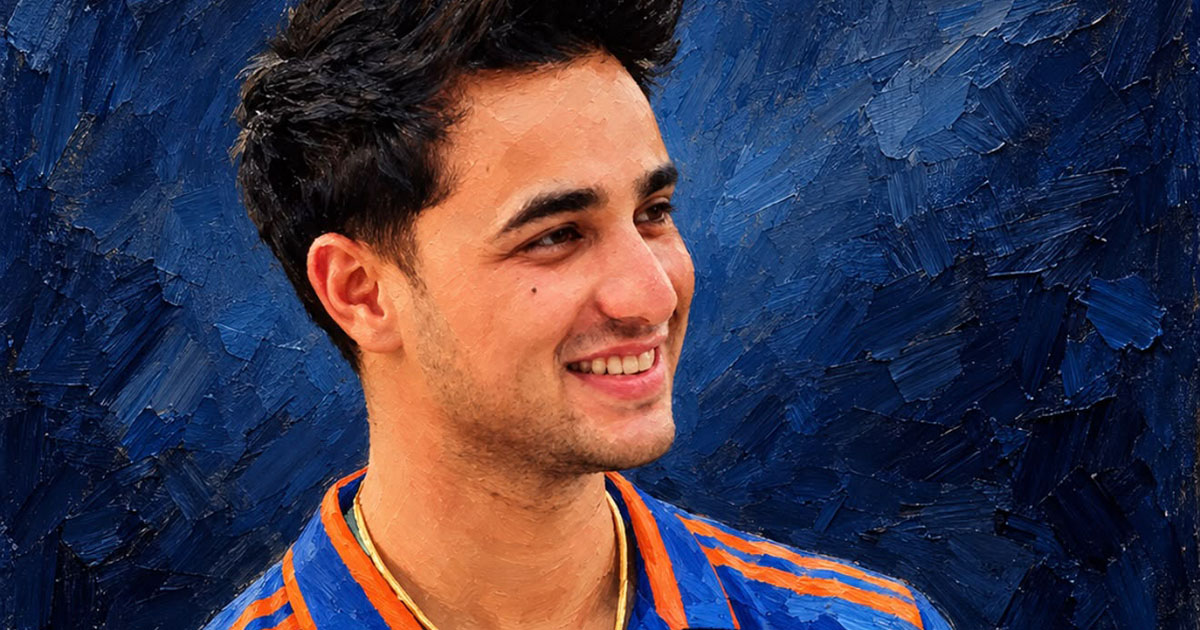
PHOTO: A painting by Mohammad Bilal provided by the author from his personal memorabilia collection.
Key Points
- Chronicles every brother pair and cricketing household from 1877 to the present.
- Begins with families that produced three or four internationals before listing two-brother pairs.
- Highlights Pakistani milestones such as the Nasim and Ubaid Shah sibling debut.
- Explores themes of partnership, succession across generations and intra-family rivalries.
- Notes rare cases of brothers representing different national teams.
Key Questions & Answers
How many pairs of brothers have represented Pakistan in Test cricket?
Ubaid Shah and Nasim Shah became the eleventh pair of brothers to represent Pakistan in Test cricket.
When did brothers first appear in Test cricket?
Brothers have been part of Test cricket since the inaugural Test match at Melbourne in March 1877.
Does this history include families with more than two international brothers?
Yes; the account begins by detailing households that produced three or four internationals before proceeding through two-brother pairings by country.
What themes does this history examine?
It highlights sibling partnerships, succession across generations, intra-family rivalries and instances of brothers representing different nations.
Ask AI: Understand this story your way
AI EnabledDig deeper, ask anything — get instant context, background, and clarity.
Disclaimer: This feature is powered by AI and is intended to help readers explore and understand news stories more easily. While we strive for accuracy, AI-generated responses may occasionally be incomplete or reflect limitations in the underlying model. This feature does not represent the editorial views of JournalismPakistan. For our full, verified reporting, please refer to the original article.