
Pakistan cricket captains through history: Triumph and turmoil
JournalismPakistan.com | Published: 2 August 2026 | Dr. Nauman Niaz (TI)
Join our WhatsApp channel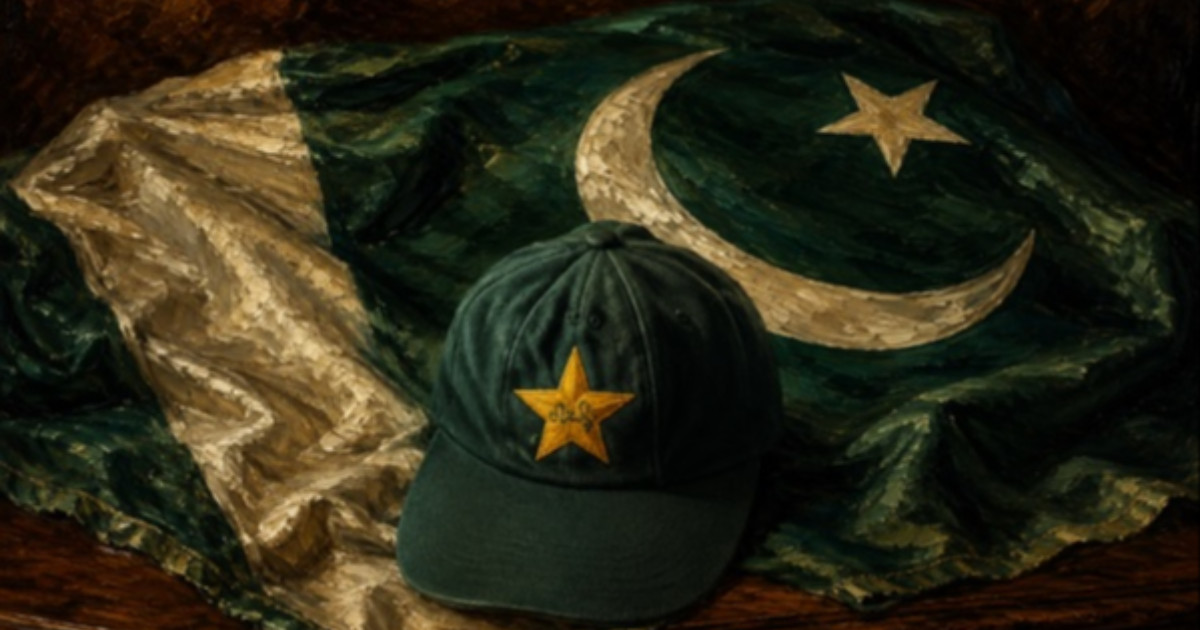
From Mian Mohammad Saeed in Lahore to present-day leaders, Pakistan's cricket captains have carried national identity alongside the team, navigating notable victories, recurring controversies and persistent public scrutiny over decades.Summary
There is a particular loneliness that attaches itself to the man who leads Pakistan at cricket, a loneliness older than the republic that gave the game its flag. It was there before there was a banner to salute, before there was a board to placate, before the word "Test" had been conferred upon the country like a knighthood bestowed almost reluctantly at Lord's in the July of 1952.
The story begins, as so much of the subcontinent's cricket begins, in a garden in Lahore, with a civil servant of upright bearing standing at the head of a team that did not yet know what manner of thing it was. To understand the captaincy of Pakistan one must first grasp that it was never just a cricketing office. It was a proxy for nationhood, a rehearsal of selfhood, the means by which a young and grievously wounded country conducted its argument with itself about the character it wished to wear before the world. Every man who assumed it inherited not a team but an idea, and the idea was heavier by far than any bat he was given to carry it with.
Mian Mohammad Saeed: The forgotten founding captain
Mian Mohammad Saeed is where the record properly opens, and it says something unflattering about how carelessly nations keep their own ledgers that he is so often omitted from the telling. Born in Lahore in 1910, a Provincial Civil Service officer schooled in the disciplines of the bureaucracy, he had already travelled the exacting circuits of pre-Partition cricket, turning out for the Muslims, for Northern India, even for India itself in unofficial Tests, a fixture of the Ranji Trophy long before he was asked to lead the first representative eleven a new nation ever sent into the field. When John Goddard's West Indians, bearing with them Everton Weekes, George Headley, and the aura of a superior cricketing civilisation, paused in Lahore in November 1948 for an unofficial Test at the Bagh-e-Jinnah, it was Saeed who stood unflinching against them and made a century of stern, unhurried quality.
There was no awe in him, and that absence of awe was itself a form of instruction to the young men gathered about him; his was a captaincy of peaceful assurance rather than theatre. He led the first tour abroad, to Ceylon in 1949, winning both unofficial Tests with a personal 93 of considerable command, and led again to a two-nil victory when Ceylon returned the visit in 1950, a founding record of four unofficial Tests won and one drawn, marred only by an unexpected mauling at the hands of a touring Commonwealth side, after which the crowd, in a foretaste of the volatile devotion that would forever attend this team, pelted its own players from the pavilion.
That incident, it transpires, was orchestrated by A. H. Kardar and his partisans; Kardar, freshly returned from Oxford and then employed at Chittagong by Burma Shell, had represented India in three official Tests and Warwickshire besides, and, not yet part of the side, held no great admiration for Saeed. Yet when the MCC arrived in 1951, and Test status hovered within reach, the selection committee under Justice Cornelius set Saeed quietly aside and handed the office to a younger, harder, more ambitious man. Age was given as the reason; manoeuvre was the truer one. Cornelius had invited Kardar to join the touring party, and the reply that came back, high-headed and unambiguous, ran: "My dear Cornie, I can only join the Pakistan team as captain." Saeed, who had shouldered the burden of a beginning no one could quite measure, was gently written out of the founding scripture, and it is here that the loneliness of the office first shows its face, for even the man who invents a thing may be dispossessed of it. It was Saeed, notably, who had helped install the BCCP itself, and his daughter, who married Fazal Mahmood, designed the earliest cricketing crest of Pakistan, tracing into it Iqbal's Shaheen beneath a Crescent.
Abdul Hafeez Kardar: The architect of Pakistan cricket
Abdul Hafeez Kardar is the true colossus of the beginning, and he understood, more completely than anyone who followed him across thirty subsequent years, that captaincy was an act of nation-building conducted with a cricket ball. Oxford-educated, a man who had represented India before Partition under the name Abdul Hafeez, he returned to lead Pakistan with the conviction of a founder and the manner of a magistrate, austere, imperious, unbending and he wore these qualities not as flaws but as instruments of policy. A young country with no pedigree and no self-belief does not need a diplomat at its head; it needs a man who refuses, on its behalf, to feel small. Kardar's genius was strategic before it was ever tactical: he grasped that Pakistan's scarce resources, a thin pool of players, matting wickets, no money, no history had to be concentrated and weaponised rather than dispersed. He built the side around Fazal Mahmood, the blue-eyed medium-pacer whose command of cut and seam on matting was a natural resource as precious as any the young country possessed, and set his fields and his ambitions accordingly.
The result was among the most improbable sequences of arrival the game has recorded. In only its second series, Pakistan won a Test at The Oval in 1954, Fazal taking twelve wickets and becoming the first side ever to win a Test in England on its maiden tour. Under Kardar, Pakistan defeated every Test nation of the era save South Africa, whom apartheid's policies had placed beyond the reach of fixtures against West Indies, India, or Pakistan; he not only led a team, he legislated a cricketing culture into being. His man-management was that of the benevolent autocrat, and honesty compels the admission that it curdled at the edges, he inspired reverence and resentment in roughly equal measure, Fazal himself chafed under him, and the dressing room learned that Kardar's loyalty ran first to the abstraction of Pakistan and only secondly to any man within it, and that at times favouritism crept into his selections even as results continued to follow him.
Consider the expression a man carries onto a field, for it is itself a form of instruction to those who watch him. Kardar's face was a closed account book; he did not smile at fortune nor scowl at misfortune, and in an age when his young team was liable to be intoxicated by a good hour or shattered by a bad one, that studied impassivity was a governing act. His decision-making bore the same austere signature; he would rather lose in pursuit of a principle than win by abandoning one, which made him, at moments, an inflexible tactician who mistook stubbornness for strategy, though the inflexibility was rather the point: a founder cannot afford nuance; he must lay down the non-negotiables from which subtler men will later be free to depart. His utilisation of meagre resources was a study in concentration; Fazal bowled until he all but dropped, the batting was built upon endurance rather than adventure, and Kardar accepted that a side without depth must win by the excellence of its few rather than the balance of its many. He was, in the end, less a captain than a legislator wearing pads, and the laws he wrote outlasted his reign by generations.
The search for stability after Kardar
After Kardar laid the office down, Pakistan entered a long and uneven middle passage, the captaincy passing through gifted cricketers rarely permitted to hold it long enough to stamp it with a philosophy of their own. Fazal Mahmood, the great bowler, took it up and led with the authority of a man who had won matches with his own two hands, though a captain who is also his side's spearhead carries a double burden, and the office sat less comfortably upon him than the ball had ever done. Imtiaz Ahmed, the wicketkeeper-batsman, led with the competence of a senior professional but without the transformative vision the earliest years had briefly promised.
Hanif Mohammad: The master of patience
The presiding cricketing genius of this era, though he captained only in fragments, was Hanif Mohammad, the Little Master, whose sixteen-hour 337 against West Indies at Bridgetown in 1958 remains among the supreme feats of concentration the game has recorded. Hanif's captaincy was an extension of his batting, patient, meticulous, risk-averse to a fault, a captaincy of attrition and survival rather than conquest. He understood defence as a positive philosophy in a manner few have equalled, and though his sides sometimes lacked the spark of aggression, they seldom lacked for spine. Leadership by personal example carried to its logical extreme, the captain as the still point around which lesser men arranged themselves; his reading of a situation was exact, he simply resolved almost every situation in the direction of safety, and his expression at the crease and in the field was that of a man doing sums, unhurried, absorbed, faintly remote from the drama around him. In an age of matting and modest scores it was a rational creed, and it kept a resource-poor side competitive against richer opponents, but it was a captaincy of the defensible rather than the daring, and it left the imagination of the team's leadership to be claimed by bolder men who came after.
The turbulent 1960s: Burki and Saeed Ahmad
Javed Burki, elegant of stroke and Oxford-tinted in manner, was elevated to the captaincy in the early 1960s in circumstances that owed rather more to the intrigues of a young and factional board than to any settled cricketing logic; a fine batsman still shaping his own game was asked, out of turn and before his authority had ripened, to command men senior to him in experience if not in polish. The elevation carried the unmistakable scent of patronage rather than merit, cousin as he was to the gifted Majid Khan and connected by family and background to the corridors that mattered in those years, and the office, thrust upon him prematurely, exposed him to a scrutiny his years had not equipped him to withstand. He led with dignity and occasional flashes of tactical sense, yet the abiding impression of his captaincy is one of promise interrupted, a talent asked to govern before it had been permitted properly to grow, discarded almost as abruptly as it had been anointed. In him the pattern that would haunt Pakistan cricket for half a century first announced itself with real clarity: a board that treated the captaincy less as a trust to be cultivated than as a gift to be dispensed and withdrawn at will. Saeed Ahmad, his contemporary and, by the plain verdict of the record, "also a disaster" in the office, possessed a wristy elegance with the bat that never translated into the composure leadership demands; a suspension for indiscipline on the 1969 tour of England, and a wider reputation for unpredictability off the field, ensured that his tenure is remembered less for what he built than for what it forfeited. Between them, Burki and Saeed Ahmad illustrate the era's essential sorrow that the seeds of much later dysfunction were sown in these very years of the craftsmen, when men who might have grown into fine captains were moved on before they were given the chance.
The 1970s: Flair replaces caution
The 1970s brought a loosening and a flowering. Intikhab Alam, the rotund and genial leg-spinner, led with a warmth and a shrewdness that made him beloved, and it was under his benign stewardship that a generation of extraordinary talent first began to cohere. But the defining captain of the decade was Mushtaq Mohammad, the second youngest of the remarkable brotherhood, a leg-spinning all-rounder of guile and a captain of instinctive, adventurous cast. Under Mushtaq, Pakistan won series in New Zealand and drew blood against the mightiest sides, and the team acquired the swaggering, mercurial character that would become its signature, brilliant, unpredictable, capable of the sublime and the calamitous within the same session. Mushtaq's captaincy prized flair and backed instinct; he led a dressing room of exceptional and difficult egos, Zaheer Abbas, Asif Iqbal, the young Imran Khan, the younger still Javed Miandad and did so by a kind of collegial cunning rather than by Kardar's cold authority, understanding that this generation could not be commanded, only coaxed, cajoled, occasionally flattered, and then unleashed.
Zaheer Abbas, Asif Iqbal and Wasim Bari
Zaheer Abbas, the bespectacled run-machine whose batting possessed the quality of calligraphy, also took his turn at the helm in these years and after. He led with the same fastidious correctness that governed his strokeplay, a captain whose command of technique was never in doubt though his command of men lacked the instinctive warmth of a Mushtaq or the theatrical cunning of a Miandad; his tenure, brief and largely unspectacular by the measure of results, is remembered chiefly as an epilogue to a batting career of rare classical beauty rather than as an era of leadership in its own right. Asif Iqbal, elegant and thoughtful, and Wasim Bari, the impeccable wicketkeeper, took turns at the office besides, and it was the culture of the cornered cavaliers, forged across these years, that mattered more in the end than any single captaincy, the conviction that Pakistan played best when its back was to the wall, and its blood was up.
Imran Khan: The captain who transformed Pakistan
And then there is Imran Khan, and the essay must slow, for in him the office found its most complete expression. If Kardar built the house, Imran furnished it with genius and taught it to believe in its own permanence. He was, by common consent, the finest cricketer Pakistan has produced and among the two or three greatest all-rounders the game has known, and he brought to the captaincy a quality none of his predecessors had possessed in such measure: absolute personal sovereignty. Imran did not court the approval of board, press, or player; he commanded, and earned the right to command by being visibly, incontestably, the best man on the field. His tactical understanding was subtle, and he leaned intelligently on the shrewdness of Javed Miandad, forging with him a compliant working relationship; Wasim Akram, discovered not by Imran but by the imaginative eye of Javed, was thereafter mentored and armed by Imran, whose strategic ambition ran deep. He grasped, before it was fashionable in Pakistan, that fast bowling wins matches, and that fast bowlers must be found, nurtured, and protected; he rehabilitated the ageing and the mercurial into match-winners, set his fields with the eye of a chess grandmaster, and read the turning of a session with an almost feline anticipation.
Leadership built on belief
But his true gift was psychological. He persuaded a company of gifted individualists to subordinate themselves to a collective destiny, not by dissolving their egos but by yoking their self-regard to his own towering example; under Imran, the phrase "cornered tigers" ceased to be a metaphor and became a strategy. His man-management was famously selective, he protected the players he valued with a ferocity bordering on the paternal, and could be glacially indifferent to those he did not, backing youth with a conviction that occasionally looked like recklessness and was more often vindicated, though he had his favourites, and some seniors who threatened to eclipse him found themselves swiftly and vindictively consigned to oblivion. He would hand a raw and unproven quick the new ball in a hostile session and simply expect delivery, and the expectation itself became a kind of gift, a transfer of belief from a man who had none to spare and yet gave it away regardless.
The expression of command
His expression on the field was its own instrument of command, the aristocratic disdain, the head held at an angle suggesting the outcome was never seriously in doubt, the refusal to betray strain even as a match hung by a thread and it communicated to opponents an unsettling composure, to his own men an anchoring calm. Tactically he was an aggressor by temperament and a realist by calculation, attacking when attack was viable and shutting a game down without embarrassment when it was not, his ego invested in winning rather than in the appearance of gallantry. His utilisation of resources verged on the alchemical: he coaxed reverse swing into a doctrine, though the ethics of a roughened ball remain to this day imperfectly resolved; he deployed his spinners as strangling agents rather than mere variety, and rotated his pace bowlers with a shepherd's care for both body and confidence.
The crowning moment: World Cup 1992
The culmination came at Melbourne in 1992, in the coloured clothing of the World Cup rather than the whites of a Test, but the sensibility was identical: a captain who had told his side to fight like cornered tigers, and who, at forty, in his last act in the game, lifted the trophy visibly overwhelmed, his famous accumulation of "I," "me," and "my" irking not a few of those who had fought alongside him. Imran left the captaincy not as an office he had just held but as an identity he had inhabited so completely that every successor would be measured against him and found, in some particular, wanting.
Javed Miandad: The street-smart genius
Javed Miandad, who captained in several combustible spells across a long career, offered a wholly different model. Where Imran led from a position of Olympian sovereignty, Miandad led from the bazaar, in the finest possible sense, with the improvised cunning, the theatrical provocation, and the bottomless competitive appetite of the street. He was the greatest crisis batsman his country ever produced, the man for the fourth innings and the impossible chase, and his captaincy carried the same quality of resourceful desperation raised to an art form. His cricketing intelligence was possibly the sharpest of any Pakistani captain; he read situations, bowlers, and opponents with an almost predatory acuity, yet his tenures were repeatedly undermined by the very intensity that made him great; he could inspire and alienate within the same afternoon, admired for his genius and wearied for his volatility in equal measure. He and Imran circled one another for years in a relationship of mutual respect and mutual wariness, two enormous talents who could never quite share a single throne, and that Miandad captained in fragments rather than in one commanding reign remains among the silent tragedies of Pakistan's cricket, for few men understood the game's inner mechanics more deeply than he.
A master of reading the game
What Miandad possessed above all was a situational understanding of an almost frightening completeness. He could feel, before the evidence arrived, the exact moment a bowler tired, a pitch turned, or an opponent lost his nerve, and he set his field and his tempo to that private intelligence. His expressions were a captain's theatre, the goading, the chatter, the calculated needle designed to unsettle a settled batsman, and while it made him a difficult adversary and an exhausting colleague, it was never gratuitous; it was tactics conducted by other means. His utilisation of resources was inventive to the point of eccentricity; the unlikely bowler tried, the improbable field set, the plan no coaching manual would sanction, because his cricket had been learned not in an academy but in the merciless improvisation of Karachi's streets. That such an intelligence was never given a long and settled reign is Pakistan's loss rather more than his own.
A decade of chaos and revolving captains
The decade after Imran was Pakistan cricket at its most gloriously and ruinously characteristic: a period of staggering individual talent set against a backdrop of institutional chaos, factionalism, and the long shadow of match-fixing allegations that would eventually poison the era's entire memory. The captaincy became a revolving door, passing between Wasim Akram, Waqar Younis, Saleem Malik, Ramiz Raja, Aamer Sohail, Rashid Latif, Moin Khan, and others, sometimes more than once, in a bewildering churn that reflected the board's dysfunction more faithfully than any cricketing logic.
Wasim Akram: Brilliance amid turmoil
Wasim Akram, the sultan of swing and perhaps the finest left-arm fast bowler the game has seen, led with the same electric unpredictability that marked his bowling. On his day his tactical imagination was breathtaking, a captain who could conjure a wicket from nothing as he conjured deliveries from nothing, changing an angle or a length by instinct and finding an edge where the game had offered none; his bowling changes possessed the quality of improvisation raised to genius, trusting his own feel for a batsman's discomfort above any theory, and when that feel ran true he was as inspired a captain as Pakistan has fielded. But his tenures were dogged by the factional feuding of a fractured dressing room and by the corrosive suspicion of the fixing years, and a leader whose authority is questioned in the corridor cannot fully command it on the field; his expression betrayed the strain of it, the mercurial brilliance shadowed by a wariness, a sense of a man watching his own flanks. Waqar Younis, his great fast-bowling partner and rival, led with fierce commitment and the front-foot aggression that defined his bowling, and would return later to the fold as coach.
Saleem Malik, Ramiz Raja and Aamer Sohail
Saleem Malik's captaincy, in the mid-1990s, oversaw fine and sometimes inspired victories, his tactical acumen sharp enough that opponents rated him among the shrewder minds of the era, yet it stands irrevocably stained by the fixing scandal that followed him into a life ban, so that the record of his decision-making can no longer be read innocent of suspicion. Undoubtedly Malik was the shrewdest and captaincy came to him naturally. Ramiz Raja, cerebral and articulate, brought to the office the reasoning of a man who would later make his name as a broadcaster and, briefer still, as board chairman; his captaincy was measured and thoughtful rather than inspirational, a competent custodianship in a period that offered little room for custodianship of any kind to flourish. Aamer Sohail, dashing and combative at the top of the order, led with a swagger that mirrored his batting, forthright to a fault and unafraid to speak his mind to teammate, opponent, or board alike, a quality that served him gloriously in the heat of a contest and rather less gloriously in his dealings with the men who governed him, and his tenure, like so many of the decade, was curtailed before its promise could properly mature.
Rashid Latif: Courage amid controversy
Saeed Anwar, among the most graceful of opening batsmen the country has produced, held the reins only briefly, his captaincy a footnote to a batting career of exquisite timing and, in later years, of deepening religious conviction; leadership sat upon him lightly and departed from him almost as quickly as it had arrived. Rashid Latif, the phlegmatic and most complete wicketkeeper, captained in fragments across these turbulent years and showed, in those fragments, a grit, an intelligence, and a tactical brilliance that many contemporaries privately rated above his public reputation, he read a match shrewdly, marshalled a limited attack with real cunning, and possessed, besides, the rare courage to speak openly against the corruption gnawing at the game around him. Yet it was a moment of contested glory that undid him: a catch claimed and celebrated, then widely disputed as having been grounded, furnished the board with the pretext it required, and Latif found himself suspended for five matches on a charge of dissent, a punishment disproportionate to the offence and transparently a settling of older scores. In its aftermath he was, by degrees and by pressure applied quietly rather than announced openly, coerced into calling time on a career he had wished to end, a fate that placed him, in this respect, alongside Younis Khan among those whose temperaments, however able, simply did not suit the management of the moment.
Moin Khan and the end of an era
Moin Khan, feisty and combative behind the stumps, led in the early 2000s with a competitive snarl that never quite left him, his captaincy a continuation in miniature of the fighting instincts he showed with the gloves, though it, too, was swept up in the era's pervasive cloud of suspicion before the Qayyum inquiry cleared his name.
A generation undermined by dysfunction
The tragedy of the nineties is that a group of cricketers gifted enough to have dominated the age instead spent much of it at war with itself, the captaincy passed like a parcel among rival camps, unable to provide the still centre the talent so plainly deserved. Man-management, in such a climate, was reduced to the negotiation of factions; situational understanding was warped by the knowledge that not every man on the field might be pursuing the same result. It is the era's abiding sorrow that so much genius was governed so poorly, and that the fault lay less in the captains than in the fevered institution that kept unmaking them.
Inzamam-ul-Haq: Calm after the storm
Out of that turbulence emerged, improbably, one of the most emotionally settled captaincies in the country's history. Inzamam-ul-Haq, the vast and languid batting genius of Multan, took up the office in the mid-2000s and brought to it a quality Pakistan had rarely enjoyed: serenity. Where the nineties had been all noise and knives, Inzamam led with a placid, almost pastoral calm, a religiosity that gave the dressing room a shared identity, and a batsman's deep patience. He was no great tactical innovator, and his captaincy could drift when the game demanded urgency, but he understood men, and he understood his own side's temperament; he was shrewder than he appeared, biding his time until the seniors departed before attempting to command the show entirely, capable, when he chose, of intrigue and orchestration and a certain quiet manipulation of circumstance.
The Oval Test and a captain's principles
His tenure produced fine cricket and a genuine sense of collective purpose, and it foundered, painfully, on a matter of principle rather than performance, the forfeiture of the Oval Test of 2006 over a ball-tampering accusation, when Inzamam led his team from the field in protest and would not return. It was an act of wounded dignity that cost his side a match and cost him something of his standing, and it captured the essential character of his captaincy, that for him the honour of the team was a thing more real than any result; he was a leader who governed by feel and by faith, and when he judged that his players' honour had been impugned, no tactical calculation could move him.
Shoaib Malik and Mohammad Yousaf
Shoaib Malik, versatile all-rounder and a batsman of nimble improvisation, inherited limited-overs captaincy in the middle years of the decade and led with an energy that occasionally tipped into abrasiveness; his tenure, which reached its zenith in the final of the inaugural World Twenty20 in 2007 against India, was troubled by undertones of discord with senior professionals in the dressing room, a friction that clouded a period otherwise rich in promise and left his authority perpetually contested. Mohammad Yousaf, prolific in the extreme, his calendar year of 2006 remains among the most productive any batsman has produced assumed the Test captaincy only briefly in 2009 and 2010, his reign undone almost before it began by a player revolt and a subsequent board inquiry that suspended several senior men, Yousaf among them, leaving his captaincy remembered more for its abrupt and bitter conclusion than for anything achieved within it.
Salman Butt and Pakistan's darkest chapter
The years after the spot-fixing catastrophe of 2010, which struck at the captaincy itself and left the institution disgraced, demanded a different kind of leader. It was Salman Butt who held the office at that catastrophe's very centre, an opening batsman of correct technique and evident promise, appointed captain in 2010 with every expectation of a settled tenure ahead of him, whose name is now inseparable from the spot-fixing conspiracy that consumed that England tour; his captaincy ended not in resignation or reshuffle but in disgrace, a ban from the game and a prison sentence in England, the single darkest phase the office has recorded. Not the sovereign genius of an Imran nor the street-fighter of a Miandad was wanted in that wreckage, but the steady, unglamorous restorer, the man who rebuilds a ruined house brick by patient brick.
Younis Khan: A leader ahead of his time
Younis Khan, magnificent and mercurial, the country's highest Test run-scorer, led in spells across these years and won Pakistan the World Twenty20 of 2009, though his relationship with the board unfolded as a saga of resignations and reconciliations that spoke eloquently to the abiding instability of the office; strong-headed, upright, workmanlike, brave, dedicated, committed and sharply focused, he was nevertheless a man too temperamentally forthright to be acceptable to a board given to constant manipulation and overt politicisation, and it was this incompatibility of natures, rather than any deficiency of cricketing substance, that denied him the extended reign his ability warranted. Nonetheless, he chaperoned the younger men around him and stood as a linchpin of support to Misbah through the years that followed, temperamental and unyielding, a true savant of the Pakistani game whose worth the institution never quite learned to value on its own terms.
Misbah-ul-Haq: The healer Pakistan needed
It was Misbah-ul-Haq who supplied the convalescence Pakistan needed. He inherited the captaincy at its lowest ebb, in the immediate wreckage of the fixing scandal, an unfashionable choice at thirty-six widely dismissed as a stopgap, and proved the longest-serving and, by the plain measure of results, the most successful Test captain in the nation's history. Exiled from home by terrorism, his side played its Test cricket in the borrowed deserts of the United Arab Emirates, and there, on featherbeds against the world's best, Misbah forged a team of granite discipline and sustained resilience. His own batting, unfairly caricatured as tortoise-like, was in truth a masterclass in situational judgement, and his captaincy carried the same virtue, unflashy, calm, deeply intelligent about the shape of a match. There was a stillness to Misbah's expression that his detractors read as passivity and his admirers came to recognise as control; he did not rage, he calculated, and his decision-making prized the avoidance of catastrophe over the pursuit of glory, which in a side historically prone to spectacular collapse was less timidity than wisdom hard-won.
Rebuilding Pakistan's Test team
He understood his resources with an accountant's clarity, which of his bowlers could hold an end shut in the dead heat of Abu Dhabi, which of his batsmen could be trusted to bat time when time was the only tool that mattered and deployed them without sentiment. If he faulted a tactician it was a certain conservatism, a reluctance to gamble when a gamble might have converted a draw into a win, but it was the fault of a man rebuilding on ground that had recently given way beneath his predecessors, and caution was, in that context, a form of courage. Under Misbah, Pakistan climbed to the top of the Test rankings in 2016, and he marked the ascent with a set of press-ups on the Lord's outfield, a moment of understated joy from a man who had absorbed more than his share of scorn; his man-management was avuncular and unshowy, and he stabilised a traumatised institution, teaching it once more how to win with dignity. And yet, for all he achieved, a certain self-evasiveness, a defensiveness, an occasionally eccentric stubbornness of approach ran beneath the healing, and it left its own quiet trickle-down effect on those who inherited the culture from him. If Imran was the sovereign and Kardar the founder, Misbah was the healer, and a cricketing culture as prone to self-destruction as Pakistan's has perhaps needed its healers most of all.
Shahid Afridi and Mohammad Hafeez
Shahid Afridi, folk hero and cricketing improviser without equal, took up the captaincy in the shorter formats across several intermittent stints in this same period, his leadership an extension of the boom-or-bust cricket that made him beloved of a nation starved of instant joy; brilliant in flashes, capable of conjuring victory from ruin with bat or leg-break alike, he was nevertheless erratic in his reading of a match's slower currents, his field placements and bowling changes often as impulsive as his own batting, and a captaincy that thrilled far more often than it planned. Mohammad Hafeez, disciplined and articulate, led occasionally across formats in these years and later still, his cricket marked by a fitness and a seriousness of method that set him apart, his tenure a competent if unspectacular stewardship repeatedly interrupted by scrutiny of his own bowling action, a technical shadow that trailed a genuinely thoughtful cricketing mind.
The modern captains
The captaincies that followed have unfolded in a faster, noisier, more fragmented cricketing world, in which the Test office competes for attention and for talent with the glittering distractions of the shorter formats. Sarfraz Ahmed, the pugnacious wicketkeeper who led Pakistan to its unforgettable Champions Trophy triumph over India in 2017, brought a scrapper's heart to the role but found the Test captaincy a harder and less forgiving country than the white-ball game. Azhar Ali, dignified and technically correct, led in the classical batsman's manner but in an era that gave its captains little room to grow; his instincts presumably too defensive for a format now demanding an increasingly urgent tempo, and captaincy, in the end, was never truly his forte. These were leaders of the modern restlessness, asked to hold a fraying attention in a format the wider culture was quietly abandoning, and judged with a haste that the founders and the sovereigns were never subjected to. The old malaise, the board's appetite for change, the churn of selectors and chairmen and philosophies persisted and, if anything, accelerated, so that a captain might be anointed and discarded within the span of two home series; the office that Kardar had held for the better part of a decade now passed through hands with the speed of a relay baton.
Babar Azam: The burden of modern captaincy
Which brings the long argument to the present, and to two men carrying the inheritance in the present tense. Babar Azam, the finest Pakistani batsman of his generation and one of the outstanding players of the modern game, was handed the Test captaincy with the natural logic that the best player should lead, a logic that worked gloriously for Imran and rather less kindly for others, and Babar's tenure exposed the old truth that batting genius and captaincy genius are different gifts that only occasionally reside in the same man. He led with sincerity and was burdened, as so many before him, by a system that offered him little stability and much scrutiny, relinquishing the Test office in 2023 amid resignations, speculation, and a churn wearily familiar to any student of this history.
The greater difficulty of Babar's captaincy was one that afflicts the modern game everywhere but bites hardest in Pakistan: the Test office is now the least glamorous of a captain's several crowns, and the concentration it demands competes with the noise and reward of the shorter forms. A batsman of Babar's exquisite gifts, asked to carry his own run-making, the nation's expectations, and the strategic burden of the longest format simultaneously, was placed under a weight the specialisation of the age makes very nearly unbearable; his decision-making could appear tentative, his fields reactive rather than imposing, and one sensed a fine cricketer expending upon the office energy he needed for his craft. It was less a failure of character than a collision between an old model of leadership and a new structure of the game. He was hanging in thin air.
Shan Masood and the continuing burden
Shan Masood, the thoughtful and articulate left-handed opener, Oxford-tinged in manner and reflective in temperament, inherited the office in November 2023 into circumstances of considerable difficulty. His early record was harsh: defeats in Australia, a shocking home series loss to Bangladesh, the whole weight of a struggling institution pressing down upon him, and he became, almost immediately, the subject of the impatience that is the modern Pakistani captain's constant companion. Yet in his evident intelligence, his willingness to speak of the game with candour and thought, and his refusal to shrink from a burden most would find crushing, there is something of the older dignity of the office, even if he proved, in the event, not quite capable enough, or too meek, to stand against the dictates of the management above him, and seemed, at moments, paralysed by that very weight. He led a side rebuilding itself yet again, on home pitches doctored for spin, in a Test landscape that offers Pakistan few easy days; whether history will be kind to him is unknowable, but he certainly carried the same burden every man in this long procession had carried, from the civil servant in the Lahore garden to the sovereign in the tiger's shirt and then, in due course, the captaincy was taken from him, and, as ever, the blame was shifted onto his shoulders besides. His record remains the most abysmal in Pakistan's history.
What Pakistan's captains reveal about the nation
What, then, does the whole procession tell us? That the captaincy of Pakistan has never been a single thing, but a running argument the country conducts with itself about the nature of leadership. Kardar answered it with will, Hanif with patience, Mushtaq with flair, Imran with sovereignty, Miandad with cunning, Inzamam with faith, Misbah with repair. Each was a proposition about how a gifted and volatile people ought to be led, and each proposition was, in its moment, both true and insufficient. The genius of Pakistan cricket, its capacity to conjure, from apparent chaos, players and moments of transcendent beauty has always been shadowed by the tragedy of its governance, the restless churning that has denied so many of its captains the time to become what they might have been.
Leadership is written on the face
It is worth pausing, too, on the peculiar relationship between the Pakistani captain and expression itself, for it recurs across every era. From Kardar's closed appearance of a face to Imran's aristocratic disdain, from Miandad's bazaar theatre to Misbah's monkish stillness, the great captains of this country have understood that the face a leader shows the field is a tactical resource as real as any bowler. In a side congenitally prone to emotional weather, to the ecstatic surge and the sudden collapse, the captain's countenance is the barometer the eleven read; the ones who mastered the office mastered first their own visible selves, and offered the dressing room, in crisis, a face that refused to panic. The ones the office defeated were often undone not by tactics but by the leakage of their own doubt into view. Leadership here has always been, in part, the discipline of the expression.
Conclusion: The weight of the captaincy
The loneliness that attended Mian Saeed in that Lahore garden has attended every man since. To captain Pakistan is to hold, for a while, an idea larger than cricket, an argument about a nation's character, waged with a bat and a ball and eleven mercurial men and then to hand it on, usually before one is ready, to the next inheritor of the weight. They wore it differently, each of them, according to the truth of their own natures. But they all wore the same weight. And the argument, gloriously and maddeningly, goes on.
ABOUT THE WRITER: Dr. Nauman Niaz, a postdoctoral scholar (Oxford) and recipient of Pakistan's Tamgha-i-Imtiaz for sports broadcasting and journalism, has covered 54 international cricket tours and three ICC Cricket World Cups. He has written more than 3,700 articles, authored 19 books, including the official history of Pakistan cricket, Fluctuating Fortunes, and is Sports Editor at JournalismPakistan.
PHOTO: A painting by Mohammad Bilal from the author’s personal collection.
Key Points
- Captaincy in Pakistan has long symbolised national identity as well as cricket leadership.
- Mian Mohammad Saeed is recognised as Pakistan's founding captain.
- Cup and captaincy have involved loneliness, scrutiny and political pressure.
- The role has encompassed notable triumphs alongside recurring controversies.
- Captains have helped shape the team's character and public perception over decades.
Key Questions & Answers
Who was Pakistan's first captain?
Mian Mohammad Saeed is recognised as Pakistan's founding captain and led the side in its early pre-Test and formative years.
Why is Pakistan's captaincy described as lonely?
The captaincy carried responsibilities beyond sport, representing national identity and facing intense public and political scrutiny, which intensified the sense of isolation.
How have captains influenced Pakistan cricket?
Captains have shaped team character and strategy, steering Pakistan through major victories as well as controversies that reflected wider national debates.
Why is Mian Mohammad Saeed often overlooked?
Historical records and popular narratives have sometimes omitted early figures like Saeed despite his central role in Pakistan's cricketing origins.
Relevant Topics
Ask AI: Understand this story your way
AI EnabledDig deeper, ask anything — get instant context, background, and clarity.
Disclaimer: This feature is powered by AI and is intended to help readers explore and understand news stories more easily. While we strive for accuracy, AI-generated responses may occasionally be incomplete or reflect limitations in the underlying model. This feature does not represent the editorial views of JournalismPakistan. For our full, verified reporting, please refer to the original article.