
IFJ calls for release of 13 journalists in Egypt
JournalismPakistan.com | Published: 15 April 2015
Join our WhatsApp channel
The International Federation of Journalists has called for the release of 13 journalists sentenced by an Egyptian court. This unprecedented ruling highlights the ongoing issues of press freedom in Egypt.Summary
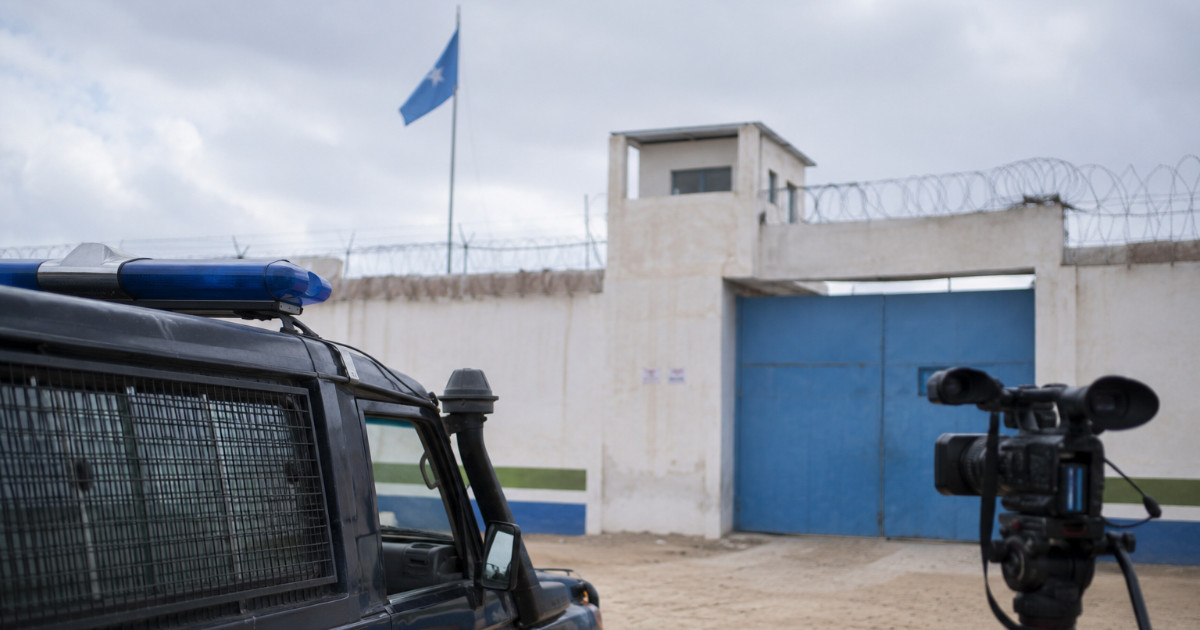
The International Federation of Journalists (IFJ) has called for the immediate release of 13 journalists sentenced last Saturday to life imprisonment and one to death by an Egyptian court. It has also urged them to free all other journalists who remain in prison until a final court ruling is made.
According to media, this is the first time in Egypt that such a ruling has been made against media workers, most of them arrested since August 2013 and accused of spreading false information and propaganda against the state.
The IFJ has backed the Egyptian Journalists Syndicate (EJS) which has established a legal committee to monitor the cases and advise on the legal strategy.
"We will fully support the imprisoned colleagues in their appeal of this sentence and will renew the request to the authorities to release all imprisoned journalists until the final court decision", said the committee.
Walid Abdel Raouf Shalaby received last Saturday 11 April a death sentence by the Egyptian court, while 13 of his colleagues were condemned to life imprisonment:
- Hany Salh Eddin
- Gamal Nassar
- Ahmed Subai
- Khaled Mohamed Hamza Abbas (Ikhwan web editor-in-chief)
- Magdy Abdellatif Hamouda (Ikhwan online journalist)
- Ibrahim al-Taher al-Sayed
- Mohamed Mostafa al-Adly (Amgad satellite channel correspondent)
- Mossad Hussein Abdallah al-Barbary (Ahrar 25 channel director)
- Hassan Hosny al-Qabbani (Journalists for Reformation movement's coordinator)
- 4 Rassd network detained founders: Samhy Mostafa, Abdallah al-Falharany, Ahmed Abdel Alim, Mohamed Sultan and Amr Farrag, media reported.
Most of them were arrested in August 2013 in Cairo's Rabia Square while covering demonstrations that followed the removal of President Morsi from power in July 2013.
"The IFJ is appalled by this unfair and outrageous sentence, which is an example of how journalists and press freedom becomes the first victim of every political conflict," said the IFJ President Jim Boumelha. "We demand the Egyptian authorities immediately release our colleagues, who were simply doing their job and reporting demonstrations and social movements taking place in the streets of Cairo, and to free all the imprisoned journalists until a final court ruling is made." - IFJ
Key Points
- IFJ calls for the release of 13 journalists sentenced to life imprisonment.
- One journalist received a death sentence in the recent Egyptian court ruling.
- The ruling marks a significant escalation in media repression in Egypt.
- IFJ and EJS support legal strategies for appealing the court decisions.
- Many of the detained journalists were arrested in 2013 during protests.
Relevant Topics
Ask AI: Understand this story your way
AI EnabledDig deeper, ask anything — get instant context, background, and clarity.
Disclaimer: This feature is powered by AI and is intended to help readers explore and understand news stories more easily. While we strive for accuracy, AI-generated responses may occasionally be incomplete or reflect limitations in the underlying model. This feature does not represent the editorial views of JournalismPakistan. For our full, verified reporting, please refer to the original article.