
Groundbreaking ethical code for journalists launched
JournalismPakistan.com | Published: 25 February 2017
Join our WhatsApp channel
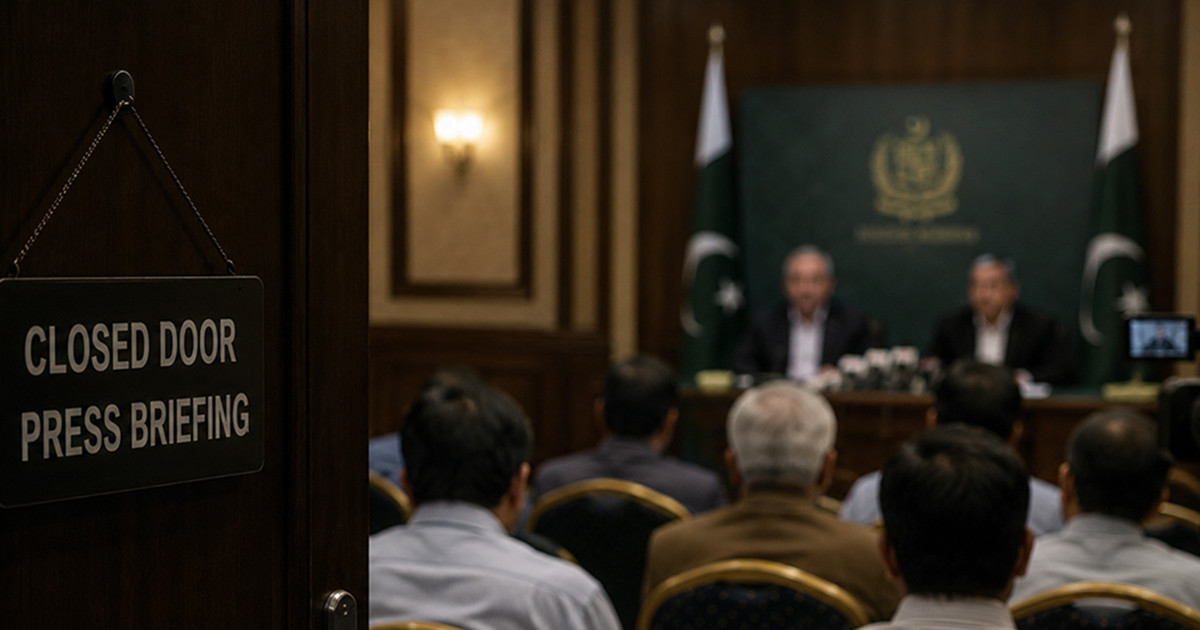
A new ethical code for journalists in Pakistan was launched in Islamabad, unifying media standards after extensive consultations. The initiative aims to strengthen press freedom and establish a uniform statement of ethics for journalists across all platforms.Summary
ISLAMABAD - A national code of conduct for journalism inspired by a local ethical journalism group affiliated to the Ethical Journalism Network and agreed by journalists across the country was launched in Islamabad this week.
The code, which aims to unify journalists working across all platforms of media, emerged after a two-year consultation process involving almost 1,500 journalists, editors and media leaders and discussions with media stakeholders at 51 meetings around the country.
“This code is a breakthrough for journalists in Pakistan, but it is a model that will inspire reporters and editors everywhere,” said Aidan White, EJN Director, in his address via Skype to the National Symposium at the International Islamic University where the code was launched on Friday.
“All journalists, wherever they work, now have a single, unified statement of ethics and values,” he said. “This will strengthen journalism and give fresh momentum to the campaign to protect press freedom and to inspire responsible communications across the information landscape in Pakistan.”
The code identifies six key elements of ethical journalism – truth and accuracy; pluralism; independence, fairness and impartiality; confidentiality and privacy; accountability and good governance; and, finally, humanity and the duty to do no harm – and also makes a number of recommendations under each theme to help media put the code into practice.
White said the next steps would be to prepare detailed guidelines for journalists working across different platforms to help them create an editorial working environment that will make the code effective.
The initiative to develop the code was taken by the Pakistan Coalition for Ethical Journalism, (PCEJ) which was founded by a group of distinguished and veteran journalists in 2012.
For years journalists in Pakistan have had to deal with competing national codes – created by the press council, the union of journalists and employers’ associations in broadcasting and the press. Frustrated by a lack of commitment to a single code the PCEJ created a core committee of leading journalists to draft a new, unifying code. With the help of leading media support groups they carried out an unprecedented consultation with journalists and media across the country.
The final text not only outlines core ethical principles, it also comes with a series of general recommendations to media to create an enabling environment for ethical journalism and good governance inside media.
These recommendations call upon media organizations to: - Establish internal ethics committees to promote best practice;
- Appoint independent ombudsmen or readers’ editors to deal with complaints from the media audience;
- Strengthen regional press clubs and create a new national professional association to promote self-regulation;
- Provide training on safety of journalists and appoint safety advisors;
- Improve pay and employment conditions and provide contracts to all staff;
- Establish committees to deal with bullying and harassment issues; and
- Provide targeted support for female journalists.
Over the past year the Ethical Journalism Network has been working with the Coalition for Ethical Journalism and local media support group Rozan to ensure that the new code reflects international standards. The work of organizing and developing the code was also supported by International Media Support, a Danish media development group.
The media figures in Pakistan who formed the Technical Advisory Committee behind the project were Mohammed Ziauddin, Adnan Rehmat, Fahad Hussain, Farah Zia, Ghazi Salahuddin, Kamal Siddiqi, Mazhar Abbas, Murtaza Solangi, Nargis Baloch, Rameeza Nizami and Salman Danish.
Congratulating the team behind the project, White said that the extensive consultation process would ensure that ownership of the code would rest where it belongs – with journalists themselves both in news centres and in the field.
He said: “The Pakistan work shows that the spirit of ethical journalism is alive and well, even in parts of the world where media are under tremendous pressure and where journalists risk their lives to report freely and professionally. This initiative will be a tremendous inspiration for others.” - Press release
Key Points
- Code launched in Islamabad after two-year consultation involving 1,500 journalists.
- Identifies six key elements of ethical journalism and recommendations for media practice.
- Aidan White emphasized the code's potential to inspire responsible journalism worldwide.
- Initiative led by the Pakistan Coalition for Ethical Journalism established in 2012.
- Recommendations include ethics committees and support for female journalists.
Relevant Topics
Ask AI: Understand this story your way
AI EnabledDig deeper, ask anything — get instant context, background, and clarity.
Disclaimer: This feature is powered by AI and is intended to help readers explore and understand news stories more easily. While we strive for accuracy, AI-generated responses may occasionally be incomplete or reflect limitations in the underlying model. This feature does not represent the editorial views of JournalismPakistan. For our full, verified reporting, please refer to the original article.