.png)
What happens when journalists go unpaid for months?
JournalismPakistan.com | Published: 5 November 2026 | JP Special Report
Join our WhatsApp channel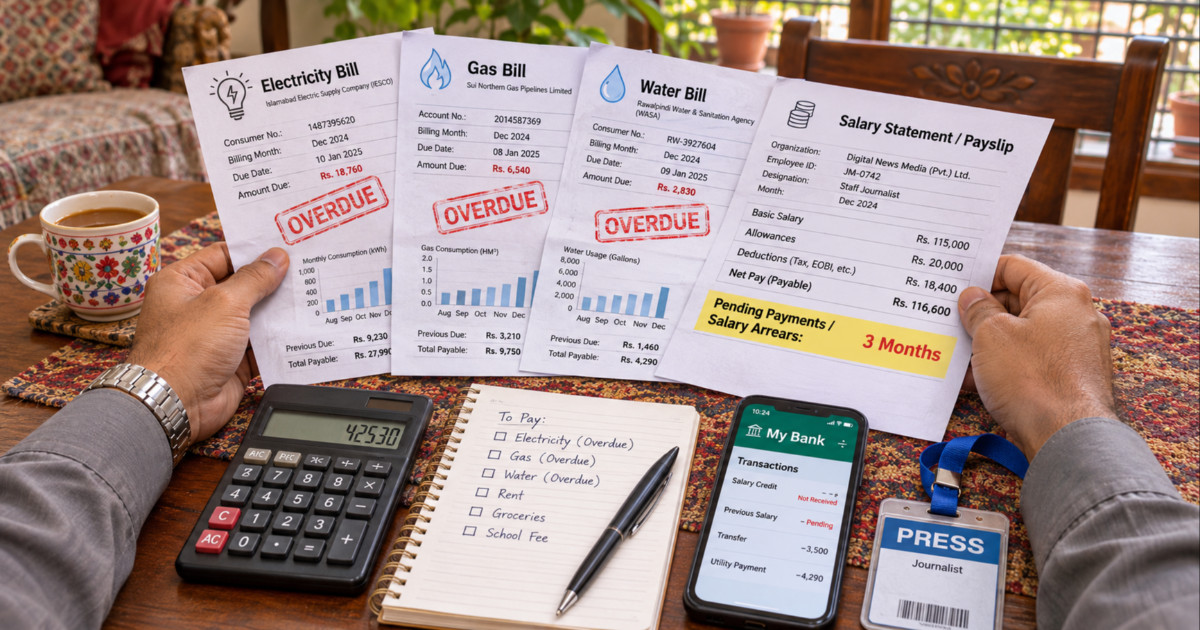
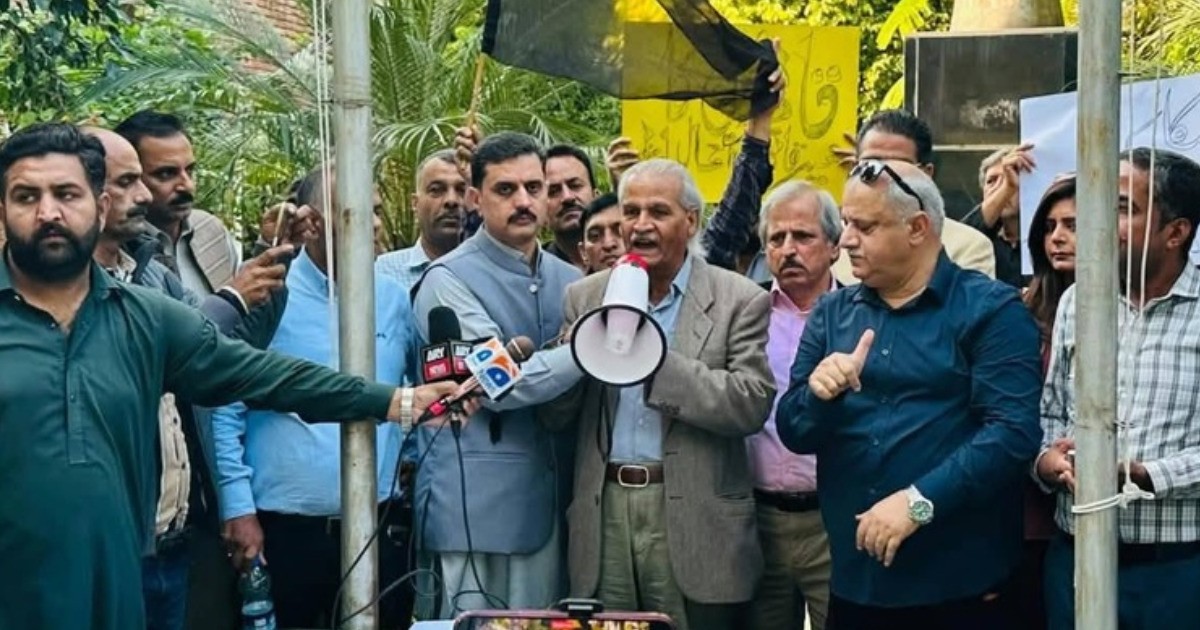
At the November 3, 2026 protests, journalists highlighted months of unpaid salaries, layoffs, bureau closures, and limits on press freedom across Pakistan. This financial strain weakens editorial independence and damages newsroom morale.Summary
ISLAMABAD — When journalists go without salaries for several months, the consequences extend beyond unpaid household bills. Financial insecurity can weaken their ability to work independently, damage newsroom morale and place additional pressure on an already struggling media industry.
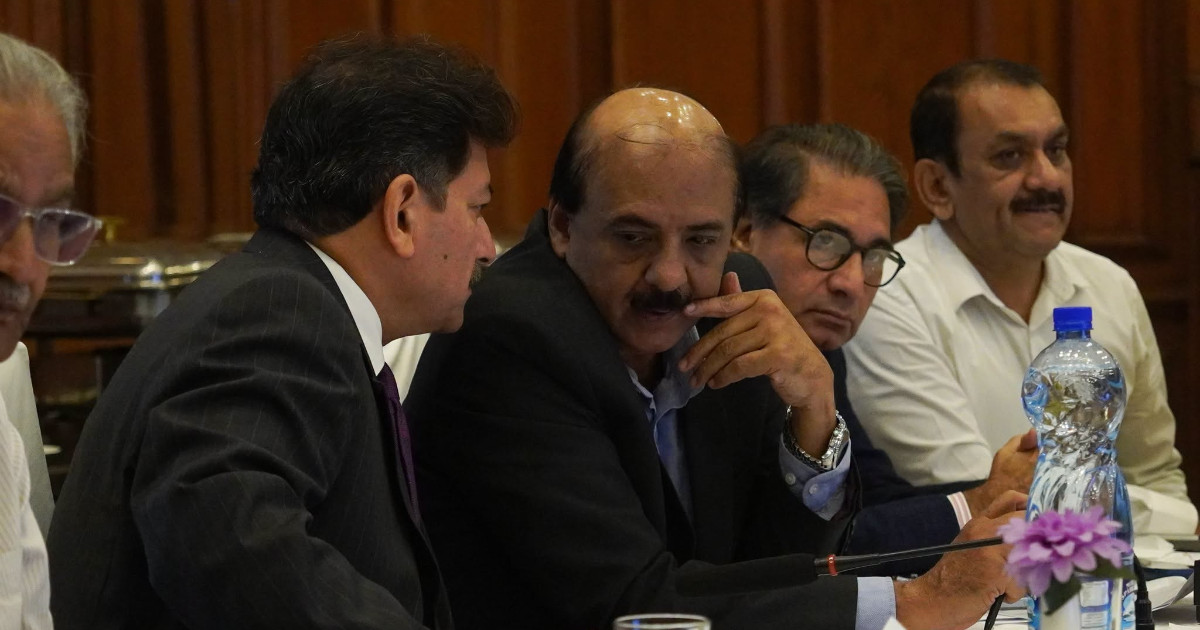
The issue returned to national attention during protests across Pakistan on November 3, 2026, when journalists raised concerns about unpaid salaries, forced layoffs, bureau closures and restrictions on press freedom. The Pakistan Federal Union of Journalists (PFUJ) organized the demonstrations to mark the anniversary of the 2007 emergency, while highlighting the economic and professional difficulties facing media workers.
Why are journalists going unpaid?
Delayed salaries have become a recurring complaint across Pakistan's media industry, particularly in private television news organizations. Employees have reported waiting two, three, or even four months for payments, while others have received only part of their outstanding wages.
The reasons vary between organizations. Falling advertising revenue, rising operating costs, declining profitability, and weak financial planning can contribute to payment problems. However, financial difficulties do not automatically relieve employers of their contractual and statutory obligations to employees.
There is also a distinction between a temporary cash-flow problem and a prolonged failure to pay staff. A company facing a short-term revenue shortage may delay payments while arranging funds. Repeated delays extending over several months raise more serious questions about management priorities, financial sustainability and compliance with labor laws.
Whatever the cause, employees continue to face regular expenses. Rent, school fees, utility bills, transport and medical costs cannot necessarily be postponed because an employer has failed to release salaries.
What does Pakistani law say about unpaid wages?
Pakistan has legal provisions governing the payment of wages, employment conditions and the recovery of outstanding dues. However, the applicable law and forum depend on the province, nature of employment, organization, and worker's legal status.
The Payment of Wages Act, 1936, and relevant provincial legislation provide mechanisms for addressing delayed wages and unauthorized deductions where the laws apply. For example, the Sindh Payment of Wages Act, 2015, requires covered establishments to follow prescribed wage-payment periods and allows claims relating to delayed payments.
For newspaper employees, the Newspaper Employees (Conditions of Service) Act, 1973, establishes specific employment protections and provides for wage determination through statutory Wage Boards.
The Implementation Tribunal for Newspaper Employees (ITNE), established under the 1973 Act, is responsible for implementing Wage Board awards. The Ministry of Information and Broadcasting identifies implementation of these awards as the tribunal's principal function.
However, the ITNE is not a general forum for every employment dispute involving journalists. Its jurisdiction is tied to Wage Board implementation, and other claims may require different legal proceedings.
A distinction is also necessary between newspaper employees and journalists working for television channels, digital publications or other media businesses. Their legal remedies are not necessarily identical, and coverage under particular labor laws cannot be assumed merely because someone works as a journalist.
How can journalists recover unpaid salaries?
Journalists seeking unpaid wages generally need to establish their employment relationship, the salary agreed with their employer, the amounts due, and the period for which payment has been withheld.
Appointment letters, employment contracts, salary slips, bank statements, attendance records and written correspondence with management can all help establish a claim.
Depending on the circumstances, employees may approach the appropriate labor authority, a competent court or tribunal, or seek assistance through a journalists' union. The correct forum depends on the governing law, employment classification and nature of the claim.
Written complaints can be particularly important because they establish when employees formally raised the issue and what response, if any, management provided.
Journalists should also be aware that filing a complaint does not guarantee immediate recovery. Proceedings may take time, employers may dispute the amount owed, and enforcement can remain difficult even after a favorable decision.
For employees already struggling financially, the time and expense involved in pursuing a claim can become an additional burden.
What has JournalismPakistan reported over the years?
JournalismPakistan.com has consistently reported on delayed salaries, layoffs, job insecurity, and the financial difficulties of media workers. Its coverage has followed the issue over the years, documenting individual complaints, collective protests and developments across print and broadcast organizations.
On February 24, 2026, JournalismPakistan reported prolonged salary delays at several private television channels, including Aaj News, 365 News and NewsOne. Employees described financial uncertainty, while some organizations were also facing restructuring pressures.
The problem became particularly visible ahead of Eid-ul-Fitr. On March 11, JournalismPakistan reported that the Rawalpindi-Islamabad Union of Journalists (RIUJ) had appealed to Information Minister Attaullah Tarar for intervention after identifying unpaid or partially paid employees at several television channels.
Further reporting on March 16 found that journalists at Neo News, Lahore Rang, Aaj News and other broadcasters were facing outstanding payments, with some workers reporting arrears extending to three or four months.
On March 19, JournalismPakistan reported a partial breakthrough following union protests. According to RIUJ President Asif Bashir Chaudhry, several organizations, including Suno News, Public News and 365 News, had cleared delayed salaries. However, workers at other channels were still awaiting payment.
The cases showed that collective pressure could produce results, although they did not establish a permanent solution to the industry's salary problems.
Another example emerged on March 31, when JournalismPakistan reported allegations by former The Nation reporter Israr Ahmed Rajpoot. He claimed approximately Rs6.2 million in unpaid salaries and benefits and said his efforts to recover the money had remained unresolved. These were his allegations, not independently established findings against the newspaper's management.
Taken together, JournalismPakistan's reporting illustrates that salary arrears are not confined to a single organization or an isolated period. They represent a recurring employment issue across parts of Pakistan's media industry.
How do unpaid salaries affect editorial independence?
The relationship between financial insecurity and editorial independence is less direct than the relationship between censorship and publication. Nevertheless, it deserves serious attention.
A journalist who has not received several months of salary may find it difficult to challenge management decisions, reject unreasonable assignments, or raise concerns about interference in editorial work.
The prospect of losing a job while outstanding salaries remain unpaid can make employees particularly vulnerable. Reporters may hesitate to question decisions made by senior editors, owners or influential individuals if they fear retaliation or dismissal.
Financial pressure can also create conflicts of interest. Journalists struggling to meet basic expenses may become more dependent on outside employment, paid assignments, or other sources of income.
Such arrangements do not automatically compromise a journalist's integrity. However, without clear disclosure rules and professional safeguards, additional financial dependence can introduce risks to independent reporting.
It would be inaccurate to suggest that journalists receiving delayed salaries necessarily produce compromised journalism. Many continue to uphold professional standards despite considerable hardship.
The concern is that persistent financial insecurity can weaken the conditions needed for independent decision-making.
What happens to newsroom morale and reporting quality?
Salary arrears can affect entire editorial teams, even when employees continue reporting.
Journalists who are uncertain about their income may struggle with concentration, motivation, and long-term career planning. Experienced employees may begin looking for work outside journalism, leaving organizations with fewer trained reporters, editors and producers.
The effects can extend to routine newsroom operations. Reporters may find it difficult to pay for transport, telephone services or other expenses needed to cover assignments. Camera operators and field teams can face similar problems.
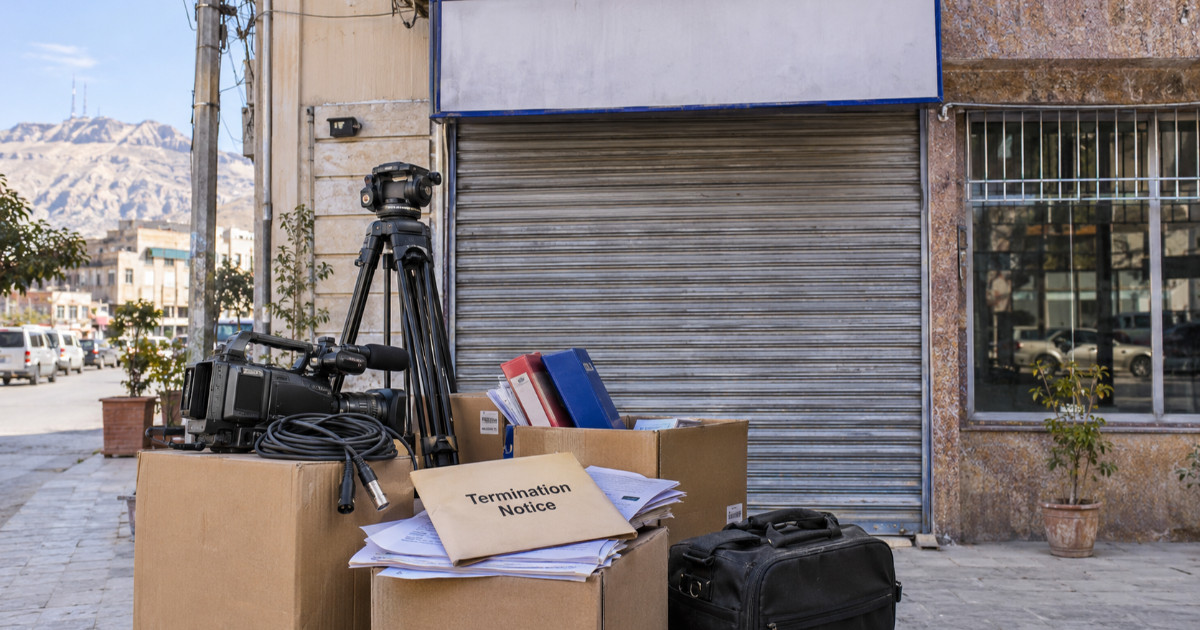
When organizations combine salary delays with layoffs and bureau closures, remaining staff may have to manage heavier workloads with fewer resources.
This can reduce the time available for verification, investigative reporting, and coverage of communities outside major urban centers.
For smaller cities and districts, the consequences can be particularly significant. A bureau closure may remove one of the few reporting teams regularly covering local institutions, public services and government decisions.
News consumers may not immediately recognize these pressures. They can nevertheless experience the consequences through reduced reporting, less original coverage and greater dependence on official statements or syndicated material.
Can media owners justify delaying salaries?
Media owners face genuine business pressures. Advertising markets change, operating expenses increase, and competition from digital platforms can undermine traditional revenue models.
Publishers and broadcasters may argue that maintaining an organization during a financial crisis requires difficult decisions about staffing, expenditure and restructuring.
These concerns are relevant when assessing the industry's economic condition. However, they are separate from the question of employees' legal entitlement to wages already earned.
An employer's financial problems do not, by themselves, establish a lawful basis for withholding salaries indefinitely.
There is also a management responsibility to communicate clearly with staff about financial problems, outstanding payments, and realistic repayment arrangements.
The central issue is whether financial pressures are handled transparently and in accordance with applicable employment laws, rather than transferred entirely to workers who have already performed their duties.
Why should unpaid salaries be treated as a press-freedom issue?
Press freedom is commonly discussed in terms of censorship, arrests, criminal proceedings, threats and restrictions on reporting.
Economic conditions are sometimes treated separately, as matters involving employers and employees rather than the public's right to information.
Yet journalism depends on people who can perform their work without excessive financial dependence or fear of losing their livelihood.
Unpaid salaries do not constitute censorship in themselves. Nor does every wage dispute demonstrate interference with editorial independence.
The connection becomes important when persistent non-payment makes journalists less able to resist pressure, discourages critical reporting or weakens the capacity of news organizations to serve the public.
The November 3 protests reflected that broader concern. Journalists raised unpaid salaries and job losses alongside restrictions on expression and legal pressures on the profession.
Recognizing the economic dimension of press freedom does not eliminate the distinction between labor rights and editorial rights. It acknowledges that the two can influence each other.
What should journalists do when salaries are delayed?
Journalists facing salary arrears should maintain accurate records of payments received, outstanding amounts, and communications with employers.
They should review their appointment letters and contracts, seek advice on the labor laws applicable to their employment, and determine which authority has jurisdiction over their claims.
Where possible, affected employees can coordinate through recognized journalists' unions or obtain independent legal advice before initiating proceedings.
Workers should also consider documenting disputed deductions, delayed benefits, changes in employment conditions, and any retaliation connected with wage complaints.
The immediate objective is recovery of lawful dues. The broader challenge is ensuring that delayed salaries do not become an accepted operating practice within media organizations.
Why this matters
A journalist cannot exercise professional independence under conditions of continuing financial uncertainty without facing additional pressures. Salary arrears can damage careers, weaken newsrooms and ultimately reduce the quality and diversity of information available to the public. Protecting journalists' employment rights is therefore relevant not only to workers and media owners, but also to the wider conditions necessary for independent journalism.
Key takeaways
Unpaid salaries can create financial hardship and weaken newsroom stability
Pakistani wage laws provide remedies, but their application depends on employment status and jurisdiction
Newspaper employees have specific protections under the 1973 law and Wage Board framework
JournalismPakistan has repeatedly documented salary arrears, union protests and partial recovery of outstanding payments
Persistent financial insecurity can increase editorial vulnerability even when no direct censorship is involved
ATTRIBUTION: Reporting by JournalismPakistan, based on its published coverage from February, March and November 2026; the Newspaper Employees (Conditions of Service) Act, 1973; applicable wage-payment legislation; official information from the Ministry of Information and Broadcasting; and reporting by Dawn and Voicepk.
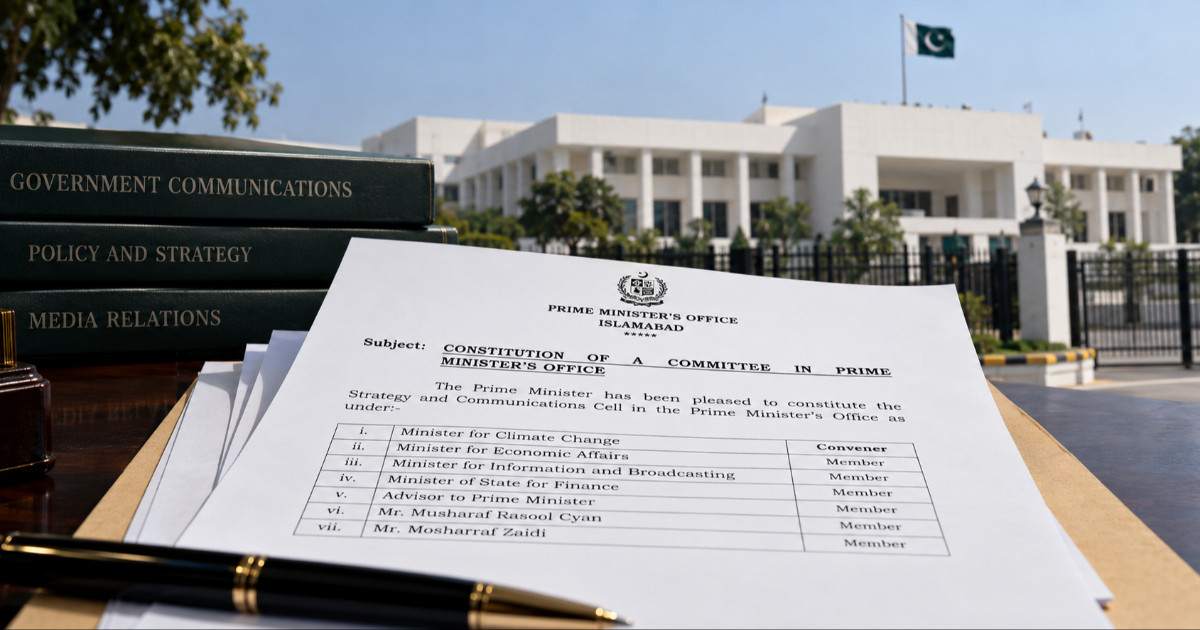
PHOTO: AI-generated; for illustrative purposes only.
Key Points
- Delayed or withheld salaries have become common in private TV and other media across Pakistan.
- Causes include falling advertising revenue, rising costs and weak financial planning by outlets.
- Prolonged nonpayment undermines journalists' financial independence and editorial autonomy.
- Morale falls, layoffs and bureau closures follow, further weakening news coverage.
- There is a difference between short-term cash-flow delays and repeated, prolonged failures to pay staff.
Key Questions & Answers
Why are many journalists going unpaid?
Media organisations cite falling advertising revenue, rising operating costs, declining profitability and weak financial planning; some face short-term cash shortages while others suffer prolonged funding problems.
What are the main effects of unpaid salaries?
Financial insecurity can erode independent reporting, lower newsroom morale, prompt layoffs and bureau closures, and reduce the overall capacity of media outlets to operate.
What did the November 3, 2026 protests highlight?
The PFUJ-organised demonstrations drew attention to unpaid wages, forced layoffs, bureau closures and restrictions on press freedom while marking the anniversary of the 2007 emergency.
What recourse do journalists have?
Journalists can pursue union support, legal and contractual remedies, collective bargaining and public advocacy; employers still have statutory and contractual obligations even amid financial strain.
Relevant Topics
Ask AI: Understand this story your way
AI EnabledDig deeper, ask anything — get instant context, background, and clarity.
Disclaimer: This feature is powered by AI and is intended to help readers explore and understand news stories more easily. While we strive for accuracy, AI-generated responses may occasionally be incomplete or reflect limitations in the underlying model. This feature does not represent the editorial views of JournalismPakistan. For our full, verified reporting, please refer to the original article.