
Caught between a rock and a hard place
JournalismPakistan.com | Published: 17 September 2012
Join our WhatsApp channel
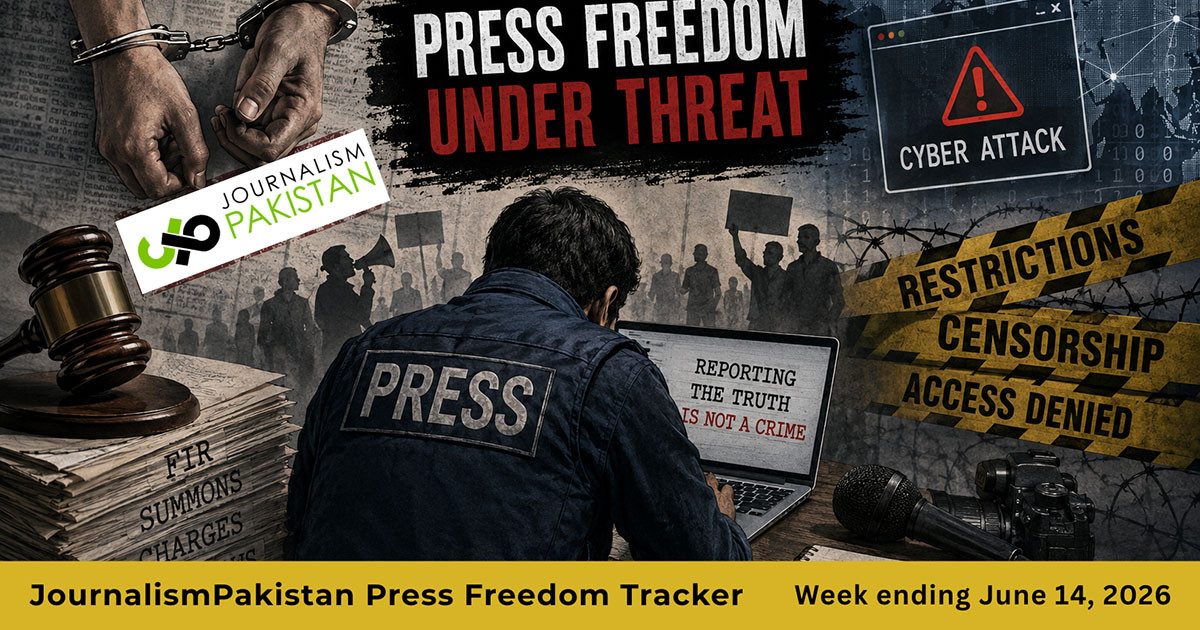
In Balochistan, journalists are caught between militant threats and government repression. They risk their lives daily while facing anti-terrorism charges for their reporting.Summary
QUETTA: The telephone call to local journalists generally comes in the late evening. The voice on the other end is harsh. He has a statement he wants printed, and he prefaces it with a terse order: "Report our messages without making any changes or we will kill you."
The messages they deliver warn of upcoming violence or assassinations, sometimes naming an intended victim, or claim responsibility for atrocities already committed.
The calls come from Sunni militants notorious for violence against minority Shiites or members of secessionist groups that routinely blow up police stations and attack government facilities in the southwestern Pakistani province of Balochistan.
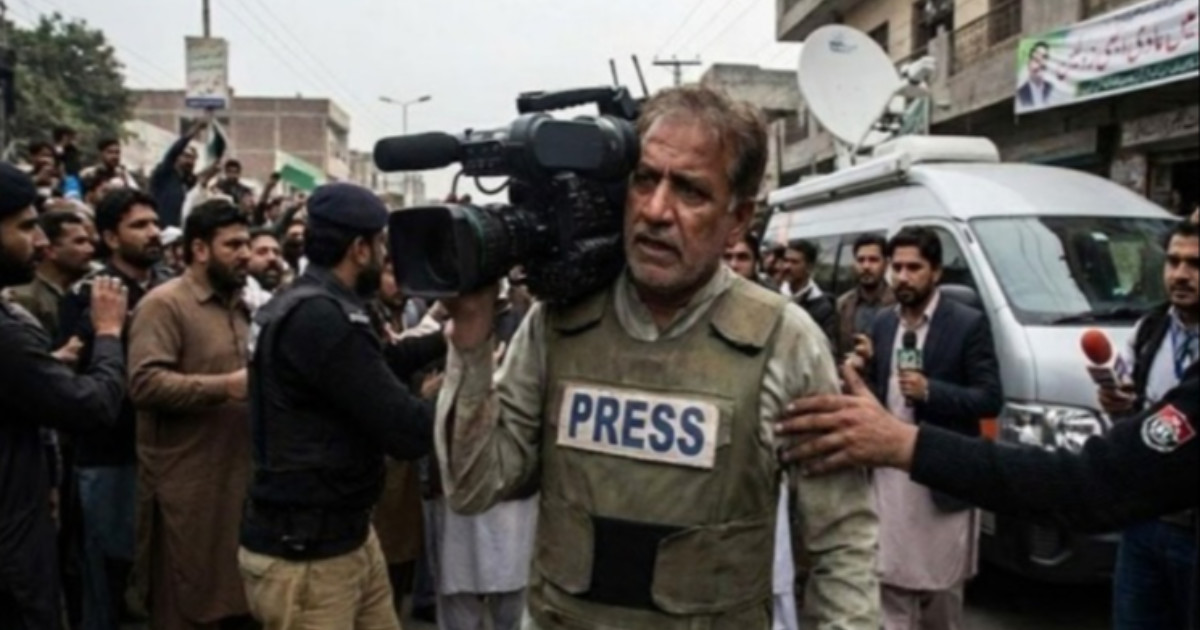
But the late-night calls put the journalists in a bind. If they don't print the messages, they could be killed. If they do print them, they could face three years in prison under Pakistan's anti-terrorism laws. It's no surprise which risk they'd rather run. At least 20 journalists have been killed in Balochistan the past six years, their bullet-ridden bodies sometimes found stuffed into sacks.
"If you are a journalist here in Balochistan you have a choice: Either a bullet in the head or a jail sentence," said Ashiq Butt, a stocky bureau chief with the News Network International (NNI), a Pakistani news agency that feeds its reports to newspapers.
But authorities are putting pressure from their side as well, trying to stem spiraling violence in the province. Last month, the Balochistan provincial government for the first time charged 21 news organizations, their owners and several journalists under the anti-terrorist law, which provides for three years in jail if convicted of carrying messages, reports or information supplied by outlawed militant groups. The charge sheet filed by the government accused the news organizations of "spreading panic."
Pakistan is one of the most dangerous places in the world to work as a journalist, according to the US-based Committee to Protect Journalists. In the last six years 41 journalists have died violently in Pakistan, although 12 of those deaths are still under investigation to determine whether their deaths were linked to their jobs as journalists, according to the CPJ site.
Many of the multiple militant groups and armed factions in Pakistan — such as Lashkar-e-Janghvi, behind many slayings of Shiites — operate with impunity, with police too weak to take much direct action against them. So they are only emboldened to threaten journalists into being their mouthpieces. "If I want to live in this city I have to write what they say," Butt said.
The statements can often be cruel and explicit, detailing those who have been killed, he said. Sunni militants' messages are laced with vitriolic attacks against the minority Shiite Muslims they revile as heretics. Just last week, he was called by a member of the violent Balochistan Liberation Army, a self-declared secessionist group fighting for an independent state for ethnic Balochis against what they see as domination from ethnic Punjabis. The group has already claimed responsibility for the deaths of three journalists. The caller had a message and added, use it verbatim or die.
Butt did exactly that, publishing the statement, "The Punjabis have captured our lands and we will kill the Frontier Corps and Police . . . We will continue our struggle until Balochistan is liberated from Pakistan."
Aryan Khan, another journalist in the Balochistan capital Quetta, said Lashkar-e-Janghvi militants even dictate the language newspapers and broadcasters should use in their normal news reports whenever they report on the death of a Shiite, whether in an attack or from natural causes.
Rather than the respectful, euphemistic terms usually used by Urdu-language press for a person's death, "they say we should use the same word we use if an animal dies," he said.
In recent years Pakistan's Balochistan province has been shattered by relentless bloodletting by the separatists and by Sunni militant killings and suicide bombings against Shiites. Human rights activists and international aid workers operating in Balochistan have also been attacked. The international Red Cross suspended its operations in May after one of its workers was killed in Quetta.
"For us Balochistan has become a source of great concern," said Bob Dietz, Asia Program Coordinator for the Committee to Protect Journalists. "The situation in Balochistan looks set to continue for a long time — the issues are deep seated and don't lend themselves to easy solutions. For media support groups, the region has emerged as a new front line."
Escalating violence is making vast parts of Balochistan inaccessible, said Dietz. That, he contended, seems to suit the government.
"The government seems to be quite happy that there is little or no independent monitoring of the situation," he said. He also criticized the Balochistan provincial government for laying charges against journalists and news organizations covering both sides in the conflicts ravaging the region.
In an interview in Quetta, provincial police chief Omar Ibne Khitab justified the charges, saying the anti-terror law was clear. He also said his force does not have the equipment to trace the threatening telephone calls to journalists and locate the culprits.
The Human Rights Commission of Pakistan issued a report last month criticizing the government for inaction as well as national media outlets for neglecting coverage of events in Balochistan. The report said local journalists feel threatened from all sides and neglected by the government.
"Journalists in the field felt threatened from the security forces, militants and insurgents," said the report released August 30. "If they said one thing they were traitors to one side and if they did not they were traitors to the other side.”
From within the HRCP's heavily guarded office, Shamsul Mulk said rights workers risked their lives investigating the killings of journalists as well as the circumstances surrounding the disappearance of scores of people, many linked to the separatist movement. Many rights workers have left the organization out of fear for their lives.
"I wouldn't be here if there wasn't a guard outside the door," he said. "People are afraid. They are not even attending our meetings anymore."- AP
Key Points
- Journalists receive threatening calls from Sunni militants demanding specific coverage.
- 21 news organizations have been charged under anti-terrorism laws for reporting militant messages.
- Escalating violence has made parts of Balochistan inaccessible for independent reporting.
- 41 journalists have died violently in Pakistan in the last six years.
- The government faces criticism for not protecting journalists and failing to resolve conflicts.
Relevant Topics
Ask AI: Understand this story your way
AI EnabledDig deeper, ask anything — get instant context, background, and clarity.
Disclaimer: This feature is powered by AI and is intended to help readers explore and understand news stories more easily. While we strive for accuracy, AI-generated responses may occasionally be incomplete or reflect limitations in the underlying model. This feature does not represent the editorial views of JournalismPakistan. For our full, verified reporting, please refer to the original article.