Amar Guriro: Journalism's future is human-AI partnership The JournalismPakistan Global Media Brief | Edition 23 | June 5, 2026 As AI reshapes news, publishers seek a sustainable future Every frame at a cost: The safety crisis facing Pakistan's camerapersons Why journalists are increasingly targeted in conflict zones What the 60 Minutes controversy means for TV journalism Zee secures FIFA World Cup rights in India through 2030 How fact-checkers verify viral videos during breaking news Pentagon restrictions on reporters draw media backlash Israel-Lebanon talks proceed as conflict hinders reporting Why governments are tightening controls on foreign journalists China condemns US restrictions on Xinhua reporter Taiwan condemns China over New York Times reporter expulsion The biggest threats facing journalism in Asia today Press freedom review: The many faces of pressure on the press Amar Guriro: Journalism's future is human-AI partnership The JournalismPakistan Global Media Brief | Edition 23 | June 5, 2026 As AI reshapes news, publishers seek a sustainable future Every frame at a cost: The safety crisis facing Pakistan's camerapersons Why journalists are increasingly targeted in conflict zones What the 60 Minutes controversy means for TV journalism Zee secures FIFA World Cup rights in India through 2030 How fact-checkers verify viral videos during breaking news Pentagon restrictions on reporters draw media backlash Israel-Lebanon talks proceed as conflict hinders reporting Why governments are tightening controls on foreign journalists China condemns US restrictions on Xinhua reporter Taiwan condemns China over New York Times reporter expulsion The biggest threats facing journalism in Asia today Press freedom review: The many faces of pressure on the press
Logo
Janu
Track Global Media Layoffs

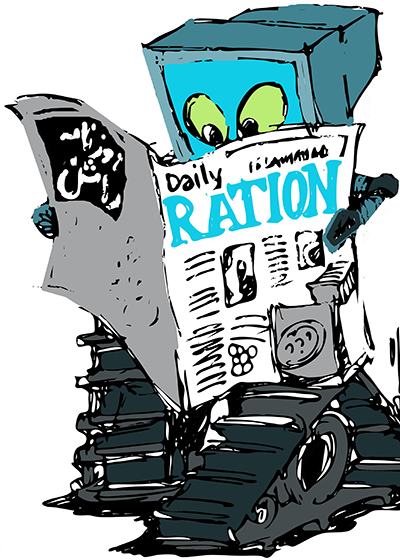
Cartoonist says The Nation has not officially sacked him

 JournalismPakistan.com |  Published: 29 September 2019

Join our WhatsApp channel
Cartoonist says The Nation has not officially sacked him
Khalid Hussain, a cartoonist, claims that he has not received an official notice of termination from The Nation. The publication decided to stop his cartoons due to government pressure following a controversial artwork.

ISLAMABAD — Khalid Hussain, a cartoonist whose artwork mocked Prime Minister Imran Khan and was deemed offensive by readers, says The Nation has not sacked him formally.

“I have not got marching orders in black and white. Only verbally I have been told that my cartoons, for the time being, will not be published,” Hussain told BBC Urdu.

He added that the head of the editorial pages verbally informed him that because of the government pressure, the paper had decided not to publish his cartoons. “But I do not know how long my work will not be published.”

The controversial cartoon published on the paper’s editorial page on September 25 angered the government. It showed PM Khan drawing a carriage that has American President Donald Trump dangling a ‘mediation’ carrot in front of him, with Indian Prime Minister Narendra Modi seated.

The Nation apologized for publishing the artwork on September 26. “We would like to apologise deeply for a cartoon that appeared on our pages. The artwork fell short of our standards and does not reflect our editorial policy. It should never have appeared.”

Hussain told BBC Urdu that he had not faced any restrictions on his artwork, though sometimes his cartoons have not been published as they were seen to be violating the paper’s editorial policy. However, he added this particular cartoon was published after it was okayed in line with the editorial policy.

He also tried to explain that the cartoon was neither against the person of the prime minister nor the government. “It was to depict that America is diverting Pakistan’s attention while allowing India to take whatever measures it likes in occupied Kashmir.”

He said the government did not understand the cartoon and used pressure tactics against the paper, adding it was unfortunate.

Key Points

  • Khalid Hussain states he was not formally sacked by The Nation.
  • The decision to halt his cartoons is based on government pressure.
  • A cartoon published on September 25 provoked backlash from the government.
  • The Nation apologized for the controversial cartoon shortly after.
  • Hussain argues that his work was intended to comment on U.S. and India's involvement in Kashmir.

Ask AI: Understand this story your way

AI Enabled

Dig deeper, ask anything — get instant context, background, and clarity.

Not sure what to choose? Try one of these.

The AI generates results based on your selected options
Your AI-generated results will appear here after you click the button.

Disclaimer: This feature is powered by AI and is intended to help readers explore and understand news stories more easily. While we strive for accuracy, AI-generated responses may occasionally be incomplete or reflect limitations in the underlying model. This feature does not represent the editorial views of JournalismPakistan. For our full, verified reporting, please refer to the original article.

Dive Deeper

Newsroom
Amar Guriro: Journalism's future is human-AI partnership

Amar Guriro: Journalism's future is human-AI partnership

 June 05, 2026 Amar Guriro, founder of Pakistan's first AI-powered news platform, says journalism's future rests on human-AI collaboration to improve reporting while preserving editorial oversight.


The JournalismPakistan Global Media Brief | Edition 23 | June 5, 2026

The JournalismPakistan Global Media Brief | Edition 23 | June 5, 2026

 June 05, 2026 Global Media Brief reviews pressures reshaping journalism, press freedom, AI and platform power, and reports BBC's Emmy, 60 Minutes turmoil and Taiwan's protest.


As AI reshapes news, publishers seek a sustainable future

As AI reshapes news, publishers seek a sustainable future

 June 05, 2026 At the World News Media Congress in Marseille, publishers discussed how generative AI is altering newsroom workflows, audience engagement and content licensing.


Why journalists are increasingly targeted in conflict zones

Why journalists are increasingly targeted in conflict zones

 June 04, 2026 Journalists in conflict zones face rising danger as combatants, states and militias increasingly target independent reporting to control narratives.


What the 60 Minutes controversy means for TV journalism

What the 60 Minutes controversy means for TV journalism

 June 03, 2026 The 60 Minutes controversy at CBS exposes tensions over leadership, editorial independence and pressures on legacy TV journalism amid political polarization.


Popular Stories