
Journalists face burnout amid nonstop news cycle Why news avoidance may be a bigger threat than misinformation Seven evidence-based media predictions for Pakistan and beyond in 2026 Dawn calls life sentences for journalists an extreme move Arab journalists pledge cooperation to defend media freedom Palestinian rights group flags press access limits Silencing an article in Pakistan makes it louder When telling the story becomes a crime: A warning shot for Pakistani journalism Breaking news alerts then and now: from urgency to overload AI reduces publisher traffic but not newsroom jobs, study finds Palestinian journalists face a wave of detentions in 2025 Journalists face burnout amid nonstop news cycle Why news avoidance may be a bigger threat than misinformation Seven evidence-based media predictions for Pakistan and beyond in 2026 Dawn calls life sentences for journalists an extreme move Arab journalists pledge cooperation to defend media freedom Palestinian rights group flags press access limits Silencing an article in Pakistan makes it louder When telling the story becomes a crime: A warning shot for Pakistani journalism Breaking news alerts then and now: from urgency to overload AI reduces publisher traffic but not newsroom jobs, study finds Palestinian journalists face a wave of detentions in 2025
Logo
Janu
Digital Connections

Kamal Siddiqi outlines future plans in Express Tribune column

 JournalismPakistan.com |  Published: 5 September 2016

Join our WhatsApp channel
Kamal Siddiqi outlines future plans in Express Tribune column
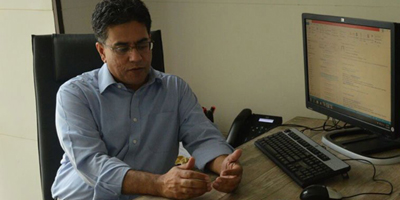
Kamal Siddiqi, former editor of The Express Tribune, has shared his future plans in a recent column. He highlights the growth of media and the challenges facing journalists in Pakistan.

ISLAMABAD – Kamal Siddiqi, who has stepped down as editor of The Express Tribune, outlined his future plans in an op-ed column published Monday.

In the column titled “The challenge ahead” he talks about the number of newspapers, magazines, readers and Internet users in Pakistan that have continually risen since 2002.

“In 2002, we had 1,100 dailies, weeklies and monthlies. Today we have approximately 2000,” he said, pointing out that the print circulation had also increased from 3million in 2002 to over 6 million in 2015.

He then turns to the massive growth of the broadcast media – from one TV channel in 2002, we now have over a hundred, 40 of them being news channels, besides this there are almost 150 FM channels.

Siddiqi then switches to the number of working journalists in Pakistan that has soared from 2000 in 2002 to an estimated 18,000 at present, and that is where the challenge lies, he writes. But he adds that an even bigger challenge is that almost 70 percent of this number is without a journalism degree.

Apart from attaining professional skills, the main issues now for journalists in Pakistan are ethics and safety. “When people complain about the deteriorating standards of journalism in Pakistan what they do not understand is that like every other part of our society, here too, there are some basic issues that need to be addressed.”

Siddiqi wrote that he now wanted to focus on these issues but doing so meant giving up his position as editor of “one of Pakistan’s most exciting and talked about English language dailies.”

“The paper has set new standards and like every good institution has introduced hundreds of men and women to the profession. Tribune staffers, past and present, are amongst the best-trained journalists in Pakistan today.”

He termed his seven-year association with the paper a roller-coaster. “And we are fully cognizant of the fact that we are no more gate keepers. The onslaught of social media has changed all that,” he wrote, pointing out that their strength now would be to give the audience accurate and informed content. That is why we need better journalists. That is why I plan to focus on training of journalists in Pakistan.”

Image courtesy: Balochistanvoices.com

KEY POINTS:

  • Siddiqi steps down as editor of The Express Tribune.
  • He discusses the rise of newspapers, magazines, and internet users since 2002.
  • Print circulation grew from 3 million in 2002 to over 6 million by 2015.
  • The number of working journalists has soared to an estimated 18,000 in Pakistan.
  • Siddiqi emphasizes the need for training and ethics in journalism.
Explore Further

Newsroom
Journalists face burnout amid nonstop news cycle

Journalists face burnout amid nonstop news cycle

 January 05, 2026 Growing burnout among journalists in the relentless 24/7 news cycle is affecting their mental health, job satisfaction, and retention, driven by stress stemming from excessive workload, long hours, and constant connectivity.


Arab journalists pledge cooperation to defend media freedom

Arab journalists pledge cooperation to defend media freedom

 January 04, 2026 Arab journalist unions from Jordan and Egypt announce deeper cooperation on training and advocacy, stressing media freedom and the role of Arab media in shaping global narratives.


Palestinian rights group flags press access limits

Palestinian rights group flags press access limits

 January 03, 2026 The Palestinian Centre for Human Rights highlights ongoing restrictions on journalists in occupied territories, impacting press freedom and humanitarian reporting.


Breaking news alerts then and now: from urgency to overload

Breaking news alerts then and now: from urgency to overload

 January 03, 2026 The evolution of breaking news alerts highlights a shift from rare, trusted updates to frequent notifications that contribute to audience fatigue.


AI reduces publisher traffic but not newsroom jobs, study finds

AI reduces publisher traffic but not newsroom jobs, study finds

 January 02, 2026 A study reveals that AI has reduced traffic to news publishers but not job levels, challenging fears of mass layoffs in journalism.


Popular Stories