
(1).png)
ZIM, Vai Ell and a newsroom chase under martial law
JournalismPakistan.com | Published: 24 August 2026 | Akhtar Shah
Join our WhatsApp channel
During General Zia's early martial law in about 1979, journalists Zafar Iqbal Mirza (ZIM) and Yusuf Lodhi (Vai Ell) slipped past a security picket, entered The Muslim's Islamabad offices and hid on a first-floor sunshade while soldiers searched the building.Summary
Akhtar Shah revisits a remarkable episode in which two celebrated journalists escaped a security search by hiding on a first-floor sunshade outside The Muslim’s Islamabad newsroom.
ISLAMABAD — During the early years of Gen Zia-ul-Haq’s martial law, probably around 1979, an extraordinary episode unfolded in Islamabad that has survived in newsroom memory as part satire, part suspense and wholly representative of those suffocating yet strangely creative times.
Zafar Iqbal Mirza, widely known as ZIM, and journalist-cartoonist Yusuf Lodhi, better known as Vai Ell, were heading to The Muslim when they passed a security picket without stopping. With their untidy appearance and flowing beards, the two could have stepped out of a caricature of Karl Marx and Friedrich Engels. Their failure to stop triggered a dramatic pursuit through Islamabad, with a military jeep carrying a young officer and soldiers close behind.
A search reaches the newsroom
ZIM and Lodhi eventually reached the offices of Islamabad Publications at 9 Hameed Chambers in Aabpara. They hurried inside, but the pursuing officer arrived moments later. Soldiers surrounded the premises and began searching the building.
The officer announced that he was looking for two suspects whom he described as “a Sikh and a Hindu sadhu.” He said they had been seen entering the offices only moments earlier.
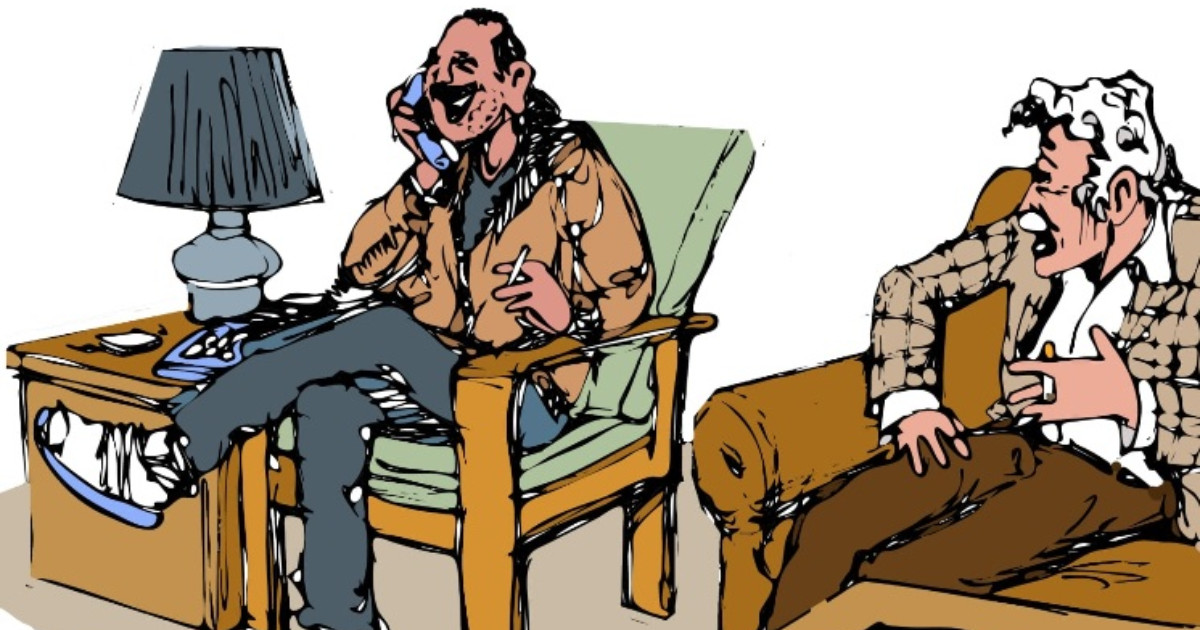
The two men were indeed there—but not inside the newsroom. Sensing trouble, ZIM and Lodhi had climbed through the editor’s window and taken refuge on a narrow first-floor sunshade. They remained crouched outside, precariously suspended above the street while the search continued only a few feet away.
Inside, The Muslim’s founding editor, A.T. Chaudhry, confronted the young officer with characteristic composure.
“Whom exactly are you looking for?” he asked.
“A Sikh and a Hindu have entered here. We are here to arrest them,” the officer replied.
A pointed newsroom response
Chaudhry listened before offering a calm but unmistakably pointed response.
“If what you say is true, let me assure you that there are no Sikhs or Hindus among our staff, only journalists,” he said. “If any of our people have broken the law, they will be handed over according to the law. But tell me, officer, why does your conduct resemble that of an occupying force?”
The remark worked like a pin against an inflated balloon. The tension began to recede, voices softened, and the confrontation eventually ended without any arrests.
ZIM and Lodhi, however, remained on the sunshade until they were certain that the officer and his soldiers had left. Only then did they climb back through the window, having survived an episode that could easily have ended very differently under martial law.
Satire waiting outside
Parked outside the building, with its doors reportedly left open, was Lodhi’s mustard-yellow 1974 Toyota Corolla. The vehicle was filled with sheets of paper bearing his cartoons, sharp, irreverent and capable of puncturing the polished façade of the official narrative with a single line or stroke.
Empty bottles scattered across the floor did little to make the car appear less suspicious. They did, however, add another comic detail to an afternoon already balancing precariously between farce and danger.
Lodhi’s cartoons offered a rare form of relief during the Zia years. His depictions of the military ruler often transformed the general’s moustached face and medal-covered uniform into a rigid, block-like figure. Through exaggeration and ridicule, he found humor in an environment where both political expression and laughter were being steadily restricted.
Humor where freedoms shrank
These were years of direct censorship, when newspapers could be ordered to remove reports and commentary before publication. The Muslim sometimes responded by leaving the censored spaces blank, a stark visual reminder that words had been removed by authority.
Yet satire survived. Art adapted, twisted, and reinvented itself. A cartoon could communicate what an editorial was forbidden to say, while a carefully chosen line could expose the absurdity behind an official command.
Journalists, too, found ways to resist, sometimes through their reporting, sometimes through silence and empty spaces, and occasionally by climbing through a newsroom window and waiting out the authorities on a narrow ledge.
EDITOR’S NOTE: This article is based on a newsroom episode preserved and retold by Akhtar Shah.
CARTOON: ZIM and Yusuf Lodhi hide on the first-floor sunshade outside The Muslim’s newsroom while soldiers search the premises. Illustration by Akhtar Shah.
ABOUT THE AUTHOR: Akhtar Shah is a cartoonist and contributor to JournalismPakistan.com.
Key Points
- Event took place during General Zia-ul-Haq's early martial law period.
- Zafar Iqbal Mirza (ZIM) and Yusuf Lodhi (Vai Ell) were the journalists involved.
- They passed a security picket, prompting a military pursuit to The Muslim offices.
- The pair hid on a narrow first-floor sunshade after entering through a window.
- Soldiers searched the building while the journalists remained concealed.
Key Questions & Answers
Who were ZIM and Vai Ell?
ZIM was Zafar Iqbal Mirza, a noted journalist, and Vai Ell was Yusuf Lodhi, a journalist and cartoonist, both prominent figures in Pakistan's media scene.
When did this incident occur?
The episode took place during the early years of General Zia-ul-Haq's martial law, around 1979.
How did they avoid capture?
They slipped into The Muslim's offices, climbed through an editor's window, and hid on a narrow first-floor sunshade while soldiers searched the building below.
What did the pursuing officer report?
The officer described seeing two suspects, using misleading descriptions, and ordered a search of the premises where the journalists had taken refuge.
Relevant Topics
Ask AI: Understand this story your way
AI EnabledDig deeper, ask anything — get instant context, background, and clarity.
Disclaimer: This feature is powered by AI and is intended to help readers explore and understand news stories more easily. While we strive for accuracy, AI-generated responses may occasionally be incomplete or reflect limitations in the underlying model. This feature does not represent the editorial views of JournalismPakistan. For our full, verified reporting, please refer to the original article.