
Abdul Waheed Kakar: The general who shaped a sports broadcaster
JournalismPakistan.com | Published: 3 November 2026 | Dr. Nauman Niaz (TI)
Join our WhatsApp channel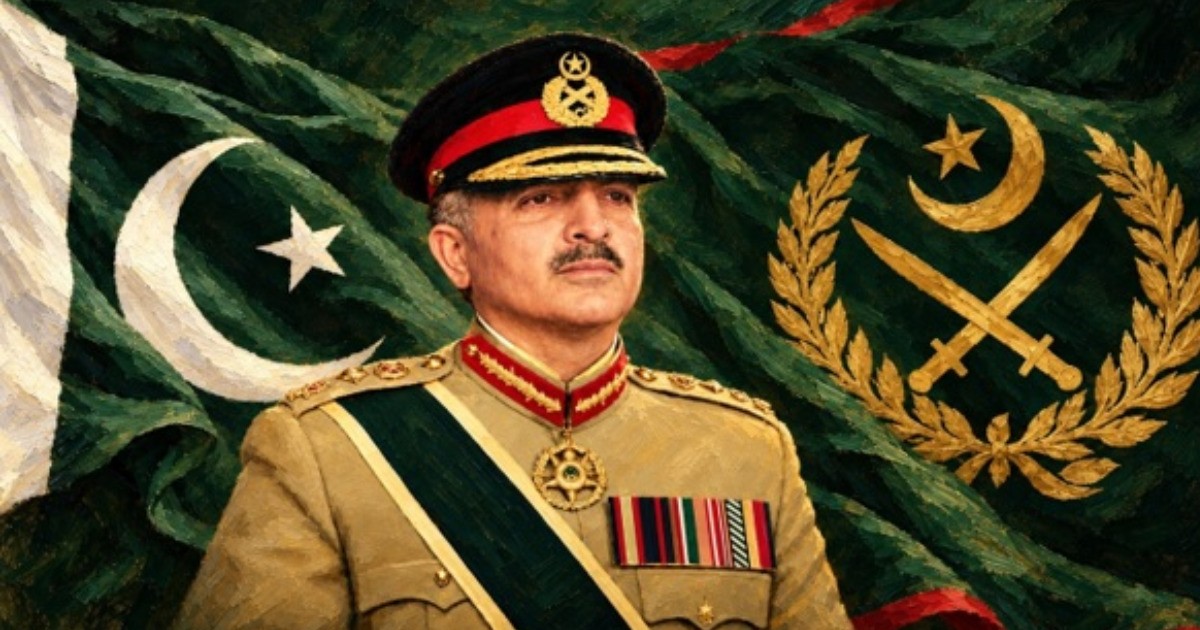
Dr. Nauman Niaz remembers General Abdul Waheed Kakar as a family friend and mentor who encouraged his cricket writing and advised him to pursue medicine alongside broadcasting. The tribute also recounts Kakar's military career.Summary
ISLAMABAD — It fell to me to announce General Waheed Kakar's passing on social media. Yet the public announcement could scarcely convey the private bereavement. He had suffered a cerebrovascular accident and spent 21 days in hospital before the struggle ended.
As I wrote, memory returned me to an encounter that captured something essential about him. I had once asked how, being a man of modest physical stature, he had felt on joining the 19th PMA Long Course. “Napoleon Bonaparte,” came the instantaneous reply. His subtle sense of humour was unwaveringly befitting. The wit was characteristic: assured, economical, and delivered without any need for elaboration. Before we parted, he smiled and added that it was the height of one’s character, rather than one’s physical appearence, that made a person count.
The man behind the uniform
Across the years, that observation has acquired the authority of his example. His charisma required no announcement; his presence commanded attention without demanding it. I remember the general, certainly, but today I mourn the man who could answer an impertinent question with humour, and leave his questioner with a lesson for a lifetime.
On Monday, October 26th, 2026, while a Rawalpindi autumn was doing what Rawalpindi autumns have always done, softening the hard light over the cantonment, thinning the dust, laying a faint gold upon the chinars of the old Mall, General Abdul Waheed Kakar, the fifth Chief of Army Staff of Pakistan, set down the accumulated burden of 89 years. He went as he had lived the last three decades of them: without fanfare, without valediction, without the faintest appetite to be noticed. The Inter-Services Public Relations issued its customary paragraph, sober as a service dress. The funeral prayers were offered at the Army Race Course Ground, where the generals of a later and louder generation stood in disciplined ranks before the bier of a man most of them had known only as a portrait in a corridor, a face among the framed succession of chiefs that every young officer passes on his way to somewhere more important. Some of his colleagues and juinors stood in absolute silence that death had come to him.
A bond beyond military rank
I knew him otherwise. To me he was never “the General”, never “Sir”, never the name the newspapers set in capitals in the fevered summer of 1993. He was Waheed Uncle: a slight, upright figure in his customary shirt and trousers or a cardigan, arriving at our gate at dusk as naturally as the evening azaan, settling into the cane chair on the veranda beside my father, and staying until the tea had gone cold, been replaced, and gone cold again. Long after my father’s passing, General Waheed Kakar remained a father to me in all those profound particulars over which blood can claim no exclusive jurisdiction.
I remember December 2021. He was the first to arrive for my father’s burial. Taking me into his arms, he told me that the old man had gone, and that I must now grow into the responsibilities he had carried, tending to the family as he had done. Then, with an affection that made his words harder to bear, he caressed me and spoke of his own departures to come. “They have all left me alone here,” he said. “And I am already holding my boarding pass too.”
There was neither agitation nor self-pity in his voice. His faith gave him the strength to contemplate his own mortality with an extraordinary clarity of mind, even as he attended to my grief. He held my hand until my father had been buried. Through those final, irrevocable moments, his presence gave me something to hold on to when so much had been taken away.
That was his constancy. Those he loved could depend upon him to remain beside them, even at the graveside, even when he was grieving too. I regret not meeting him reglualrly and whenever I had the pleasure of meeting him, it was all about benefaction.
Character measured beyond stature
There are men whose greatness is a function of altitude, of voice, of the quantity of room they displace. Waheed Kakar stood barely five feet five inches in his polished regimental shoes. Yet when the history of this unquiet republic comes to be written with the candour it so seldom receives, it will record that this small man, at the hour when it mattered most, stood taller than the institution he commanded and taller, too, than the temptation that has undone so many of his kind. He had power within reach of his hand, and he set it down, gently, the way a devout man sets down a vessel he does not believe is his to keep.
He was born in Peshawar in March 1937, a full decade before the country he would one day command was conjured out of the subcontinent's convulsions. He was a child of the Pashtun Kakars, whose ancestral hearths lay in the stony uplands of Balochistan before the family drifted north and took root in that old walled city of caravanserais and copper bazaars, where the Khyber breathes down the neck of the plains. The Frontier gives its sons a particular inheritance: a plainness of speech that borders on the abrupt, a horror of debt and of flattery in roughly equal measure, and the conviction that a man's word, once given, is a thing of stone and not of paper.
There was a second inheritance, less common. His uncle was Sardar Abdur Rab Nishtar, one of the founding companions of the Pakistan Movement, a man of letters and of scruple who served the Quaid and left public life poorer than he had entered it. The boy grew up in the long, cool shade of that example. One may trace, without excessive sentiment, a line from Nishtar's austere idealism to the nephew who, half a century later, would decline to make himself master of the state he had been entrusted to defend. Some families bequeath land; this one bequeathed a conscience.
The early years at Pakistan Military Academy
The Pakistan Military Academy at Kakul, cradled in the pine-scented bowl of the Abbottabad hills, possesses its own dry theology of failure. A cadet who falters, through injury, illness or the sheer capriciousness of youth, is “relegated”: sent back a term to begin again among strangers, his old course-mates marching on without him. It is a small humiliation, and like many small humiliations it can prove the beginning of something large.
In 1957 four such young men were washed up on the same shore. My father, Hamid Niaz (later a Lieutenant General), Farrakh Khan (subsequently a Lieutenant General), Hamid Gul (a Lieutenant General who headed the ISI). My father had been relegated from the 18th PMA Long Course into the 19th. Waheed Kakar, who had joined in 1956, was relegated from the 19th into the 20th. For a season they were fellow exiles from their own batches, four boys in khaki drill sharing the faint, defiant comradeship of the demoted, and out of that shared descent grew a friendship that neither war nor rank nor the slow erosion of the decades would wear away. It lasted, quite literally, for as long as both of them drew breath. Waheed Kakar was commissioned into the Frontier Force Regiment on October 18th 1959. He was a soldier of the infantry, the arm that walks, digs and holds the ground when the maps have ceased to make sense, and he never once mistook the glamour of soldiering for its substance.
Those who did not grow up in the cantonments of the 1960sor the 1970s can scarcely be made to understand what they were. The Army then was less an institution than a village that happened to wear uniform: a travelling republic of families that moved together from Kharian to Quetta to Nowshera, trailing tin trunks stencilled with names and numbers, the children raised on one another's verandas, the wives keeping the same papers of chutney recipes, school fees and transfer rumours. Nobody locked a door. A colleague was a cousin by default, and a friend was something rather more than that.
Within that world my father and Waheed Uncle kept a ritual entirely their own. They met almost every day whenever on the same station or were in contact via trunk calls, and almost never by appointment. One simply materialised at the other's gate at dusk, as naturally as weather. There would be tea, then more tea, then a companionable silence that neither man felt obliged to furnish with words. I remember the sound of their laughter more than anything they said, and I remember the way Waheed Uncle, even then, listened with his entire face before he spoke, as though weighing each sentence on a goldsmith's scale.
War and the lessons of military service
They went to war together, twice. In 1965 he fought at Chawinda, in the great tank battle on the Sialkot plain, where the young infantry dug in among the sugarcane while the armour burned around them, and where a generation of Pakistani officers learned precisely what courage costs. In 1971 he served again, as a brigade major. He seldom spoke of either. When he did, it was never of himself but always of his men, and of that particular grief known only to the soldier who has done his duty and watched it end in defeat. That grief, I have long believed, made him suspicious for life of soldiers who imagined they could govern.
The two friends' paths diverged only to run in parallel. In 1969 my father went to the Command and Staff College at Quetta; Waheed Uncle was selected for staff college in Canada, and came home in 1971 bearing a North American briskness of method and, I always suspected, a gentle admiration for armies that answered to parliaments. He later passed through the National Defence College in Rawalpindi and read deeply in international relations and the history of war. He was one of those rare generals who finished the books they began.
The general who encouraged a young writer
I first came to know him as something more than my father's friend when he was a brigadier, a clear-headed man with a moustache trimmed to regulation and a habit of reading newspapers to the very last column. It was he, before anyone else, who suggested that I might write about cricket. Not just watch it, not only argue about it at the dinner table with the reckless certainty of the young, but write about it, with care, with structure, with some regard for the English language.
When my pieces began to appear in The News International, I discovered that I had acquired a reader I had not bargained for. He read every one. He would telephone, or more often raise the matter at our gate on one of his evening visits (he was our next door neihbour for four years), a folded newspaper under his arm like a swagger stick, and deliver his verdict with the economy of a field report: this paragraph is too long; this judgement is too kind; this sentence is good, keep writing sentences like this one. His praise was rationed, and therefore valuable. His criticism was never cruel, and therefore useful.
A lifelong appreciation of books and learning
He talked to me about writers, too: about the difference between a reporter and an essayist, about authors whose prose he admired and whose arguments he distrusted, about books I ought to have read and had not. He would arrive with a recommendation the way other uncles arrive with sweets. In a culture that rewards soldiers for many things but rarely for literacy, he was a reader of unfashionable seriousness, and he wished, quite deliberately, to make me one. My library now exceeds nineteen thousand volumes, mostly signed first editions. Whatever pride I take in it is inseparable from my gratitude to those who nourished an early appetite for books. Waheed Uncle and General Hamid Gul supplied the greater part of that generous and seemingly inexhaustible provision. Each pampered me in his own fashion; books were among their most enduring expressions of affection.
I remain a product of an entirely military upbringing, formed within a close circle whose influence extended well beyond discipline. From several quarters came the same quiet instruction: to live simply, to deal gently with others, and to be honest in word and conduct. Those habits were taught through daily example, with an affection that made their lessons lasting. Much of what I value in myself began in their company.
When my own hour came to choose a life, I chose, with all the fervour of a general's son, the life I had grown up beside. I wanted the Army. I filled in the forms for the 82nd PMA Long Course with a hand that did not tremble, cleared the preliminary tests, and began, privately, to imagine myself in the pine-dark parade ground at Kakul where my father and Waheed Uncle had once been relegated into friendship.
Then, one afternoon, he arrived at our residence. He was by then the Adjutant General of the Pakistan Army, though not yet a lieutenant-general, and he came not in his capacity as the man who oversaw the Army's people but in his older and more important capacity as mine. He did not issue an instruction. He deliberated. We talked for a long time, in that unhurried, Socratic manner of his, question laid upon question until the answer stood up of its own accord. And at some point he took me by the hand, quite literally, and began to explain.
Choosing a different path
The regular Army, he said, would not be kind to the son of a lieutenant-general. I would be measured forever against my father's shadow; every success would be attributed to my surname, every failure magnified by it. That identity, he suggested, would be a burden I would carry from the first parade to the last. Then he spoke, gently, as a man who had clearly thought about it before he came, of something more delicate. My parents were first cousins. There were genetic predispositions to consider, and my father's own heart had already shown its frailty. A military career, he said, could be interrupted, perhaps cut short, by the emergence of cardiovascular or some other disease, and the Army is not an institution that waits for a man to recover.
And then the turn, characteristically practical. I was a creditable student, he reminded me. I could do far more, and far more securely, as a doctor, with a professional degree to stand upon whatever the weather. It was Waheed Uncle who first encouraged me to run two careers in parallel: clinical medicine as the keel, broadcasting and writing as the sail. In the years that followed he continued to send his feedback, in his own oblique way, on both. If I have been a physician who talks about cricket on air, or a broadcaster who happens to read hormonal profiles, the architecture of that double life was sketched, one long afternoon, by a man in a cardigan who held my hand and declined to let me make a mistake.
A family beyond blood
His children, Shandana, Palwasha and Saad, grew up alongside us, in and out of each other's homes, birthdays and examinations, triumphs and scoldings, so thoroughly entangled that I cannot now recall a childhood memory from which one of them is absent. We were not related, and we were a family. In the subcontinent those two statements are supposed to contradict each other; in that household they did not.
The reason, above all, was Yasmin Aunty. She was one of the most beautiful and cultured women I have known, possessed of that particular grace which needs no audience and seeks none, and she was the quiet force behind the family, the engine room beneath the polished deck. The way she received us, fed us, chided us and worried over us persuaded us that we were her own blood, though we never were. Hospitality in our part of the world is often a performance; with her it was a temperament. It was she, as much as he, who made that couple distinct, and their home a place where a boy could walk in unannounced and be treated not as a guest but as someone who had simply come back.
The steady rise through military ranks
His ascent was steady rather than spectacular, the career of an officer trusted rather than courted. He commanded his parent battalion of the Frontier Force, then an infantry brigade. As a brigadier, from 1976 to 1978, he was Chief of Staff of II Corps at Multan under Lieutenant-General Rahimuddin Khan, a famously exacting master who did not suffer the mediocre gladly or at all. Promoted major-general, he was given command of the 16th Infantry Division.
It was in those years that I ran into him, quite by accident, on the manicured lawns of the Corps Commander's house in Peshawar. It was one of those Frontier evenings when the light falls slantwise through the old trees and the bearers move across the grass with trays of tea and pakoras, and the conversation of senior officers takes on a mellow, almost confessional tone. He saw me across the lawn, crossed it with that brisk, short-legged infantryman's stride, took me firmly by the arm, and, in his habitual manner, affectionate yet entirely unyielding, began to interrogate me about my plans for the future. He wanted particulars. He was not a man for vague ambitions.
An unexpected turn toward army leadership
His next posting brought him to General Headquarters in Rawalpindi as Adjutant General, still a major-general. It was during that tenure, our next door neighbour that he came to our house and steered me away from the Army and towards medicine. Then, without warning, came a relocation that surprised everyone, himself included: to Quetta, as General Officer Commanding the 33rd Division and acting Corps Commander. Promotion to lieutenant-general followed, and in 1989 he took command of XII Corps, guardian of the long, raw western frontier, in the years when the Afghan war was spilling its guns and its refugees across Balochistan.
Quetta was meant to be his last command. By the winter of 1992 his name sat on the list of lieutenant-generals due to retire the following summer, and he was entirely content with that. He had served; he would go home; he would read. I remember the evening I picked up our telephone and heard his unmistakable, clipped voice asking for my father. He wished to tell him that he would soon be arriving in the city, and that he was awaiting his post-retirement plans like any other officer whose time had come. My father himself was by then medically downgraded with ischaemic heart disease and was serving on secondment as Managing Director of Mari Gas Limited, now Mari Petroleum. Two old friends, each preparing quietly for the next phase, neither imagining what the following weeks would bring. Providence, as it so often does with modest men, had other plans.
In January 1993 General Asif Nawaz Janjua died suddenly in office, and the Army found itself without a chief and the state without a settled mind. President Ghulam Ishaq Khan, himself a son of the Frontier, reached past a clutch of more senior lieutenant-generals and chose the Corps Commander at Quetta. On January 12th Waheed Kakar became Chief of Army Staff. He had neither sought it nor expected it. In being handpicked he went past Lieutenant-General Javed Nasir, Lieutenant-General Mohammad Ashraf, Lieutenant-General Rahim Dil Bhatti, my father Lieutenant-General Hamid Niaz, Lieutenant-General Sardar Mohammad Farrakh Khan and Lieutenant-General Mohammad Arif Bangash. Supersession is a wound in any army; in ours it can be a feud. The President's quarrel with Prime Minister Nawaz Sharif over the appointment only deepened an estrangement that was already bitter.
What happened next told me more about him than any citation could. Within days of assuming the most powerful office in the country, he came to our house. He sat with my father, the friend he had just superseded, in the same room where they had drunk so many cups of tea as captains and majors, and nothing in his manner had altered by a single degree. That was his character. Office did not change his friendships; it only tested them, and they passed.
The 1993 political crisis and the Kakar Formula
The estrangement between President and Prime Minister became, within months, a constitutional crisis of the first order. In April the President dismissed the Prime Minister and dissolved the National Assembly; in May the Supreme Court restored them both. Pakistan then possessed a head of state and a head of government each bent upon the other's ruin, the provinces in turmoil, the machinery of governance seized solid. It was precisely the kind of moment at which, three times before, a Pakistani general had stepped forward, pronounced the politicians unfit, and stayed for a decade.
Waheed Kakar did something altogether stranger. He took power for no one. In July 1993, by quiet persuasion rather than by tanks, he brought both men to accept that the deadlock could be broken only if each surrendered office. Ghulam Ishaq Khan and Nawaz Sharif resigned together; a neutral caretaker government under Moeen Qureshi took the helm; and in October the country went to the polls. Historians would call it the Kakar Formula. Its genius lay less in its design than in its restraint: the soldier who brokered it never once sat in the chair he had emptied. No martial law, no emergency, no ambition dressed up as necessity. It remains the purest act of military statesmanship in our history.
Confronting a conspiracy within the Army
His tenure under Benazir Bhutto's second government was not tranquil. In September 1995 the intelligence services uncovered a conspiracy within the Army itself: a group of officers led by a Major-General, in league with a militant outfit, had planned to assassinate the Chief and the Prime Minister and to proclaim a regime of their own devising. Kakar moved without theatre and without mercy; the plotters were arrested and court-martialled. A soldier of Islam, he had no patience with men who would turn the faith into a pretext for mutiny. It was during his command, too, that the Shaheen ballistic missile programme is said to have taken its first steps, a reminder that restraint in politics was never softness in defence.
The decision to retire without an extension
Then came the last and, to my mind, the finest of his decisions. As January 1996 approached, an extension was his for the asking. In a country where chiefs have contrived to remain for five years in the past, he declined. On January 12th, 1996, three years to the day after he had taken the baton, he handed it to General Jehangir Karamat, the senior-most officer, and walked out of General Headquarters a private citizen. He never walked back in, in any sense that mattered. He sought no governorship, no ambassadorship, no Senate seat, no boardroom, no memoir with a publisher's advance. He gave no interviews and offered no televised sermons on the past or the present. He lived quietly in Rawalpindi for thirty years, and the country, which keeps a short memory for its decent men, largely forgot him. He would have regarded that as the natural order of things. An avid rider and after couple of falls, later he turned to gold and enjoyed his times.
He was a devout and practising Muslim who wore his devotion as the best believers do, inwardly and without advertisement. He prayed his five prayers, kept his fasts, and spoke of God with a reticence that was itself a form of reverence. Yet he was, in the truest sense, a liberal: he believed faith to be a matter between a man and his Maker, not a uniform to be issued to a nation, and he never once used religion as a lever of command or a cloak for ambition. Piety without zealotry, conviction without coercion: the combination has grown so rare among us that it now seems almost a lost art.
In person he charmed by intelligence rather than display. He listened more than he talked, asked better questions than he answered, and possessed a dry Pashtun wit that could puncture pomposity in a single sentence. He never blew his own trumpet; I am not sure he knew where it was kept. But his humility was never weakness. On a matter of principle he could be immovable, unwavering when others swayed, and blunt in a manner that made courtiers wince. First-line professional, clear-minded, clean-hearted, formidable: and through it all, entirely unassuming. Five feet five inches is not a soldier's stature in the recruiting sergeant's imagination. But courage has no inseam. The man who could look a President and a Prime Minister in the eye and tell them both to go, and then tell himself to go too, was not small in any measure that matters.
The last of the Mohicans
He never disconnected from the friends of his youth. There was a small fraternity of them, bound together since 1957: Lieutenant-General Hamid Gul, who had earlier resigned from service; Lieutenant-General Farrakh Khan; my father; and, close to the circle, the late General Shamim Alam Khan. Their friendship began when they were cadets with nothing but their ambitions and their boots, and it survived postings, wars, promotions, supersessions, retirements, and the thousand small jealousies that rank breeds in lesser men. It lasted until each of them, one by one, was gathered in. Waheed Uncle was the last to go. He was, as we say in the family, the last of the Mohicans.
When my father died, something in the architecture of my life gave way, and it was Waheed Uncle who quietly shored it up. He did not announce himself as a guardian; he simply became one. He was by turns my mentor, my teacher, my benefactor, and in every way but blood my father. He followed my studies as though they were his own campaigns, rebuked my carelessness without cruelty, and praised my small successes with a sparing warmth that made them feel enormous. When doors were shut he knew which to knock upon, and he knocked without ever reminding me that he had. I think he did it for my father as much as for me. Theirs was a friendship formed in the humility of relegation and tempered in the fire of two wars, and he was not a man to let such a thing end only because one of its parties had. He carried it into the next generation, as a soldier carries a fallen comrade's rifle, without being asked.
A final farewell to Waheed Uncle
Now he too has gone, and with him one of the last of a vanishing order: the soldier-gentleman of the old Frontier Force mess, devout without bigotry, powerful without appetite, proud without vanity. The newspapers have recorded the dates, the ranks and the formula that bears his name. They cannot record the dusk visits, the cooling tea, the folded copy of The News under his arm, the hand that held mine in a Rawalpindi drawing room and turned me, gently, from one life towards another.
Four cadets who met as relegated boys at Kakul in 1957 are together again, I like to believe, somewhere beyond the reach of transfers and postings and wars, the tea hot at last, and no one obliged to leave. Waheed Uncle, you once told me that a man is measured by what he refuses. You refused power, you refused praise, and you refused to let me fall. Rest now. Inna lillahi wa inna ilayhi raji'un.
General Abdul Waheed Kakar, NI(M). Born Peshawar, March 1937; commissioned Frontier Force Regiment, 1959; Chief of Army Staff, 12 January 1993 to January 12th 1996; died Rawalpindi, 26 October 2026, aged 89.
ABOUT THE WRITER: Dr. Nauman Niaz, a postdoctoral scholar (Oxford) and recipient of Pakistan's Tamgha-i-Imtiaz for sports broadcasting and journalism, has covered 54 international cricket tours and three ICC Cricket World Cups. He has written more than 3,700 articles, authored 19 books, including the official history of Pakistan cricket (Fluctuating Fortunes), and is the Sports Editor at JournalismPakistan.com.
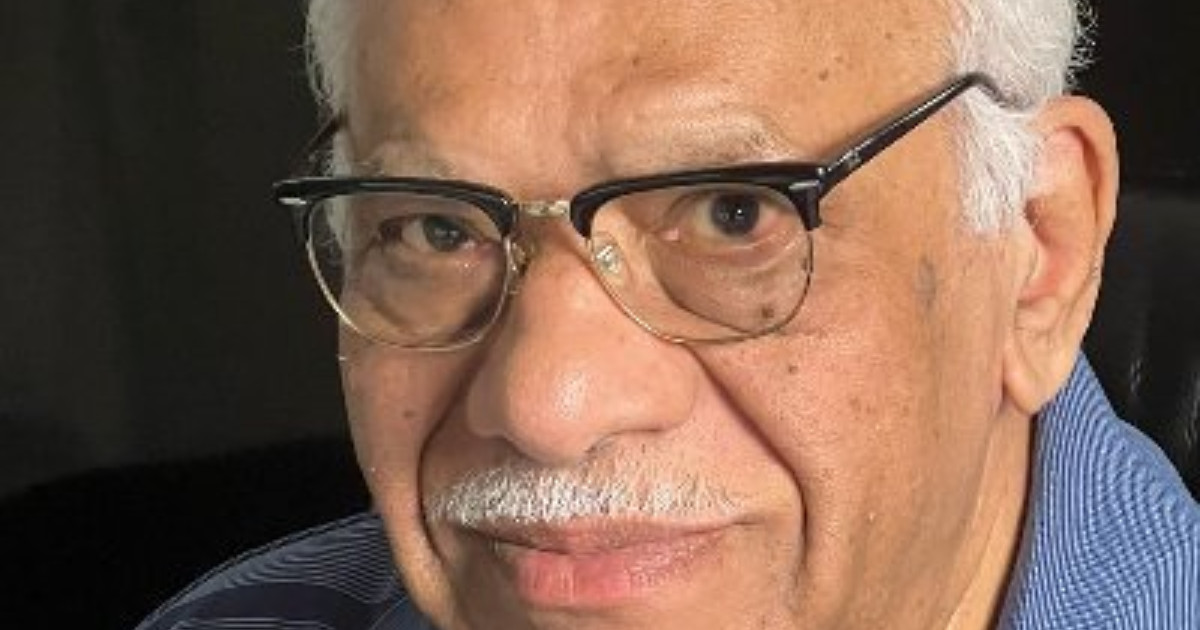
PHOTO: From the author's personal collection of paintings.
Key Points
- Nauman Niaz remembers Abdul Waheed Kakar as a family friend and mentor.
- Niaz says Kakar encouraged him to write about cricket.
- Kakar offered feedback on Niaz’s articles in The News International.
- Niaz recalls Kakar advising him to pursue medicine alongside broadcasting.
- Niaz recounts Kakar’s role in resolving Pakistan’s 1993 political crisis.
Key Questions & Answers
How did Abdul Waheed Kakar influence Nauman Niaz’s writing?
Niaz says Kakar encouraged him to write about cricket and offered feedback on his published articles.
What career advice did Kakar give Niaz?
Niaz recalls that Kakar encouraged him to pursue medicine alongside broadcasting and writing rather than join the army.
How did Kakar know Niaz’s family?
Niaz describes Kakar as a longtime friend of his father, Hamid Niaz, dating back to their military academy years.
What was the Kakar Formula?
Niaz describes it as Kakar’s mediation of the 1993 political deadlock, after which the president and prime minister resigned.
Relevant Topics
Ask AI: Understand this story your way
AI EnabledDig deeper, ask anything — get instant context, background, and clarity.
Disclaimer: This feature is powered by AI and is intended to help readers explore and understand news stories more easily. While we strive for accuracy, AI-generated responses may occasionally be incomplete or reflect limitations in the underlying model. This feature does not represent the editorial views of JournalismPakistan. For our full, verified reporting, please refer to the original article.