
Publishers turn to three-pillar revenue models
JournalismPakistan.com | Published: 20 January 2026 | JP Global Monitoring Desk
Join our WhatsApp channel
An industry analysis suggests that publishers are adopting a three-pillar model comprising advertising, subscriptions, and diversified services to stabilize revenue amid declines in print advertising and uneven digital growth. It aims to reduce dependence on single-income sources.Summary
NEW YORK — Publishers are increasingly adopting a three-pillar revenue model that combines advertising, subscriptions, and diversified services as they seek to stabilize their finances without compromising editorial independence, according to a key industry analysis published January 19. The approach reflects a broader reassessment of how news organizations can remain viable amid sustained pressure on traditional revenue streams.
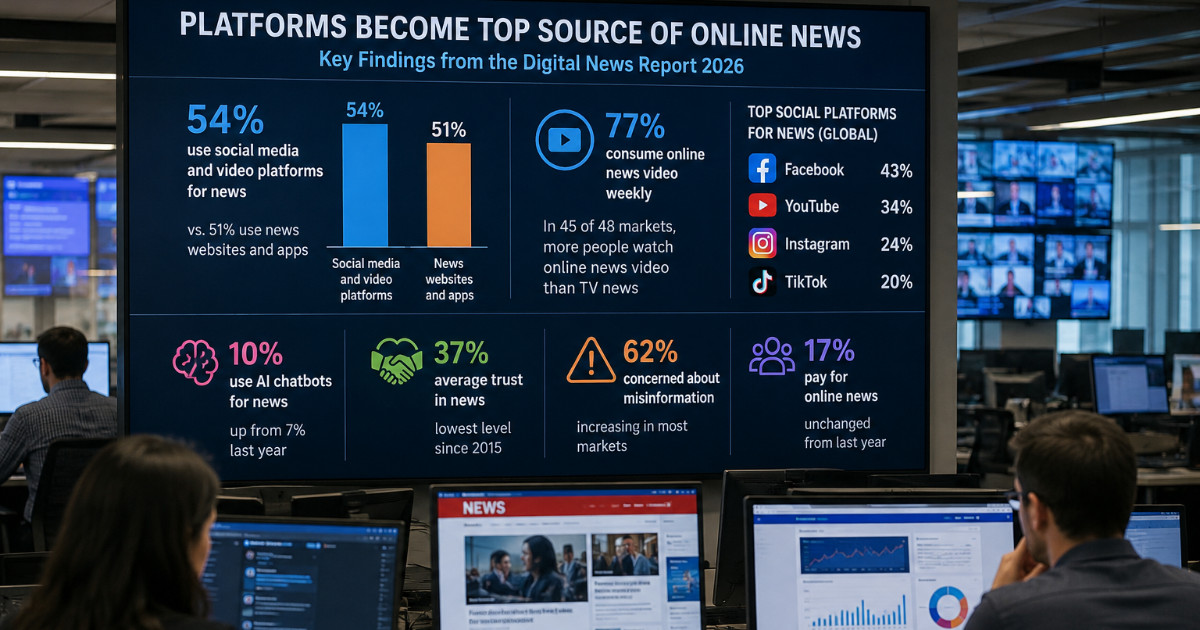
The analysis identifies long-term declines in print advertising and uneven growth in digital advertising as key factors driving the shift. Many publishers, particularly independent and regional outlets, have found that relying on a single dominant income source leaves them vulnerable to market volatility and platform-driven changes beyond their control.
Building balanced revenue streams
Under the three-pillar model, advertising remains important but is no longer expected to carry the full financial burden of a newsroom. Subscriptions and memberships are positioned as a second pillar, providing more predictable income tied directly to audience trust and engagement rather than traffic volume alone.
The third pillar, diversified services, encompasses activities that sit alongside core journalism, such as events, training, data services, or business-to-business offerings. The analysis notes that these services are typically designed to align with a publisher’s existing expertise and audience, rather than acting as unrelated commercial ventures.
Pressure on independent and regional newsrooms
The shift is particularly significant for independent and regional publishers, which have been among the hardest hit by the erosion of local advertising markets. For these outlets, diversified services can offer a way to offset limited scale while maintaining a clear separation between commercial activities and editorial decision-making.
At the same time, the analysis cautions that developing multiple revenue pillars requires upfront investment and organizational capacity that not all newsrooms currently possess. Smaller publishers may need to adopt the model incrementally, prioritizing areas that can be tested and scaled without undermining newsroom resources.
Implications for editorial independence
From an editorial perspective, the three-pillar approach is framed as a way to reduce overreliance on any single funding source that could exert undue influence. By spreading financial risk, publishers may be better positioned to uphold editorial standards during economic downturns or periods of political pressure.
The analysis stops short of presenting the model as a universal solution, emphasizing that outcomes vary by market, audience, and mission. However, it concludes that diversified revenue structures are becoming a defining feature of sustainability strategies across the publishing sector as news organizations adapt to structural change.
ATTRIBUTION: Based on a World Association of News Publishers (WAN-IFRA) industry analysis.
PHOTO: By Werner Moser from Pixabay
Key Points
- Three-pillar model combines advertising, subscriptions and diversified services.
- Advertising remains important but is no longer expected to fully fund newsrooms.
- Subscriptions and memberships provide steadier income tied to audience trust.
- Diversified services (events, training, data, B2B) align with publisher expertise.
- Shift driven by print ad declines and uneven digital ad growth, affecting regional and independent outlets.
Relevant Topics
Ask AI: Understand this story your way
AI EnabledDig deeper, ask anything — get instant context, background, and clarity.
Disclaimer: This feature is powered by AI and is intended to help readers explore and understand news stories more easily. While we strive for accuracy, AI-generated responses may occasionally be incomplete or reflect limitations in the underlying model. This feature does not represent the editorial views of JournalismPakistan. For our full, verified reporting, please refer to the original article.