
HRCP warns of growing threats to freedom of expression
JournalismPakistan.com | Published: 16 November 2026 | JP Staff Report
Join our WhatsApp channel
After its annual meeting, HRCP warned on Nov 15 that freedom of expression in Pakistan is eroding due to censorship, surveillance, restrictive rules and misuse of criminal laws, and cited recent prison sentences for rights lawyers as worrying indicators.Summary
LAHORE — The Human Rights Commission of Pakistan (HRCP) has warned that freedom of expression is being steadily eroded by censorship, surveillance, restrictive regulations and the misuse of criminal laws, raising fresh concerns about the protection of fundamental freedoms in the country.
In a statement issued on November 15, 2026, following its 40th annual general meeting, the commission said the growing restrictions were undermining the constitutional right to express opinions and question authority. The warning adds to concerns previously raised by journalists, editors and digital media practitioners about shrinking space for independent expression in Pakistan.
Censorship and surveillance concerns
The HRCP general body expressed alarm at what it described as the systematic weakening of freedom of expression through legal and administrative restrictions. It identified censorship, surveillance and the abuse of criminal laws as major threats to the exercise of constitutional rights.
The commission cited the ten-year prison sentences handed down in October 2026 to human rights lawyers Imaan Mazari-Hazir and Hadi Chattha as an example of how individuals exercising their constitutional rights could face severe legal consequences. The cases were presented as part of HRCP's wider concerns about restrictions on expression rather than as incidents involving journalists.
Earlier warnings on press freedom
The latest statement follows an HRCP roundtable held in Karachi on August 19, when journalists, editors, digital media practitioners and human rights defenders agreed to establish a broad national alliance to defend freedom of expression.
Participants at that meeting warned of increasing censorship, surveillance, restrictions on online speech and intimidation of journalists. They also raised concerns about the use of the Prevention of Electronic Crimes Act (PECA), shrinking access to information and growing pressure on independent, regional and digital media.
The roundtable called for reviewing laws and administrative measures that criminalise dissent or enable censorship. Participants also sought stronger safeguards for editorial independence and greater protection for journalists facing threats, harassment or legal pressure.
Legal pressures on independent journalism
The concerns reflect issues repeatedly documented by JournalismPakistan, including legal proceedings involving journalists, notices issued by the National Cyber Crime Investigation Agency (NCCIA), restrictions affecting digital expression and regulatory pressure on news organisations.
JournalismPakistan has reported on the implications of PECA enforcement, the questioning of journalists by cybercrime authorities and concerns about safeguards against the misuse of legal powers. These developments have generated debate about how authorities can enforce the law without undermining constitutionally protected expression.
The HRCP's annual report on the state of human rights in 2025, released on May 4, 2026, also identified restrictions on expression as a serious concern. It said amendments to PECA and the use of other criminal laws had contributed to pressure on journalists, activists, lawyers and political workers. The report highlighted intimidation and self-censorship as consequences of the deteriorating environment.
Continuing pressure on free expression
At its August roundtable, HRCP and participating media representatives also emphasised that restrictions on expression were no longer confined to professional journalists. They warned that ordinary citizens expressing opinions online were increasingly vulnerable to legal and administrative action.
The participants proposed coordinated advocacy, legal assistance, documentation and rapid-response mechanisms to defend freedom of expression. They also called for stronger protections for women journalists, freelancers and digital media professionals.
The November 15 statement did not announce new measures specifically concerning journalists or identify fresh action under PECA or by the NCCIA. Its central warning, however, reinforces HRCP's earlier position that censorship, surveillance and restrictive legal practices pose continuing threats to freedom of expression in Pakistan.
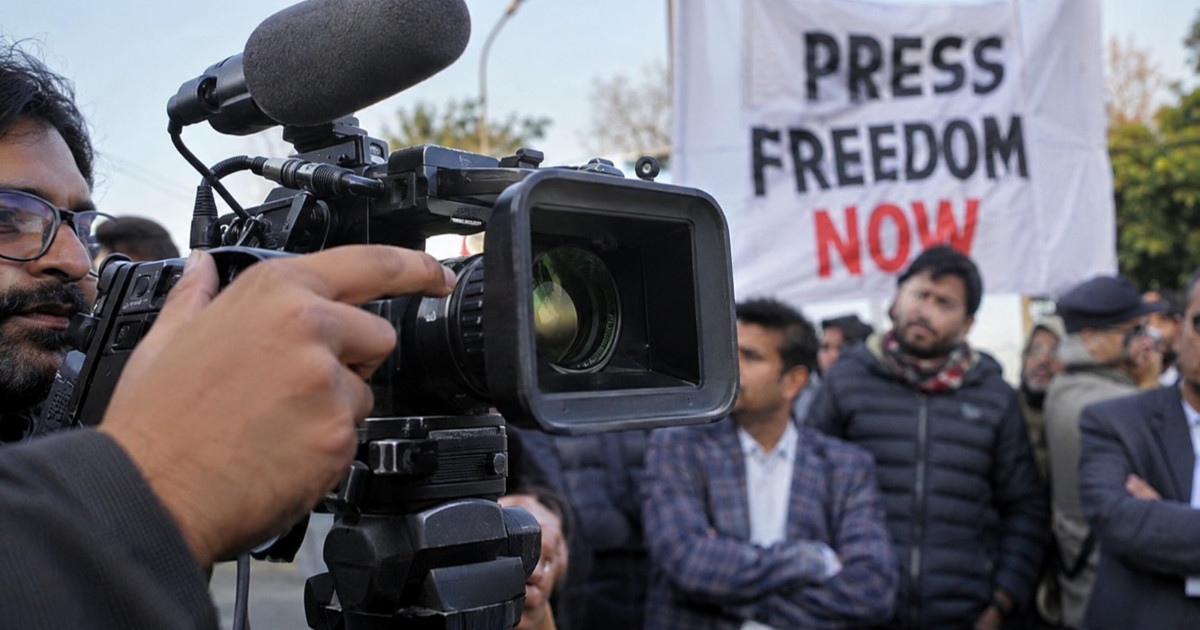
PHOTO: Illustrative image highlighting concerns about censorship and restrictions on freedom of expression in Pakistan. (USA-Reiseblogger from Pixabay)
Key Points
- HRCP warns of steady erosion of freedom of expression in Pakistan.
- Censorship, surveillance, restrictive regulations and misuse of criminal laws are identified as major threats.
- The commission cited October 2026 ten-year sentences for lawyers Imaan Mazari-Hazir and Hadi Chattha as examples.
- The statement was issued on Nov 15 following HRCP's 40th annual general meeting.
- An Aug 19 roundtable in Karachi also raised concerns among journalists, editors and digital media practitioners.
Key Questions & Answers
What did the HRCP warn about?
The HRCP warned that freedom of expression in Pakistan is steadily being eroded by censorship, surveillance, restrictive rules and the misuse of criminal laws.
Which incidents did the commission cite as examples?
The statement cited the October 2026 ten-year prison sentences for human rights lawyers Imaan Mazari-Hazir and Hadi Chattha as concerning examples of restrictions on expression.
When was the statement issued?
The HRCP issued the warning on November 15 following its 40th annual general meeting.
Had others raised similar concerns earlier?
Yes. A roundtable in Karachi on August 19 brought together journalists, editors, digital media practitioners and human rights defenders who also noted shrinking space for independent expression.
Relevant Topics
Ask AI: Understand this story your way
AI EnabledDig deeper, ask anything — get instant context, background, and clarity.
Disclaimer: This feature is powered by AI and is intended to help readers explore and understand news stories more easily. While we strive for accuracy, AI-generated responses may occasionally be incomplete or reflect limitations in the underlying model. This feature does not represent the editorial views of JournalismPakistan. For our full, verified reporting, please refer to the original article.