.png)
Why Pakistan cricket is failing: ‘Fiat Cannot Outrun Ferrari’ — The science gap destroying Shaheen Afridi's generation
JournalismPakistan.com | Published: 14 October 2025 | Dr. Nauman Niaz (TI)
Join our WhatsApp channel
Pakistan cricket faces a crisis influenced by a lack of scientific infrastructure and systemic neglect. This has adversely affected the development of talented players like Shaheen Afridi. Without modern methodologies, the potential for success remains unfulfilled.Summary
ISLAMABAD —There are seasons in the life of nations when their art, their music, their sport, those most spontaneous expressions of soul, cease to move forward, and instead, revolve endlessly within the same tired orbit. So it is with Pakistan cricket: a comet once blazing with instinct and passion, now circling its own exhaustion, its light dulled by the magnitude of its own mismanagement.
It is not that the nation lacks talent; talent, like wild jasmine, grows everywhere in Pakistan, unpruned, unguarded, untrained. It is that the gardeners have forgotten how to tend it. Incompetence, intellectual dishonesty, and a deep, ancestral fear of change have wrapped themselves around the game like a vine of mediocrity. The result is a cruel parody of movement: the illusion of progress, yet not an inch gained.
From Instinct to Infrastructure: How Modern Cricket Left Pakistan Behind
From Karachi's salt-stained academies to Lahore's bureaucratic corridors, cricket has become a carousel, spinning, splendid in colour, yet bound to its axis. One generation after another rides the same wooden horses of outdated methods, of nostalgic romance for the unscientific. Around them, the modern world, Australia, England, and India have turned the game into a symphony of science, a harmony of physiology, data, and design. But Pakistan remains a band playing the old tune, long after the procession has moved on.
Where other nations have learned that cricket is no longer a game of hands and eyes alone, Pakistan clings to the myth that skill is sovereign. It is not. Skill is but thirty percent of the modern creed; the remaining seventy lies in what cannot be seen from the pavilion: developmental pathways, biomechanical refinement, molecular recovery, the lyricism of repetition, the calculus of match-ups and moments. The modern cricketer is not born; he is built, his body a studied architecture, his mind trained in the language of awareness.
The Science Gap: Why Pakistan's Players Are 'Fiat Engines Beside Ferraris'
The difference between the fit and the supra-fit, between the specialist and the supra-specialist, between the conventional and the modern, between scientific power hitting and blind slogging, these are no longer semantic distinctions. They are the precincts between relevance and relic, between presence and memory. The nations that have encompassed science now play a different game altogether, one where muscle, mind, and machine operate in perfect concert, producing athletes who do not tire, who do not guess, who calculate beauty with mathematical precision.
And Pakistan? Its players, brave and gifted, stand on the same field but in another century. They are Fiat engines revving bravely beside Ferraris, valiant but destined to be overtaken. Cricket has moved from instinct to insight, from intuition to infrastructure. Without the laboratories, the analysts, the psychologists, and the physiologists, the unseen orchestra behind the melody, Pakistan plays with charm, but not with continuity.
Talent Without System: The Cyclical Tragedy of Pakistan Cricket
In truth, the tragedy of Pakistan cricket is not failure, but repetition, the cyclical return to the same errors, the same misplaced priorities, the same unwillingness to imagine differently. Talent is abundant, yes, but talent without system is like rain on sand—beautiful, momentary, and gone by morning. Somewhere, among the echoes of Gaddafi Stadium, one can almost hear the ghosts of past masters grousing that cricket, once a dance of the heart, has now become a discipline of the mind. To win, one must not only love the game; one must understand its anatomy. Until that lesson is learned, Pakistan cricket will continue its circular pilgrimage, chasing its own shadow on the pitch of time, a game of immense soul, but no skeleton; of genius, but no geometry.
And so it spins, beautifully and tragically, round and round, while the world, with science as its compass, moves steadily forward into the future.
Shaheen Shah Afridi: The Tragedy of a Fast Bowler Broken by Neglect
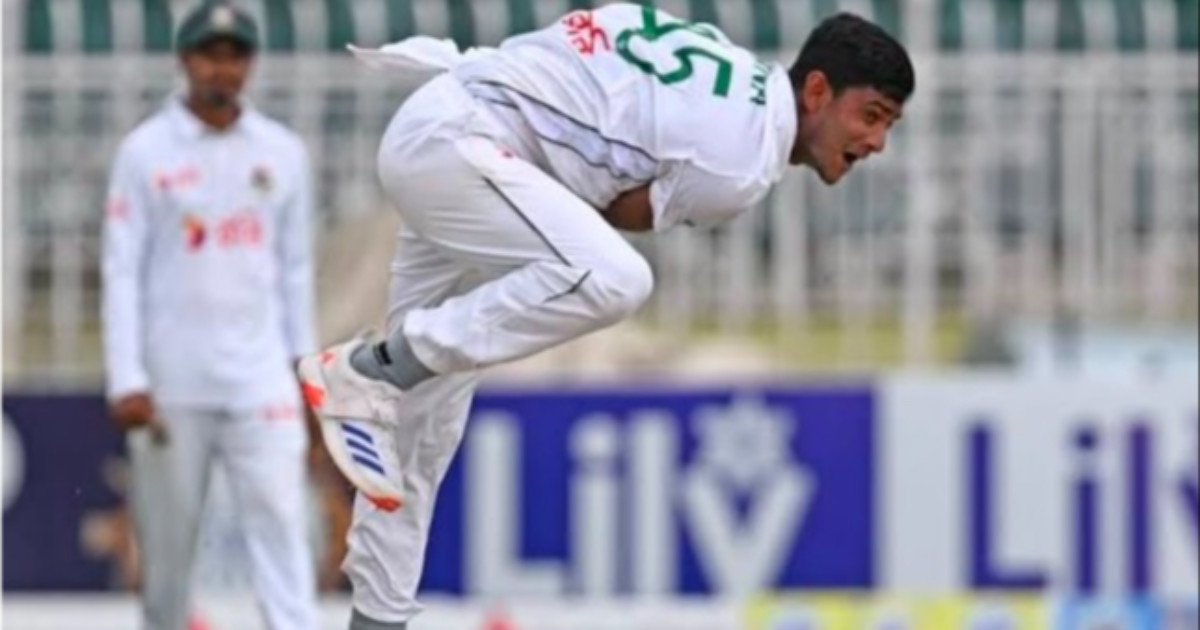
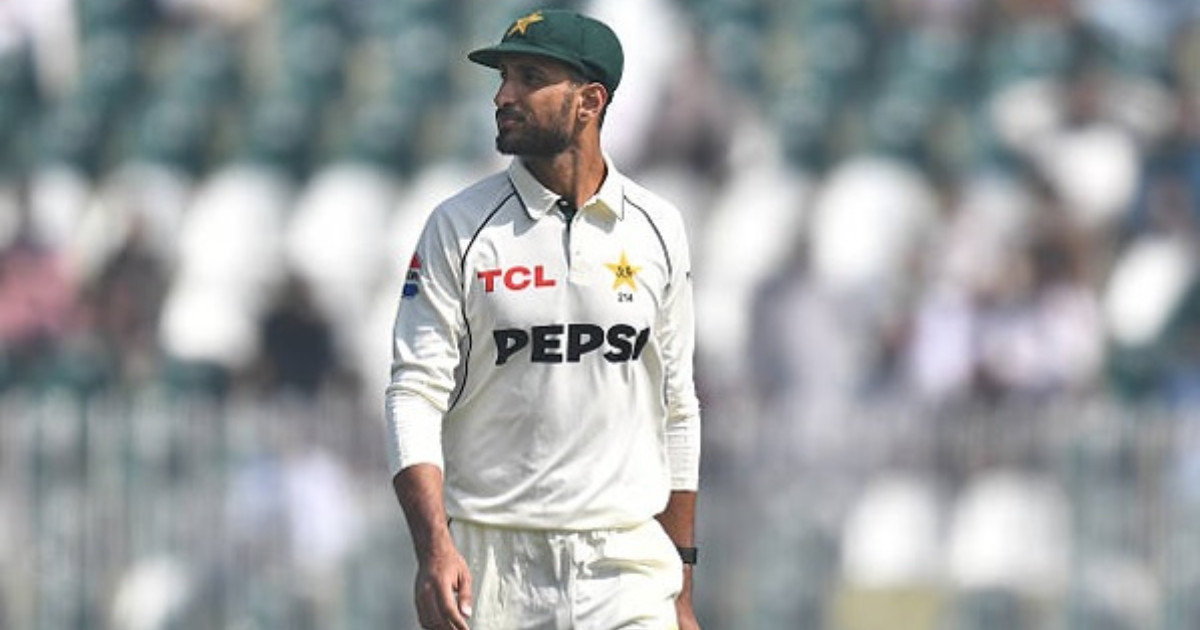
In another age, the fast bowler was a kind of romantic figure, a comet in motion, burning for the sheer poesy of speed. But in our own era, the comet has dimmed, tethered to indifference, to systems too careless to preserve its light. And so we come to Shaheen Shah Afridi, tall and leonine, whose every stride once carried the promise of thunder. He was Pakistan's left-arm wonder, the last embodiment of that ancient creed of fire and swing, the ball angling like a question of destiny itself. Yet destiny, when mishandled, turns cruel.
It began in Sri Lanka, not with glory but with a fall, a contact injury during a Test match, a moment of collision between ambition and neglect. The wound, though manageable, was not treated with the reverence due to a national treasure. Instead of repair, there was recklessness. Cliff Deacon, entrusted with the guardianship of frailty, carried Shaheen like luggage through tours, first to the Netherlands, then onward, a wounded soldier paraded instead of healed. The wound deepened, the body protested, but bureaucracy is deaf to the language of pain.
From 145 to 132: How Mismanagement Destroyed Shaheen's Pace and Biomechanics
In England, there was talk of rehabilitation, of renewal, but time, that necessary balm, was denied him. For commerce and spectacle brook no patience. He was rushed to Australia, made to bowl in the T20 World Cup of 2022, his gait brave but broken. And there, beneath the vast dome of Melbourne, the final irony played out: in the final, before the eyes of the world, the knee gave way.
Some injuries break the body, and others that unmake the man. This one did both. The biomechanics of his art, once so pure and precise, now betrayed him. His pace, once a clarion call at 145 kilometres per hour, fell to 132, a dim echo of its former music. In compensating for lost speed, the tall young man began to overuse his shoulders, his arm rotating like hypermobile levers in wide arcs of desperation, his body seeking flow through distortion.
The Medical Catastrophe: Naseem Shah, Ihsan Ullah, and Aamer Jamal's Struggles
Those famous flamingo legs, once elegant in their elevation, became unstable; the front foot, once planted like punctuation, now turned traitor, pointing not at the batsman but at third man. The knee opened, the bracing leg faltered, the wrist lost its lock. His in-swing, that weapon of sorcery, dwindled to a shadow. No one intervened. No one listened. The orchestra of Pakistan cricket played on, tone-deaf to the loss of its first violin. He carried on through pain, crossing formats like a martyr of misplaced loyalty, until the very thing that had once been Pakistan's pride, his presence, became its liability. In white-ball cricket, he was rendered expensive; in Tests, expendable.
And he was not alone in this theatre of attrition. Naseem Shah, another prodigy sculpted from raw flame, sustained a shoulder impingement while throwing from the boundary in a Test versus England at Rawalpindi. Insecurity, that silent predator of young men in Pakistan cricket, led him to hide the pain. The physiotherapist, instead of a healer, became an accomplice. No scans, no rest, no reflection, only a quiet, complicit denial. By the time diagnostics were finally done, it was too late. The shoulder had stiffened, the movements gone. His length shortened, his spells grew predictable; the seam movement remained, but the soul of his bowling had departed.
Unqualified Medical Staff: The Moral Failure Behind Pakistan's Fast Bowler Crisis
Then there was Ihsan Ullah, a promise misread and then misdiagnosed, operated upon wrongly, his future sacrificed at the altar of ignorance. It was not the fall of a weak athlete but of a failed system. Aamer Jamal, too, stood at the precipice of that same fate. In South Africa, wracked by spasms and neurological distress, he was compelled, astonishingly, to play. When his own body's revolt could no longer be silenced, he sought treatment abroad, paying from his own pocket. The physiotherapists had not only failed him; they mocked him by sending him the medical scans of Mohammad Rizwan, an error so grotesque it belongs more to satire than sport.
This, then, is the anatomy of Pakistan cricket's neglect: a medical panel staffed by the unqualified, diploma-holders masquerading as sports specialists, men without the fellowships, experience, or conscience to handle the fragile architecture of elite athletes. They stand as symbols of a nation's chronic malaise, where mediocrity wears the mask of authority, and brilliance is left to heal itself. Where competence is one's greatest enemy.
The Lost Generation: Pakistan's Fast Bowlers as Moral Parables
Once, Pakistan's fast bowlers were the custodians of awe, the thunder in Lahore, the menace in Melbourne. They were artists whose canvas was the seam and whose brushstroke was velocity. But art demands structure; lyrics needs form. When systems fail, even genius decays. Shaheen's knee, Naseem's shoulder, Ihsan's surgery, these are not just medical tales; they are moral parables. They reveal a cricketing culture still entrapped in nostalgia, indifferent to science, fearful of progress. The modern athlete, elsewhere, is an institution, protected by layers of expertise, by science, by empathy. In Pakistan, he remains a pawn, moved, overused, and broken by those who neither understand nor deserve him.
And so, as one watches Shaheen's diminished run-up, the grace there, the fire dimmed, one cannot help but feel the ache of squandered beauty. Pakistan cricket, once a storm, has become a silence interrupted by occasional thunder. If there were any justice in the game, someone would rebuild it not around personalities but around principles, where science guides faith, and talent is not a casualty of negligence. But until that dawn comes, the cycle will continue, brilliance discovered, brilliance destroyed, and the echo of each fallen fast bowler will hiss through the corridors of Lahore, lamenting, "Fiat cannot outrun Ferrari, not even when the heart burns brighter than the engine."
Modern Sport as Engineering: The Evolution from Instinct to Information
Once upon a gentler age, sport was a canvas of instinct, painted in broad, human strokes, the lift of a bat born from feel, the swing of a foot guided by memory rather than metrics. Training was flow, not routine; passion, not programme. The cricketer lived within his body, not beneath its microscope. But the modern age, impatient, analytical, and mechanised, has wrought a different creed. Today's player is no longer just trained; he is engineered. His body is a site of ongoing calibration where nutritionists, psychologists, biomechanists, data analysts, and recovery scientists gather like high priests around a living instrument. The heart rate is graphed, the muscle strain charted, and the sleep cycle observed. In place of instinct, we find information; in place of apprenticeship, algorithms. This is not decay, it is evolution, yet evolution, as Darwin warned, always comes at a price. For the athlete, that price is soul.
Why Teams Without Scientific Infrastructure Remain Romantic in an Age of Empiricists
Where teams or nations fail to build this scaffolding of science, to weave together the disciplines of physiology, nutrition, psychology, and data, they remain, however talented, improvisers in an age of orchestration. They train hard, but not wisely. They prepare long, but not deeply. They chase instinct while the world measures precision. Without this modern infrastructure with multi-disciplinary models and a robust human resource system, sport becomes dependent on momentary brilliance rather than sustainable excellence. The athlete burns bright, but briefly; the system forgets to replenish the flame.
Such teams often believe they are conserving purity, but in truth, they are courting fragility. They become romantics in a world of empiricists, beautiful, unpredictable, and ultimately defeated. They win on inspiration, lose on preparation. They glorify natural talent, but talent, left unshaped, is a candle in the wind.
The Marriage of Emotion and Empiricism: Lessons from Elite Global Teams
A modern team thrives not because it is filled with superstars, but because it is an ecosystem of shared intelligence. The physiotherapist is as vital as the coach, the data analyst as indispensable as the captain. Leadership today means not domination but coordination, the ability to harmonise diverse minds into one collective rhythm. Science does not seek to replace art, but to amplify it. A fast bowler's run-up still needs poetry, but the understanding of biomechanics ensures that poetry does not end in injury. A batter's timing still blooms from intuition, but video analytics refine that intuition against the tide of deception.
The great teams of today, from Manchester City to India's cricket setup, from the All Blacks to Team Sky, thrive because they have married emotion with empiricism, instinct with intelligence, art with architecture. The modern athlete, if he is to remain whole, must reclaim philosophy from the data. He must remember that while the body can be measured, the mind cannot be modelled. He must learn that the soul still wins games that leadership, courage, self-belief, and moral resilience are no less scientific than a protein schedule or a GPS trace.
The Athlete as Half Monk, Half Machine: Finding Balance in Modern Sport
The true athlete of today is half monk, half machine, spiritual enough to feel, mechanical enough to perform. His challenge is to unite the two; his art lies in the alchemy of balance. A team without scientific infrastructure is like a violin unstrung; it can still make music, but only when struck by a miracle. A team with it, but without heart, is a metronome, precise, soulless, forgettable. The future belongs to those who understand that sport, like life, is not a science or an art but a conversation between the two.
Biomechanics Revolution: From Intuition to Data-Driven Performance
Biomechanics has transformed the way performance is understood, measured, and perfected. Once the domain of intuition and observation, athletic movement is now a science of precision, a study of how force, motion, and efficiency combine to create excellence. It dissects every gesture, the angle of a sprinter's drive phase, the torque of a bowler's shoulder, the kinetic chain of a tennis serve, and translates them into quantifiable data. Through high-speed cameras, motion sensors, and 3D modelling, coaches and scientists can identify inefficiencies invisible to the naked eye, reducing injury risk while enhancing output.
In modern elite environments, biomechanics is no longer optional; it is foundational. It informs equipment design, individualized training plans, and rehabilitation protocols. In cricket, it refines bowling actions; in football, it sharpens sprint mechanics; in swimming, it perfects stroke patterns. The athlete becomes both subject and collaborator in a feedback loop between instinct and insight.
Modern Training Systems: Motion Capture, Force Plates, and Machine Learning
This integration has reshaped training systems entirely. Coaching has evolved from intuition to data-driven performance modelling, employing:
- Motion capture & kinematic analysis to illuminate movement patterns.
- Force plates & ground reaction data to quantify the invisible dialogue between athlete and surface.
- Real-time feedback systems to adjust technique on the fly.
- Machine learning & predictive modelling to anticipate weaknesses before they manifest.
Technique optimization, injury prevention, equipment design, rehabilitation, and all orbit biomechanics. It has moved from auxiliary science to the central nervous system of performance ecosystems, fusing with sports medicine, physiology, psychology, and data analytics. In modern laboratories, variable force, velocity, and neuromuscular activation are mere data points in an evolving equation, captured through wearables, motion capture, and advanced kinetic and kinematic analyses.
From Treatment to Performance Architecture: The Sports Medicine Paradigm Shift
Performance becomes precision; precision becomes protection. The biological core of sport has shifted from the general to the granular. Optimization is no longer a matter of training harder; it is about training smarter, aligning the athlete and ecosystem through science, feedback, and molecular understanding. Recovery itself has become a science, integrating cryotherapy, photobiomodulation, and neurofeedback to accelerate adaptation. Genetic profiling identifies predispositions to power, endurance, and recovery capacity, mapping potential before it is ever tested in competition.
Metabolic, hormonal, and neuromuscular data feed into training plans. Circadian rhythms are monitored, sleep cycles engineered, and nutritional timing personalized. The body is not guessed at; it is read, decoded, and guided. Sports medicine has undergone a quiet revolution. Its role has expanded from treating injury to architecting performance. In elite setups from Olympic programs to Premier League clubs, medical departments have become central pillars, not peripheral services.
The Integrated Medical Ecosystem: Eight Pillars of Elite Athletic Performance
The paradigm has shifted: from treatment to performance architecture, from reactive care to predictive and preventive ecosystems. The athlete's body is continuously monitored, intervened upon, and recalibrated, treated not as a static patient but as a dynamic, evolving system.
The medical ecosystem functions through interconnected pillars:
- Sports Medicine and Orthopaedics oversee injury prevention, acute management, and rehabilitation. Advanced imaging (MRI, ultrasound, CT) and arthroscopic interventions are informed by biomechanical analysis, addressing root causes rather than symptoms.
- Physiotherapy and Rehabilitation are data-backed and sensor-informed, employing motion capture, EMG, and force plates to quantify recovery and guide progressive return-to-play protocols.
- Biomechanics and Motion Science offer diagnostic precision through 3D motion analysis, kinematic mapping, and force vector tracking.
- Performance Physiology and Recovery Science use cryotherapy, contrast water therapy, compression garments, sleep optimization, hyperbaric oxygen therapy, and biomarker monitoring (creatine kinase, cortisol, HRV) to anticipate fatigue.
- Nutrition and Metabolic Science tailors plans to genetic predispositions, hormonal responses, and metabolic profiling, algorithmically timing macronutrients and hydration.
- Mental Health and Neurocognitive Care address burnout, anxiety, and focus, using neurofeedback and mindfulness as tools of consistency and longevity.
- Data Science, AI, and Monitoring Systems act as the connective tissue — GPS vests, inertial sensors, telemetry, and AI models stream and integrate data across domains, creating a unified decision-making architecture.
This is not medicine as rescue; it is medicine as design, shaping careers, extending longevity, and weaving resilience into the fabric of performance.
Integration Over Isolation: How Elite Teams Turn Data Into Strategic Decisions
The medical ecosystem's brilliance depends not on isolated excellence but on integration, the seamless dialogue between medical, coaching, and performance departments. In the most sophisticated environments, Manchester City's training complex, Australian cricket's high-performance units, and NFL franchises convene weekly "Performance Intelligence" meetings. Here, data streams from doctors, physiotherapists, performance analysts, and coaches converge into a single interpretive language, transforming numbers into strategic decisions.
Governance has evolved alongside this integration. Medical decision-making is increasingly shielded from selection bias and political interference, ensuring that health is never sacrificed for short-term gain. Ethical transparency around injury disclosure, data use, and athlete consent is no longer optional; it is the bedrock of trust in high-performance systems. Clinical governance is not an afterthought; it is the spine of elite sport.
Science With Soul: Why Technology Must Protect the Athlete's Humanity
Amidst the humming machinery of data and diagnostics, amidst dashboards and predictive models, the medical ecosystem remains, at its core, profoundly human. It respects the athlete's individuality, their pain thresholds, motivations, and personal rhythms. Emotional intelligence and empathy have become as vital as MRI scans and motion data.
The best ecosystems blend science with soul. Technology is not used to dehumanize the athlete, but to protect their humanity in a system that can so easily forget it. Beneath the telemetry and algorithms are human stories of doubt, pain, resilience, and quiet comebacks. The science sharpens the lens, but the heartbeat remains human.
The Future: Precision Medicine, Genomic Profiling, and AI-Predicted Injury Prevention
The next frontier lies in precision medicine and genomic profiling, where the individual blueprint of an athlete's body informs injury prevention, training loads, and nutritional interventions. Genetic mapping will not be abstract; it will shape the way athletes are trained and protected. AI systems will predict susceptibility to injury before it occurs, guiding prehabilitation protocols rather than reacting to a crisis.
Rehabilitation will become virtual and interactive, using VR environments and adaptive feedback systems to engage athletes cognitively while they heal physically. Health architectures will be fully personalized, dynamic, data-driven, athlete-specific. The medical ecosystem will not only respond to the athlete's body; it will anticipate it, learning and evolving with every data point.
This future rests on the core architecture of integration:
- - Sports Medicine & Clinical Governance anchor the system with injury prevention, risk profiling, RTP protocols, and ethical oversight. Tools: musculoskeletal ultrasound, portable MRI, injury surveillance databases, and AI diagnostic imaging.
- Physiotherapy & Rehabilitation Science blends manual therapy with neuromuscular re-education, kinetic chain assessment, and sensor-based monitoring. Tools: force plates, EMG, isokinetic testing, motion capture.
- Biomechanics & Performance Analytics convert movement into metrics — kinematic analysis, kinetic chain optimization, performance efficiency — using 3D motion capture (Vicon, Dartfish), IMUs, GPS, and pressure mapping.
- Exercise Physiology & Load Management ensures adaptation and recovery through GPS, heart-rate telemetry, VOâ‚‚ analyzers, lactate sensors, and RPE.
- Nutrition & Metabolic Science personalizes energy balance, nutrigenomics, and supplementation through metabolic analyzers, DEXA, biomarkers, and genetic profiling kits.
- Sports Psychology & Neurocognitive Conditioning trains resilience, decision speed, and emotional regulation through EEG, eye-tracking, mindfulness apps, and biofeedback.
- Data Science & Analytics Integration builds centralized dashboards, machine learning injury prediction, and integrated athlete management systems.
- Ethical Governance & Welfare guarantees medical autonomy, transparency, and duty of care as non-negotiable foundations.
This is not a collection of departments; it is an ecosystem, operating within a shared philosophy of collaboration, data transparency, and athlete-centered care. Science without ethics is brittle. Data without trust is noise. Integration without humanity is hollow.
Dr. Nauman Niaz is a civil award winner (Tamagha-i-Imtiaz) in Sports Broadcasting & Journalism, and is the sports editor at JournalismPakistan.com. He is a regular cricket correspondent, having covered 54 tours and three ICC World Cups, and having written over 3500 articles. He has authored 15 books and is the official historian of Pakistan Cricket (Fluctuating Fortunes IV Volumes - 2005). His signature show, Game On Hai, has been the highest in ratings and acclaim.
Key Points
- Pakistan cricket relies heavily on untrained talent without structured systems.
- The modern game incorporates science, while Pakistan clings to outdated methods.
- Injury management and athlete care show significant systemic failures.
- Talented fast bowlers are underperforming due to mismanagement and neglect.
- A foundational shift towards empirical training and development is crucial for progress.
Relevant Topics
Ask AI: Understand this story your way
AI EnabledDig deeper, ask anything — get instant context, background, and clarity.
Disclaimer: This feature is powered by AI and is intended to help readers explore and understand news stories more easily. While we strive for accuracy, AI-generated responses may occasionally be incomplete or reflect limitations in the underlying model. This feature does not represent the editorial views of JournalismPakistan. For our full, verified reporting, please refer to the original article.