
Abbas Nasir's Dawn farewell underscores industry strain
JournalismPakistan.com | Published: 5 April 2026 | JP Staff Report
Join our WhatsApp channel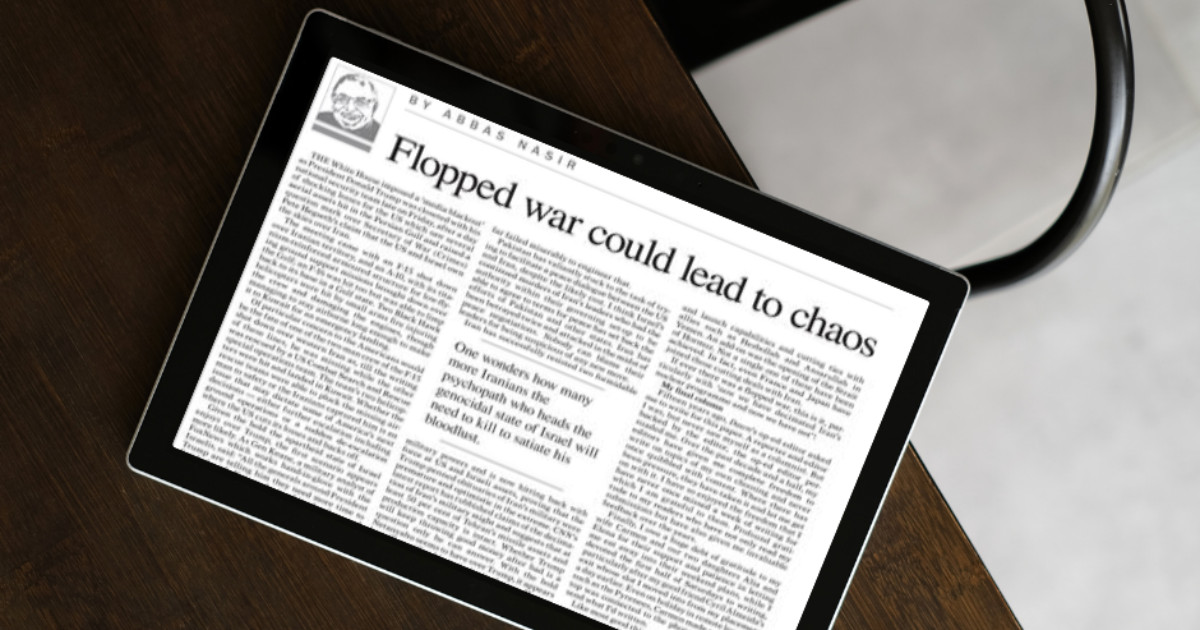
Veteran journalist Abbas Nasir wrote his final Dawn column, ending a 15-year stint, analyzing current events and offering a personal farewell. He praised editorial freedom and family support while warning about growing pressures and reduced space for independent voices.Summary
ISLAMABAD — A chapter in Pakistani journalism quietly closed this week as veteran journalist and former Dawn editor Abbas Nasir penned his final column for the newspaper, ending a 15-year run that many readers and peers saw as a rare space for independent, reflective commentary.
His farewell piece, titled “Flopped war could lead to chaos,” was not only an analysis of current affairs but also a deeply personal goodbye, one that laid bare both gratitude and growing unease about the state of the media industry he has long served.
In a candid closing note, Nasir reflected on the journey that began when Dawn’s op-ed editor persuaded him to write, despite his initial reluctance. What followed, he wrote, was a decade and a half of uninterrupted weekly columns, sustained by editorial freedom and institutional backing that he described with “profound gratitude.”
A farewell shaped by gratitude and loss
Nasir’s message carried the tone of someone stepping away not by choice alone, but amid shifting realities. He credited his editors for shielding him from pressure and allowing him to write freely, while also acknowledging the personal sacrifices behind his consistency — weekends spent writing, even during family holidays in remote locations.
He reserved special thanks for his wife and daughters, recalling how they adapted their lives around his writing schedule. The image he painted was intimate and human — a reminder that journalism, often consumed as output, is lived as routine, discipline, and compromise.
Yet the warmth of gratitude gave way to a stark assessment of the challenges facing Dawn. Nasir pointed to a financial crisis driven in part by the withdrawal of government advertising and pressure on private advertisers, linking it directly to the paper’s editorial independence.
“Its breaks my heart to see Dawn facing an existential crisis,” he wrote, adding a line that resonated widely: “Columnists come and go. Dawn must continue to herald every morning.”
Journalists react with alarm and reflection
The response from Pakistan’s media community was swift and emotional, with many interpreting Nasir’s departure as part of a broader pattern.
Senior journalist Mohsin Raza Khan, writing on X, framed the moment as symptomatic of deeper structural issues. He argued that media independence had already eroded, citing pressures ranging from compromised trade unions to alleged external influence over editorial decisions and hiring.
“Advertising has become a weapon to punish independent voices,” he wrote, adding that voices like Nasir’s were increasingly unwelcome because they could not be controlled.
Other journalists echoed the concern, albeit with different emphases. Omar Quraishi highlighted the fragility of a business model heavily reliant on government advertising, suggesting that financial vulnerability has long undermined editorial autonomy.
Veteran analyst Nusrat Javeed expressed a more personal sense of loss, describing himself as “extremely depressed” after reading the final column. He reflected on a shared struggle to make journalism both credible and sustainable, calling Nasir’s departure a “frightening end of a lifelong struggle.”
A symbol of a wider media crisis
While Nasir’s exit is, on the surface, the conclusion of an individual columnist’s tenure, it has come to symbolize something larger: the tightening space for independent journalism in Pakistan.
His own explanation pointed to economic constraints tied to operating from abroad, but the context he outlined, declining advertising, financial strain, and pressure linked to editorial stance, has been widely documented in recent years by media watchdogs and industry observers.
The convergence of financial and political pressures has left news organizations navigating an increasingly narrow path, where sustainability and independence often appear in tension.
Nasir’s final words, urging Dawn’s survival beyond individual contributors, underscored a reality many in the profession recognize: institutions matter, but they are only as resilient as the conditions in which they operate.
WHY THIS MATTERS: Abbas Nasir’s departure highlights the growing intersection of financial strain and editorial pressure in Pakistan’s media landscape. For journalists and media organizations, it underscores the risks of reliance on government advertising and the shrinking space for independent voices. The episode also raises urgent questions about sustainability models and the long-term viability of credible journalism in constrained environments.
ATTRIBUTION: Reporting by JournalismPakistan, based on Abbas Nasir’s final column in Dawn (April 2026) and publicly available posts by Mohsin Raza Khan, Omar Quraishi, and Nusrat Javeed on X (April 2026).
Key Points
- Abbas Nasir ended a 15-year weekly column at Dawn with a personal farewell.
- His final piece, titled "Flopped war could lead to chaos," combined analysis with reflection.
- He expressed gratitude for editorial freedom and institutional backing at Dawn.
- Nasir acknowledged personal and family sacrifices underpinning his regular output.
- He warned of rising pressures on editorial independence and shrinking space for critical commentary.
Key Questions & Answers
Who is Abbas Nasir?
He is a veteran Pakistani journalist and former Dawn editor who wrote a weekly column for 15 years.
Why is his farewell notable?
It marks the end of a long-running independent op-ed presence and highlights broader strains in the media industry.
What did he thank in his note?
He credited Dawn's editors for shielding his independence and thanked his wife and daughters for accommodating his writing routine.
What concerns did he raise?
He warned about mounting pressures on editorial freedom and the shrinking space for independent commentary in Pakistan.
Ask AI: Understand this story your way
AI EnabledDig deeper, ask anything — get instant context, background, and clarity.
Disclaimer: This feature is powered by AI and is intended to help readers explore and understand news stories more easily. While we strive for accuracy, AI-generated responses may occasionally be incomplete or reflect limitations in the underlying model. This feature does not represent the editorial views of JournalismPakistan. For our full, verified reporting, please refer to the original article.