
Pakistani media in 2025 tested by layoffs, laws, and trust
JournalismPakistan.com | Published: 25 December 2025 | JP Special Report
Join our WhatsApp channel
The year 2025 highlighted the struggles of the Pakistani media industry amid economic, legal, and political pressures. Despite these challenges, examples of resilient journalism continued to emerge. The landscape reflected both a retreat in editorial space and ongoing adaptations by various media outlets.Summary
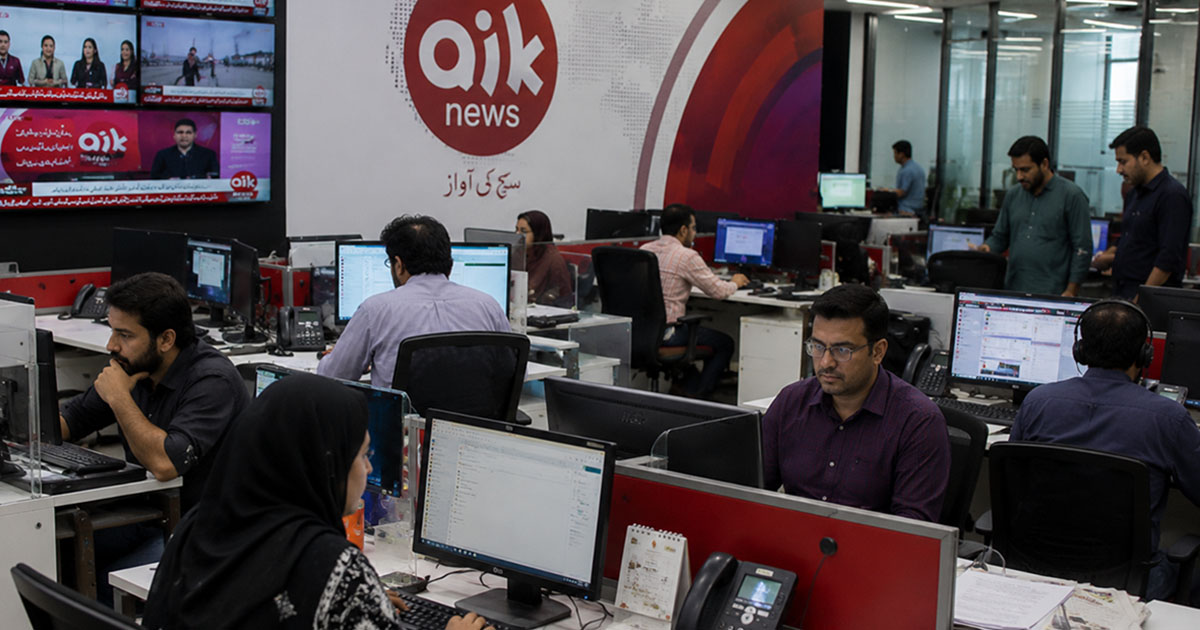
ISLAMABAD — The year 2025 underscored the contradictory reality of Pakistani media: a sector operating under deepening economic, legal, and political constraints, yet still capable of producing journalism of public value. The industry neither collapsed nor recovered. Instead, it endured, adapted, and, in many cases, retreated. The resulting media ecosystem reflected resilience at the margins and fragility at the center.
Despite narrowing editorial space and shrinking resources, several examples during the year demonstrated that professional journalism in Pakistan continued to matter, particularly when it emphasized evidence, context, and restraint. Legacy outlets such as Dawn maintained a commitment to document-based reporting on governance, constitutional questions, and economic policy, often relying on court proceedings and official records at a time when television commentary leaned toward speculation.
Journalism under pressure, but still producing impact
Public-interest reporting persisted, though unevenly. Journalists covering inflation, taxation, power sector failures, and public service delivery employed explainer formats to clarify issues often reduced to political slogans. Climate reporting also showed signs of maturation, with coverage of extreme heat, flooding, and water stress in Sindh and Balochistan incorporating expert analysis and historical context rather than episodic disaster framing. Pakistani journalists participating in regional and global collaborative projects contributed reporting on climate vulnerability and adaptation gaps, adding an international perspective to local impacts.
Digital journalism evolved cautiously. Some outlets shifted from traffic-driven strategies to loyalty-based products such as newsletters, podcasts, and long-form explainers. Platforms, including Profit and Dawn Images, continued to invest in analytical and narrative storytelling aimed at younger audiences. Several newsrooms adopted AI tools for transcription, archiving, and translation to improve efficiency while retaining human editorial control. Individual journalists helped steady coverage by refusing to amplify unverified claims circulating on social media, maintaining credibility with core audiences even when caution reduced reach.
Economic contraction and editorial retreat
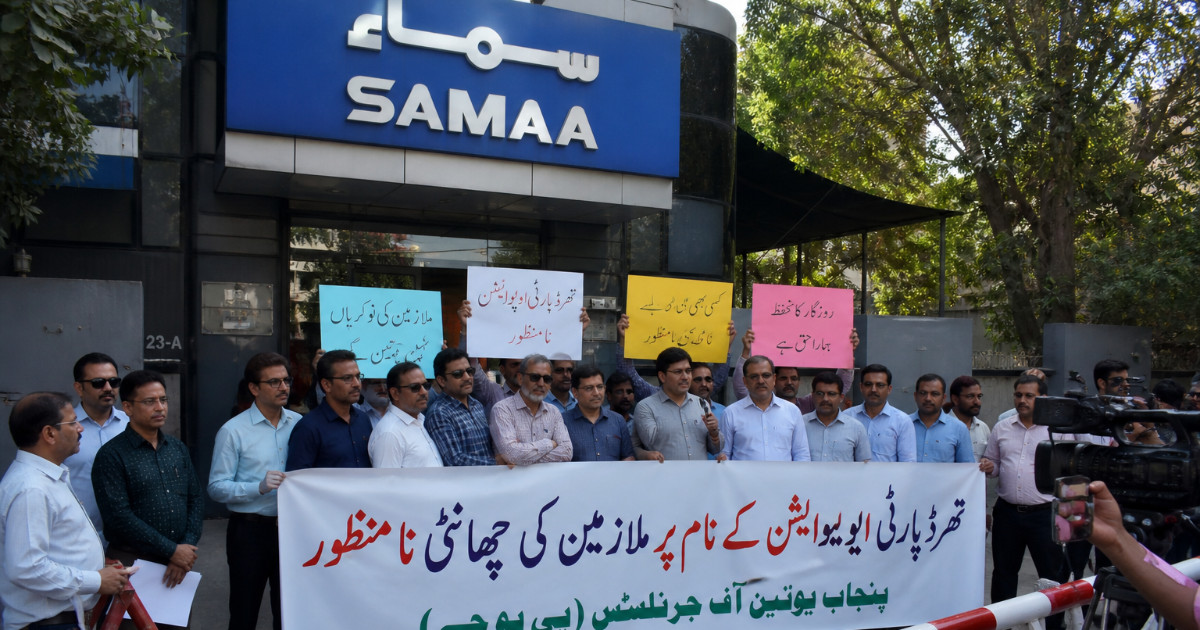
The most visible and disruptive trend of 2025 was financial stress across the media industry. JournalismPakistan documented repeated layoffs, closures, and delayed wages, reflecting a business model increasingly unable to sustain newsroom operations. In December, Dawn Media Group shut down its Urdu digital platform DawnNews.tv, terminating around a dozen staff members. The closure followed earlier contractions, including the shutdown of Aurora magazine, and was attributed to declining advertising revenue and reduced government advertising. Employees were reportedly informed abruptly, raising renewed concerns about job security and labor protections.
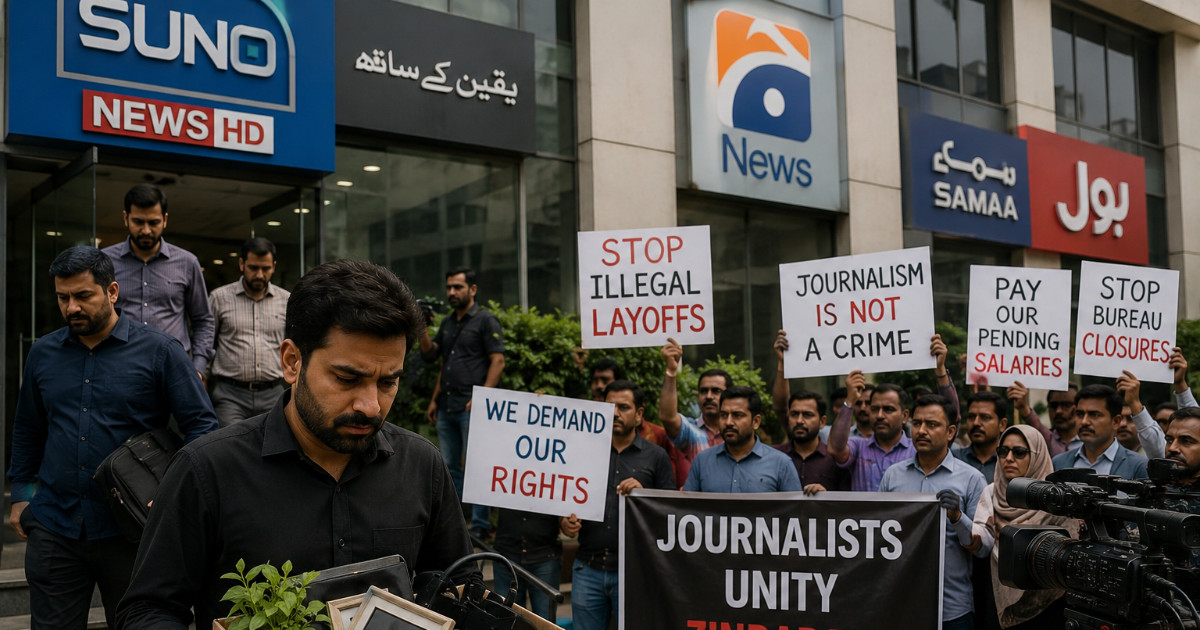
The Jang Group, Pakistan’s largest media conglomerate, carried out multiple rounds of retrenchments. In May, about 80 employees were laid off, followed by another 137 terminations in June, alongside the closure of the Urdu daily Awaz. Journalists’ unions and international press bodies criticized these retrenchments as unlawful and exploitative, citing delayed salaries and lack of severance. Digital-first outlets were also affected, with Nukta Pakistan laying off 37 employees in a cost-cutting move described as necessary for sustainability.
These economic pressures reshaped editorial behavior. Sponsored content and branded segments became more common, particularly in lifestyle, business, and technology coverage, often with inconsistent labeling. JournalismPakistan noted that the normalization of such practices blurred the boundary between editorial judgment and commercial necessity. Political polarization further narrowed editorial space, with confrontational talk shows dominating television news agendas and marginalizing evidence-based reporting on complex legal and economic issues. Legal uncertainty, including the use of defamation provisions and regulatory oversight by PEMRA, encouraged preemptive self-censorship.
Legal intimidation, censorship, and eroding trust
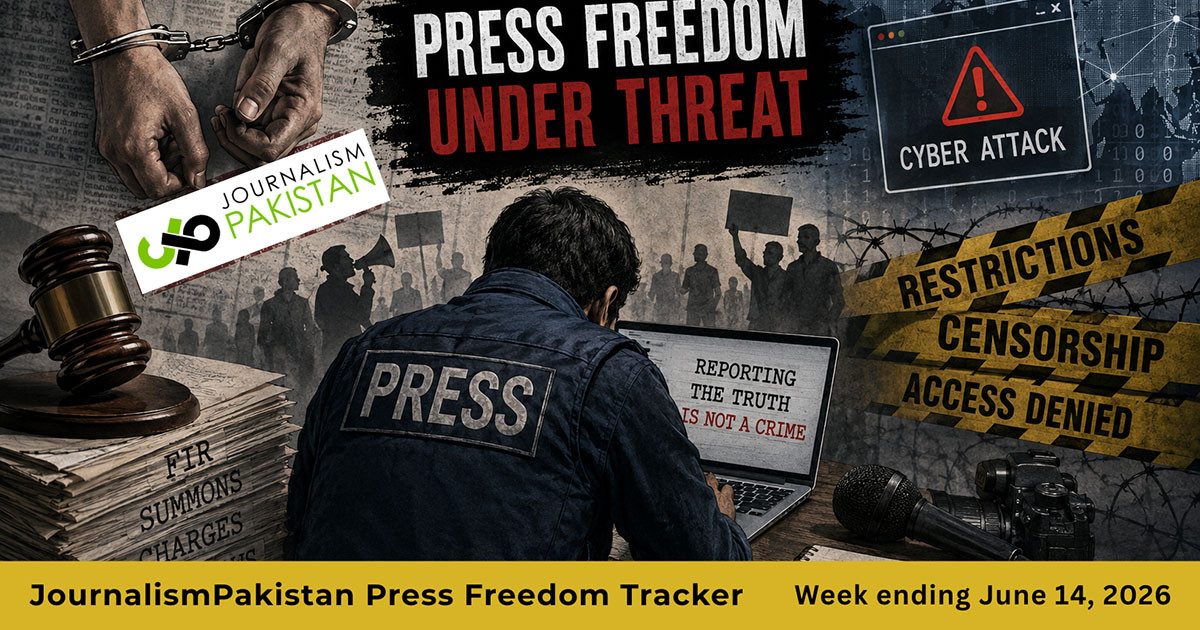
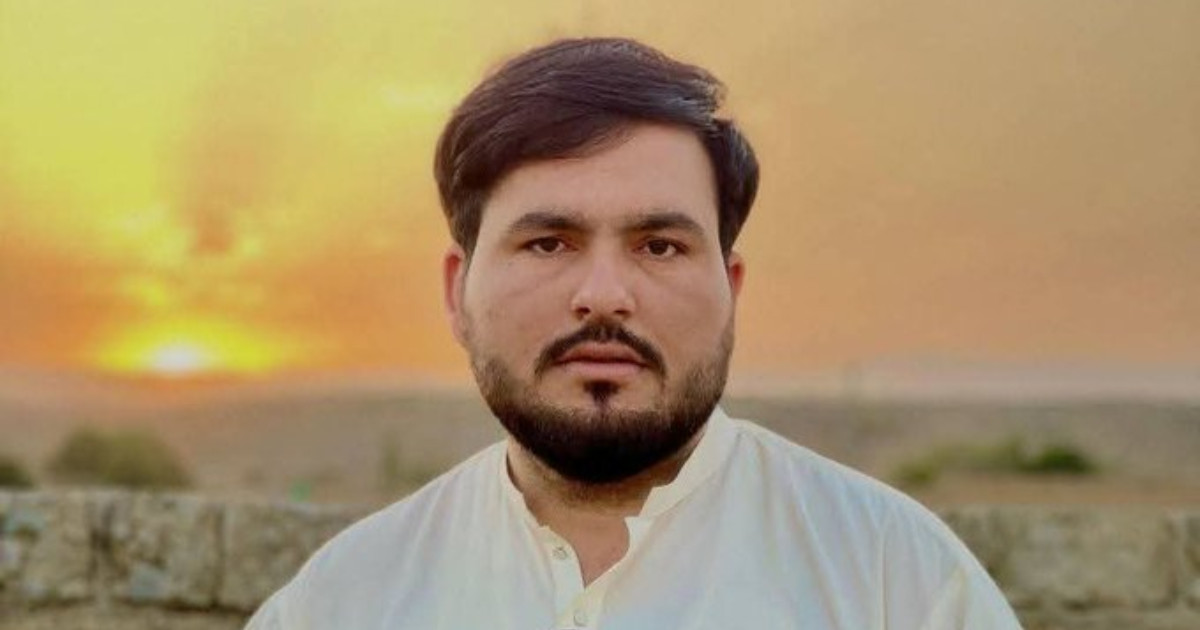
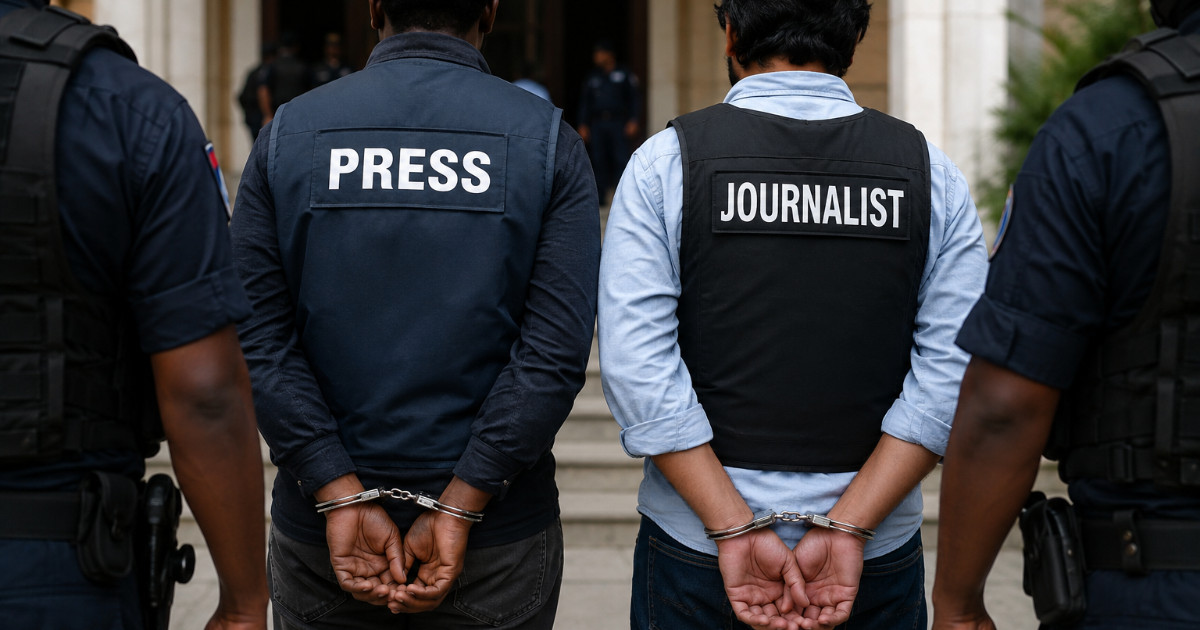
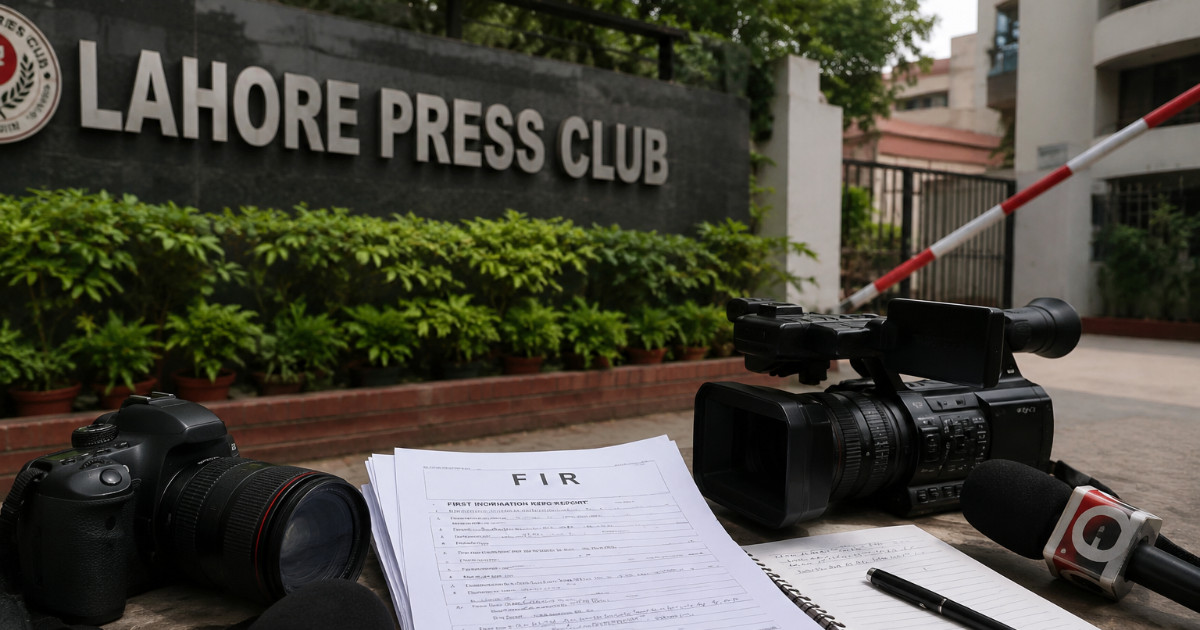
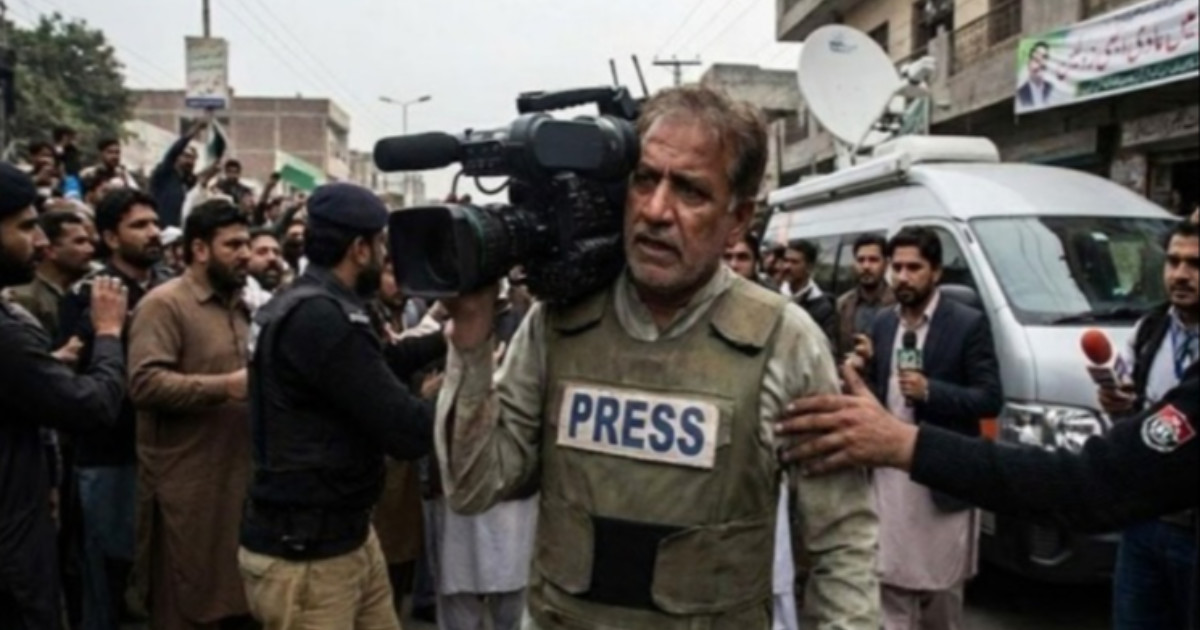
The most troubling developments of 2025 involved the steady normalization of pressure on journalists. JournalismPakistan documented multiple cases of harassment, detention, and legal intimidation. In November, Seven News correspondent Hasnain Akhlaq was briefly detained in Lahore after reporting on alleged illegal construction. He was threatened with a case under the Prevention of Electronic Crimes Act. Although he was later released, the incident illustrated how legal threats were used to deter reporting without prolonged detention.
The use of PECA intensified throughout the year. Media rights groups, as cited by JournalismPakistan, reported dozens of complaints filed against journalists under the PECA and related penal code provisions, contributing to a sharp rise in documented violations. Even when cases did not result in convictions, the process imposed legal costs, travel restrictions, and psychological pressure, encouraging self-censorship. Censorship increasingly took indirect forms, including unexplained broadcast disruptions, content takedowns, platform throttling, and informal advisories that were difficult to document or challenge.
Women journalists faced compounded risks. JournalismPakistan reported that female reporters experienced sustained online harassment, threats, and professional marginalization, particularly those covering politics, religion, or human rights. Some women journalists limited their public presence or withdrew from certain beats due to coordinated abuse, reinforcing gender disparities in visibility and advancement. Exile and mobility restrictions also remained unresolved issues, with journalists such as Asad Ali Toor and Sohrab Barkat continuing to face travel bans and legal constraints.
Ethical lapses further undermined trust. Media critics and JournalismPakistan highlighted instances of plagiarism, sensationalized crime coverage, invasion of privacy, and the circulation of unverified audio and video clips. Corrections were often delayed or understated, reinforcing public skepticism. Audience behavior increasingly reflected this trust deficit, with younger users relying more on informal digital sources and encrypted messaging platforms for news.
Looking ahead to 2026
As the Pakistani media moves into 2026, the central question is whether decline becomes normalized or contested. Continued financial contraction risks further hollowing out newsrooms, while expanded use of PECA and social media regulation may deepen self-censorship. Persistent harassment of journalists, particularly women, threatens to narrow the profession’s diversity and resilience.
Yet opportunities remain. JournalismPakistan’s reporting suggests that audiences have not abandoned journalism entirely, but are increasingly selective. Outlets that invest in credibility, transparency, and explanatory reporting may not regain mass reach, but they can build sustainable, trust-based audiences. Collaboration between newsrooms, shared investigative resources, and stronger labor protections could help mitigate isolation and risk.
In 2025, Pakistani media revealed both its vulnerabilities and its residual strength. The year showed that while the space for journalism has narrowed, it has not disappeared. Whether it contracts further or stabilizes in 2026 will depend on concrete choices made by journalists, editors, owners, regulators, and audiences alike.
PHOTO: AI-generated; for illustrative purposes only
Key Points
- Dawn Media Group and Jang Group faced major layoffs and closures due to falling revenues.
- Legal intimidation increased, with PECA frequently cited to threaten journalists.
- Women journalists encountered heightened online harassment and marginalization.
- Public-interest reporting persisted, focusing on critical societal issues.
- Erosion of audience trust led to a preference for informal news sources.
Relevant Topics
Ask AI: Understand this story your way
AI EnabledDig deeper, ask anything — get instant context, background, and clarity.
Disclaimer: This feature is powered by AI and is intended to help readers explore and understand news stories more easily. While we strive for accuracy, AI-generated responses may occasionally be incomplete or reflect limitations in the underlying model. This feature does not represent the editorial views of JournalismPakistan. For our full, verified reporting, please refer to the original article.