
Khaleej Times at 48: A legacy newspaper navigating the digital age
JournalismPakistan.com | Published: 17 April 2026 | JP Middle East Desk
Join our WhatsApp channel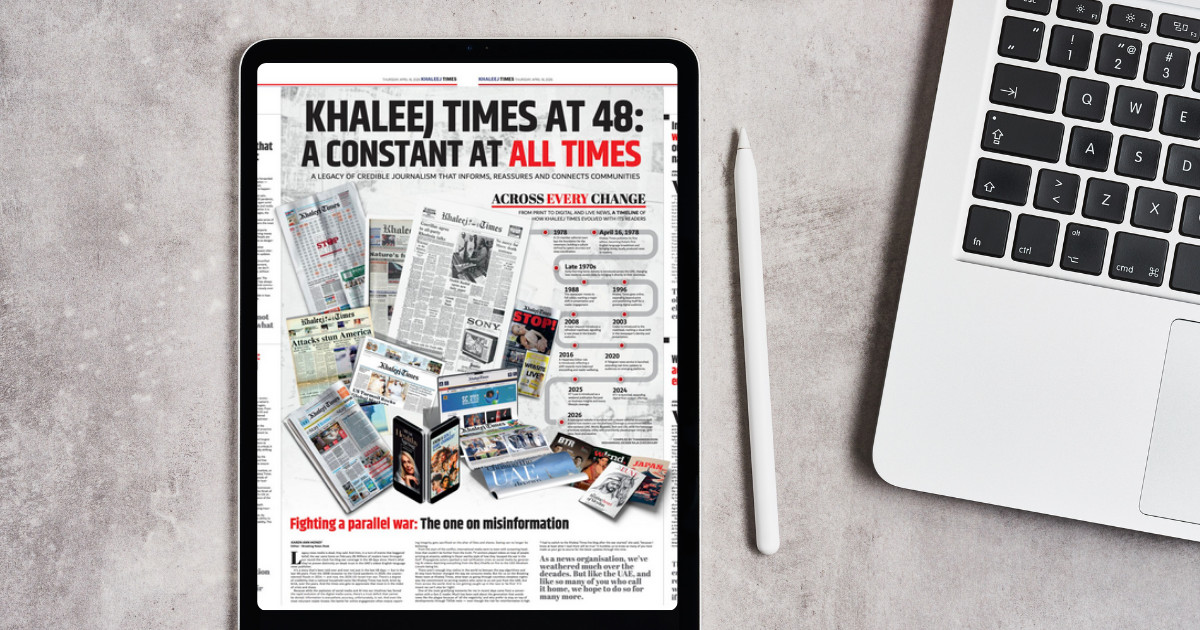
Marking its 48th anniversary, Khaleej Times reflects on decades of regional reporting and crisis coverage while accelerating a digital-first strategy; the paper seeks to balance journalistic standards with multimedia and social platforms to reach audiences.Summary
DUBAI — As Khaleej Times marked its 48th anniversary on April 16, the milestone offered more than a moment of celebration; it underscored the transformation of one of the Gulf’s most enduring media institutions.
Founded in 1978, Khaleej Times holds the distinction of being the United Arab Emirates’ first English-language newspaper, serving generations of expatriates and regional readers. Over nearly five decades, it has chronicled the UAE’s rise while positioning itself as a steady source of information during periods of uncertainty.
A legacy shaped by crisis coverage
In its anniversary editorials, Khaleej Times emphasized its role in defining global and regional events, from economic disruptions to the COVID-19 pandemic. The publication highlighted its commitment to clear, fact-based journalism aimed at informing and reassuring audiences in times of crisis.
This messaging reflects a broader industry shift where legacy outlets increasingly frame themselves as anchors of credibility amid rising misinformation and fragmented digital ecosystems.
From print roots to digital reinvention
While its legacy is rooted in print, Khaleej Times has steadily pivoted toward a digital-first strategy. Its online platforms now reach millions of users each month, supported by multimedia offerings and a stronger social media presence.
The transformation mirrors a wider trend across global media, where survival depends on adapting to changing consumption habits. For Khaleej Times, the shift has involved balancing traditional reporting values with the speed and demands of digital publishing.
Relevance in a competitive media landscape
Operating in a crowded Gulf media market, Khaleej Times continues to compete with regional and international outlets targeting English-speaking audiences. Its longevity is tied not only to brand recognition but also to its ability to evolve editorially and technologically.
The newspaper’s anniversary reflections repeatedly returned to themes of trust, community connection, and responsible journalism, signaling how it seeks to define its role in an era of declining trust in the media worldwide.
As it enters its 49th year, Khaleej Times stands as both a legacy institution and a case study in adaptation, illustrating how traditional news organizations can recalibrate without abandoning their core identity.
ATTRIBUTION: Reporting by JournalismPakistan based on April 2026 anniversary editorials by Khaleej Times and publicly available records regarding its history, ownership, and digital operations.
Key Points
- Founded in 1978 as the UAE's first English-language daily.
- Marked its 48th anniversary on April 16, highlighting its historical role.
- Emphasized crisis reporting, including coverage during the COVID-19 pandemic.
- Has shifted toward a digital-first approach with multimedia and stronger social presence.
- Seeks to balance traditional reporting values with the speed and reach of digital platforms.
Key Questions & Answers
When was Khaleej Times founded?
Founded in 1978; it was the UAE's first English-language daily.
What did the 48th anniversary emphasize?
The anniversary highlighted decades of regional reporting and the paper's role in crisis coverage and public information.
How is Khaleej Times adapting to the digital age?
The paper has adopted a digital-first strategy, expanding multimedia offerings and its social media reach while maintaining reporting standards.
Who are Khaleej Times' primary readers?
Its audience includes expatriates and regional readers seeking English-language news on local and international affairs.
Relevant Topics
Ask AI: Understand this story your way
AI EnabledDig deeper, ask anything — get instant context, background, and clarity.
Disclaimer: This feature is powered by AI and is intended to help readers explore and understand news stories more easily. While we strive for accuracy, AI-generated responses may occasionally be incomplete or reflect limitations in the underlying model. This feature does not represent the editorial views of JournalismPakistan. For our full, verified reporting, please refer to the original article.