.jpg)
Despite legislation, Pakistan fails to combat impunity of crimes against journalists: report
JournalismPakistan.com | Published: 29 October 2023
Join our WhatsApp channel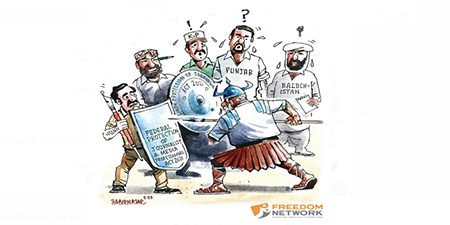
Despite being the first country to legislate for journalists' safety, Pakistan is struggling with rising impunity for crimes against media practitioners. A recent report reveals that the implementation of these laws has been ineffective in protecting journalists.Summary
ISLAMABAD—Two years after Pakistan became the first country in the world to specifically legislate on the safety of journalists, the state is still failing to use this critical legal instrument to combat rising impunity of crimes against journalists, reveals an annual report on the state of impunity against media practitioners in Pakistan, issued on Sunday.
Since the promulgation of safety laws for journalists, first by the Sindh government and then the federal government in late 2021, Pakistan continues to record an alarming increase in persecution of journalists, especially by government authorities and state agencies, including kidnapping, physical assaults and serious legal cases against them including unproven charges of sedition, treason and electronic crimes, in the two-year post-legislation period, according to Freedom Network annual report marking the International Day to End Impunity falling on November 2.
Pakistan made history in 2021 by passing two special laws to protect journalists. The Sindh Assembly passed the “Sindh Protection of Journalists and Other Media Practitioners Act-2021” while the National Assembly passed the “Protection of Journalists and Media Professionals Act-2021” in a space of a few months. Azad Jammu and Kashmir, Gilgit-Baltistan, Balochistan, Khyber Pakhtunkhwa, and Punjab have not passed a similar law for their jurisdictions.
According to the Freedom Network report titled “One Step Forward, Two Steps Back – Pakistan Legislates on Safety of Journalists, But Still Fails to Protect Them,” at least 37.5 percent of the violations in Pakistan – 93 out of total 248 cases in the period between August 2021-August 2023 – were recorded in Islamabad alone. Sindh was the second worst region in Pakistan with 22.5% of the violations (56 cases), the report said, adding that it is ironic that most attacks against journalists happened in this period in regions that legislated for their safety.
Eleven journalists were also killed or lost their lives in the line of duty during the same period. Additional detailed statistics are included in the report available on the Freedom Network website.
Pakistan was ranked 157 out of 180 countries in Reporters Without Border’s World Press Freedom Index in 2021 before the laws were passed. In 2023, the country had improved its media freedom rank to 150 due to the two laws – a legal framework that reflected an acknowledgment by the country that it needed to tackle the problem of violence against journalists and combat impunity through legal guarantees. But that is where the progress stops.
“It is very disturbing to see the good work of the two legislatures – the Sindh Assembly and the federal parliament – diluted by not making the laws fully operational to provide protection to journalists,” Iqbal Khattak, the Executive Director of Freedom Network said while releasing the report. “Both the federal and Sindh governments are responsible for effectively dysfunctionalising their own laws and therefore delaying and effectively denying justice to journalists,” he added.
The federal Protection of Journalists and Media Professionals Act was passed unanimously by the National Assembly when Imran Khan was prime minister in 2021. After he was voted out, Shehbaz Sharif became the prime minister in 2022 until the parliamentary tenure expired in August 2023.
“In these two years, both the Khan and Sharif governments failed to establish a safety commission mandated by the law which meant that in effect the federal law remained non-operationalized and hence failed to help a single of the 93 journalists in Islamabad that were killed, attacked, injured, threatened or harassed in the two years since its enactment. The two governments also failed to enforce the law,” the report said.
A somewhat similar situation prevailed in Sindh. The Sindh Protection of Journalists and Other Media Practitioners Act was passed in June 2021 by the provincial assembly and notified officially in August 2021, but the Commission for the Protection of Journalists and Other Media Practitioners (CPJMP), proposed by the law, was only notified one year late in December 2022 with respected jurist Rasheed A Razvi appointed its first chairperson.
“Even after the Commission was set up to ensure enforcement of the law, the Sindh government until August 2023 had failed to provide either an office, staff, or a formal budget for its operations, thereby procedurally hampering its operations and severely restricting the Commission’s ability to provide protection, relief, and justice for the growing number of violations against journalists and media entities in Sindh province,” the report notes.
To Commission Chairperson Razvi’s credit, without any operational resources, he was able to come to the aid of several journalists in Sindh who were either kidnapped or attacked by issuing notices to the provincial authorities, including law enforcement agencies, to either recover or safeguard the journalists. “His orders were complied, indicating that if resourced properly, the Commission can help reduce impunity of crimes against journalists and media in Sindh,” according to the report.
For Pakistan to benefit from the promise of two legislations on journalists’ safety, the report makes three recommendations: (i) urgent formation of a safety commission under the federal Protection of Journalists and Media Professionals Act, (ii) appropriate and adequate resourcing, including budget, office and staff for Sindh’s Commission for the Protection of Journalists and Other Media Practitioners, and (iii) enactment of similar journalists’ safety laws by Balochistan, Khyber Pakhtunkhwa and Punjab after legislative assemblies are elected in these provinces in the 2024 provincial elections.
“Pakistan has a golden opportunity to become one of the strongest global performers in combating impunity for crimes against journalists with presence now on its statute books of the two specialist journalists’ safety legislations, thanks to the efforts of many stakeholders over several years, especially the Pakistan Journalists Safety Coalition,” the report said. “But for this promise to materialize, these three recommendations must be implemented on priority.”
Click the below link to download the full PDF version report
https://www.fnpk.org/justice-for-journalists-one-step-forward-two-steps-back/
Key Points
- Pakistan has not effectively operationalized its journalist safety laws.
- Impunity for crimes against journalists continues to rise post-legislation.
- The Freedom Network report documents 93 violations in Islamabad alone.
- Governmental inaction hampers the safety commission's effectiveness.
- Recommendations include urgent formation of a safety commission and provincial laws.
Relevant Topics
Ask AI: Understand this story your way
AI EnabledDig deeper, ask anything — get instant context, background, and clarity.
Disclaimer: This feature is powered by AI and is intended to help readers explore and understand news stories more easily. While we strive for accuracy, AI-generated responses may occasionally be incomplete or reflect limitations in the underlying model. This feature does not represent the editorial views of JournalismPakistan. For our full, verified reporting, please refer to the original article.