
Rights groups concerned over attacks on Pakistani journalists
JournalismPakistan.com | Published: 4 June 2021
Join our WhatsApp channel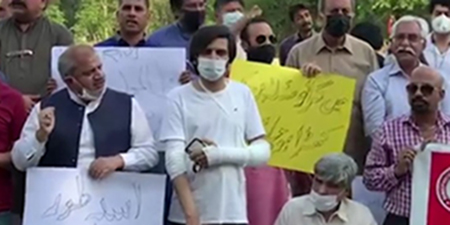
Human rights organizations are alarmed by increased violence against journalists in Pakistan. They call for government investigations and protection for media personnel.Summary
A recent series of attacks and growing pressure on journalists who criticize the Pakistan government is a cause for serious concern, Human Rights Watch, Amnesty International and the International Commission of Jurists said. Those suspected of criminal responsibility should be promptly and fairly prosecuted.
The Pakistan government should conduct prompt, impartial, and effective investigations into the recent attacks on journalists. The government should rescind official policies that protect the authorities from criticism and instead promote space for public debate and free expression, in the face of threats from extremist groups and government officials.
“The frequency and audacity with which journalists are being attacked in Pakistan is appalling,” said Brad Adams, Asia director at Human Rights Watch. “The Pakistani authorities should bring those responsible for these attacks to justice and ensure that all journalists can do their jobs without fear of intimidation or reprisals.”
On May 25, 2021, Asad Ali Toor, a journalist, was assaulted by three unidentified men who forcibly entered his apartment in Islamabad. They bound and gagged Toor and severely beat him. Toor said that they identified themselves as being from a security agency, interrogated him about the “source of his funds,” and took away his cell phone and other electronic devices. The government ordered an investigation into the incident.
In September 2020, the authorities charged Toor with sedition for comments made on social media “maligning state institutions.” A court later dismissed the charges.
On April 20, an unidentified assailant shot and wounded Absar Alam, a television journalist, outside his house in Islamabad. Alam has been a prominent critic of the government. In September 2020, the authorities charged Alam with sedition and “high treason” for using “derogatory language” about the government on social media.
On July 21, 2020, an unidentified assailant abducted another journalist, Matiullah Jan, in Islamabad the day before he was to appear before the Supreme Court for allegedly “using derogatory/contemptuous language and maligning the institution of judiciary.”
Jan was released after a few hours. He alleged the abduction was an attempt to intimidate him. A criminal case was registered for Jan’s abduction, but no suspects have been arrested.
“It is disturbing to see the space for dissent and providing information of public importance rapidly shrink in Pakistan, with journalists as well as human rights defenders particularly at risk of censorship, physical violence, and arbitrary detention,” said Sam Zarifi, secretary general of the International Commission of Jurists.
Pakistani journalists have long faced serious obstacles to their work, including harassment, intimidation, assault, arbitrary arrest and detention, abduction, and death. As these threats have escalated, Pakistani authorities have also increasingly pressured editors and media owners to shut down critical voices. On May 29, the news channel, Geo, “suspended” Hamid Mir, one of Pakistan’s best-known television talk show hosts, after Mir spoke at a protest in solidarity with Asad Toor.
Other media outlets have come under pressure from authorities not to criticize government institutions or the judiciary. In several cases in recent years, government regulatory agencies blocked cable operators and television channels that had aired critical programs. In 2020, Pakistan ranked ninth on the Committee to Protect Journalist’s annual Global Impunity Index, with at least 15 unsolved killings of journalist since 2010.
In July 2020, the Pakistan Electronic Media Regulatory Authority (PEMRA) ordered 24NewsHD, a television news channel, off the air indefinitely for the alleged “illegal transmission of news and current affairs content.” Journalists and opposition activists alleged that the channel was being punished for airing criticism of the government.
In August 2020, a group of leading women journalists issued a statement condemning a “well-defined and coordinated campaign” of social media attacks, including death and rape threats against women journalists and commentators whose reporting has been critical of the government.
“If the authorities are committed to uphold their human rights obligations, they must take decisive steps against censorship, harassment and violence against journalists,” said Dinushika Dissanayake, South Asia deputy regional director at Amnesty International. “For that, continued impunity must be dismantled.” —Amnesty International
KEY POINTS:
- Human rights groups are raising concerns over attacks on journalists in Pakistan.
- The Pakistani government is urged to investigate attacks and ensure journalist safety.
- Recent assaults include the beating of Asad Ali Toor and shooting of Absar Alam.
- Media outlets face pressure to suppress criticism of government and judiciary.
- Pakistan ranks high on the Global Impunity Index for unsolved journalist killings.