
IFJ on BOL: Government directives act as form of censorship
JournalismPakistan.com | Published: 30 May 2015
Join our WhatsApp channel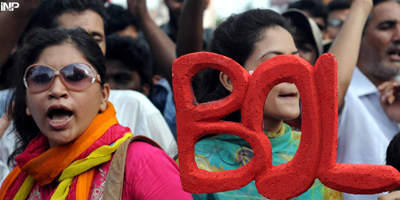
The IFJ and PFUJ have raised alarms over state directives against BOL News, arguing they represent censorship. This affects hundreds of journalists amid ongoing investigations.Summary
The International Federation of Journalists (IFJ) and its affiliate the Pakistan Federal Union of Journalists (PFUJ) have expressed serious concerns over the recent state directives against upcoming television station, BOL News TV channel. The IFJ and PFUJ have cautioned the government on the directives as they act as a form of censorship and impact on the jobs of hundreds of journalists, the IFJ said.
On May 28, the Federal Information Ministry wrote a letter to Pakistan Electronic Media Regulatory Authority (PEMRA) asking it to stop the broadcasting of BOL News until the completion of a criminal investigation into its parent company, Axact. BOL TV, currently in test transmission, was established by the chief executive officer of Axact, Shoaib Ahmed Shaikh.
The company is currently under investigation for alleged scams involving fake degrees through fake online universities. More than 2,300 journalists and media staff are employed by BOL TV. The IFJ and the PFUJ said these employees face an uncertain future due to the controversy surrounding BOL’s parent company and government directives to stop its transmission.
Some of BOL’s senior journalists resigned in protest at the scandal. The PFUJ said: “We are concerned in regard to protection of jobs of journalists and media staff.
We ask the government to refrain from taking any controversial action, which might hurt the cause of journalists and render them jobless.” The IFJ Asia Pacific says the ministry’s order to stop the broadcasting of the TV channel was clearly a censorship issue. “No media should be harassed or ordered to close down simply because its parent company or investors are under investigation.
Journalists are facing uncertainty with their jobs, so urgent action is needed to ensure staff are protected or appropriately compensated if the impacts of the investigation result in a loss of jobs. Meanwhile, on May 13, 2015, the Pakistan Press Council (PCP) wrote to the All Pakistan Newspaper Society (APNS) requesting it refrain from writing negative reports about Yemen and Saudi Arabia.
The letter stated: “The Chairman, PCP has desired that while reporting on Yemen Crisis and Saudi Arabia … Acute case should be taken to avoid negative comments to ensure about our bilateral friendly relations with Arab countries are not adversely affected.” It also spelt out Article 19 (freedom of expression) and Article 19A (right to information) to detail the exceptions to freedom of expression as an added emphasis to its directive.
The PFUJ and the IFJ strongly urge the Pakistan authority to refrain from any activities or directives aimed at gagging media freedom and to observe protections to freedom of expression enshrined in Pakistan’s constitution. - IFJ
Key Points
- IFJ and PFUJ oppose government censorship affecting BOL News TV.
- Over 2,300 journalists at BOL face job uncertainty due to directives.
- Government asked PEMRA to halt BOL's broadcasting pending investigations.
- Senior journalists at BOL resigned in protest at the censorship.
- Urgent action needed to protect jobs and media freedom in Pakistan.
Relevant Topics
Ask AI: Understand this story your way
AI EnabledDig deeper, ask anything — get instant context, background, and clarity.
Disclaimer: This feature is powered by AI and is intended to help readers explore and understand news stories more easily. While we strive for accuracy, AI-generated responses may occasionally be incomplete or reflect limitations in the underlying model. This feature does not represent the editorial views of JournalismPakistan. For our full, verified reporting, please refer to the original article.