
Myanmar police charge two Reuters reporters under Official Secrets Act
JournalismPakistan.com | Published: 10 January 2018
Join our WhatsApp channel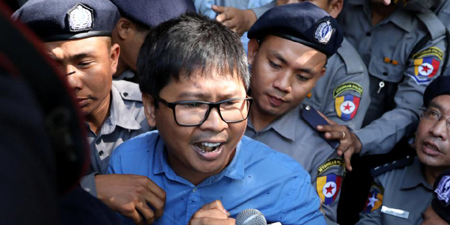
Two Reuters journalists were charged under Myanmar's Official Secrets Act for allegedly receiving classified documents. This case raises significant concerns about press freedom in the country.Summary
YANGON - Two Reuters journalists were formally charged by police in a Myanmar court Wednesday for breaching a colonial-era secrecy law that carries up to 14 years in jail, despite calls for their immediate release.
Myanmar nationals Wa Lone, 31, and Kyaw Soe Oo, 27, were arrested a month ago under the Official Secrets Act after they allegedly were given classified documents by two policemen over dinner.
The pair had been reporting on the military campaign in the northern Rakhine state that has forced some 655,000 Rohingya Muslims to flee over the border to Bangladesh since August, violence the UN has condemned as ethnic cleansing.
The issue is incendiary inside Myanmar, where authorities deny any wrongdoing during an army crackdown on militants from the Muslim minority.
A police officer “filed the case to charge under the state secret (Official Secrets) act, section 3.1(c),” a district judge told the court.
The section punishes anyone who “obtains, collects, records or publishes… any official document or information” which could be “useful to an enemy.”
The pair will return to the court on January 23 for legal arguments, when the bench will decide whether to accept the case under Myanmar’s arcane legal system.
Emotive scenes gripped the Yangon courthouse with the journalists’ family members in tears and the reporters issuing desperate pleas before being led back to detention.
“Please tell the people to protect our journalists,” Kyaw Soe Oo shouted to the court.
His colleague Wa Lone said his wife was pregnant adding: “I’m trying to be strong.”
The case has shocked Myanmar’s embattled press corps.
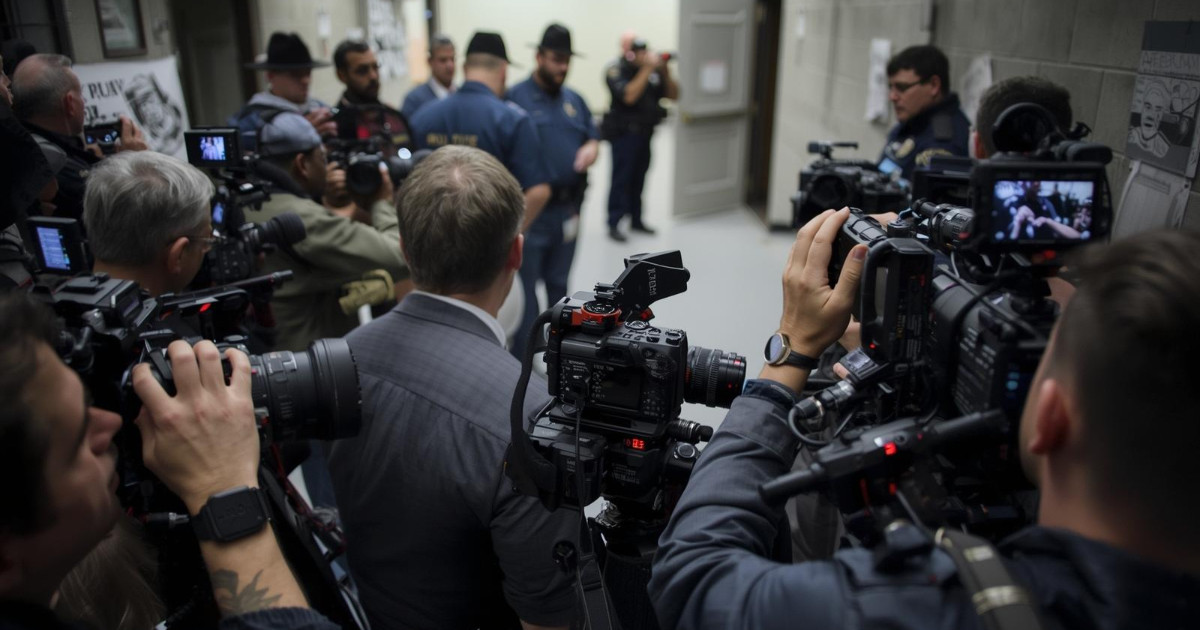
Journalists covering Wednesday’s proceedings wore black in protest against their arrest, carrying banners proclaiming “Journalism is not a crime”.
“We applied for bail but the prosecutors rejected it,” the journalists’ lawyer Khin Maung Zaw told AFP.
“So we are going to give arguments in detail in the next trial.”
Dressed in black
In the court, Kyaw Soe Oo embraced his wife and held his daughter for a couple of minutes. His daughter began to weep as he was escorted away and had to hand her back to other family members.
Wa Lone’s wife gave him a few small pieces of cake that she had brought.
”I am trying to be strong in everything. I never made any mistake; I never did anything wrong,” Wa Lone said before leaving the court.
Reuters President and Editor-In-Chief Stephen J. Adler said he was extremely disappointed that the authorities were seeking to prosecute the pair.
“We view this as a wholly unwarranted, blatant attack on press freedom. Our colleagues should be allowed to return to their jobs reporting on events in Myanmar. We believe the time is of the essence and we continue to call for Wa Lone and Kyaw Soe Oo’s prompt release,” he said.
Protest outside court
About 30 journalists were outside the court, most dressed in black as a sign of protest against the arrest of the pair. Several had the message “journalism is not a crime” or “release the arrested journalists now” on their T-shirts.
Police were on duty outside the court, and some areas were cordoned off with barbed wire.
The two were brought to court in a police vehicle and emerged from it smiling, both in handcuffs. Wa Lone gave a thumbs-up sign.
Government officials from some of the world’s major nations, including the United States, Britain and Canada, as well as top United Nations officials, have called for the release of the reporters.
Former US President Bill Clinton also urged that they are freed immediately.
“A free press is critical to a free society – the detention of journalists anywhere is unacceptable. The Reuters journalists being held in Myanmar should be released immediately,” Clinton said in a Twitter post on Monday.
Clinton was US president for much of the 1990s when the United States pressed Myanmar’s then military rulers to release democracy champion Aung San Suu Kyi from years of house arrest.
Suu Kyi won a 2015 election and formed a government in early 2016, although she is barred by the constitution from becoming president.
She has made no public comment on the detention of the two Reuters reporters. The government has denied that their arrests represent an attack on press freedom and Suu Kyi’s spokesman has said the case would be handled according to the law. - AFP
KEY POINTS:
- Reporters Wa Lone and Kyaw Soe Oo face up to 14 years in prison.
- Charges were filed under the colonial-era Official Secrets Act.
- Journalists were covering the military campaign affecting Rohingya Muslims.
- International figures have called for their immediate release.
- Protests erupted outside the courthouse in defense of press freedom.