
Journalists face burnout amid nonstop news cycle Why news avoidance may be a bigger threat than misinformation Seven evidence-based media predictions for Pakistan and beyond in 2026 Dawn calls life sentences for journalists an extreme move Arab journalists pledge cooperation to defend media freedom Palestinian rights group flags press access limits Silencing an article in Pakistan makes it louder When telling the story becomes a crime: A warning shot for Pakistani journalism Breaking news alerts then and now: from urgency to overload AI reduces publisher traffic but not newsroom jobs, study finds Palestinian journalists face a wave of detentions in 2025 Journalists face burnout amid nonstop news cycle Why news avoidance may be a bigger threat than misinformation Seven evidence-based media predictions for Pakistan and beyond in 2026 Dawn calls life sentences for journalists an extreme move Arab journalists pledge cooperation to defend media freedom Palestinian rights group flags press access limits Silencing an article in Pakistan makes it louder When telling the story becomes a crime: A warning shot for Pakistani journalism Breaking news alerts then and now: from urgency to overload AI reduces publisher traffic but not newsroom jobs, study finds Palestinian journalists face a wave of detentions in 2025
Logo
Janu
Gone Too Soon

Cases against journalists a worrying trend: HRCP official

 JournalismPakistan.com |  Published: 25 September 2020

Join our WhatsApp channel
Cases against journalists a worrying trend: HRCP official
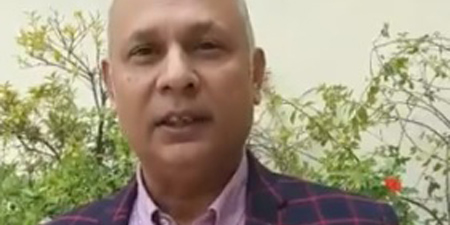
Harris Khalique of HRCP has condemned the 49 cases filed against journalists in Pakistan for criticizing national institutions. This trend raises concerns about the state's tolerance for dissent.

ISLAMABAD— Harris Khalique, Secretary-General of Human Rights Commission of Pakistan (HRCP), has said the registration of 49 cases against journalists and social media activists over defamation of national institutions shows the state had become weak and unable to take criticism.

In the talk show Zara Hut Kay on DawnNews TV, he termed the cases a worrying trend, which is even not good for the state and its institutions.

When asked to comment on the cases, he said he was going to talk openly. However, Wasatullah Jan, one of the three program hosts, on a lighter note, asked him not to be so open to close down the talk show.

Mubashir Zaidi, also a presenter, asked him if he too wanted to be booked.

Harris responded that there was no harm if the 50th case was also registered. “But seriously, I condemn this (registration of cases). When the kingdom is weak, it does not even like a joke. When the kingdom is strong, it even rewards over criticism and satire.”

KEY POINTS:

  • 49 cases registered against journalists and social media activists in Pakistan.
  • Harris Khalique describes the situation as a worrying trend.
  • He emphasizes that a strong state welcomes criticism and satire.
  • The discussion took place on DawnNews TV's show Zara Hut Kay.
  • Khalique questions the government's reaction to criticism.
Don't Miss These

Newsroom
Journalists face burnout amid nonstop news cycle

Journalists face burnout amid nonstop news cycle

 January 05, 2026 Growing burnout among journalists in the relentless 24/7 news cycle is affecting their mental health, job satisfaction, and retention, driven by stress stemming from excessive workload, long hours, and constant connectivity.


Arab journalists pledge cooperation to defend media freedom

Arab journalists pledge cooperation to defend media freedom

 January 04, 2026 Arab journalist unions from Jordan and Egypt announce deeper cooperation on training and advocacy, stressing media freedom and the role of Arab media in shaping global narratives.


Palestinian rights group flags press access limits

Palestinian rights group flags press access limits

 January 03, 2026 The Palestinian Centre for Human Rights highlights ongoing restrictions on journalists in occupied territories, impacting press freedom and humanitarian reporting.


Breaking news alerts then and now: from urgency to overload

Breaking news alerts then and now: from urgency to overload

 January 03, 2026 The evolution of breaking news alerts highlights a shift from rare, trusted updates to frequent notifications that contribute to audience fatigue.


AI reduces publisher traffic but not newsroom jobs, study finds

AI reduces publisher traffic but not newsroom jobs, study finds

 January 02, 2026 A study reveals that AI has reduced traffic to news publishers but not job levels, challenging fears of mass layoffs in journalism.


Popular Stories