
End of an era as last two journalists leave Fleet Street
JournalismPakistan.com | Published: 6 August 2016
Join our WhatsApp channel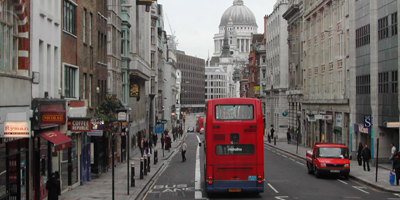
Fleet Street, once the heart of Britain's newspaper industry, has seen its last two journalists depart. This marks a poignant end to a historical era, influenced heavily by the changes initiated by Rupert Murdoch.Summary
LONDON: Three decades after media mogul Rupert Murdoch instigated its demise as the centuries-old home of Britain’s newspaper industry, London’s Fleet Street bade farewell on Friday to its last two journalists. Fleet Street once housed thousands of reporters, editors and printers working for the country’s biggest national papers as well as international and provincial publications.
While the British press is still collectively known as “Fleet Street”, there will no longer be any working journalists there after the Scottish-based Sunday Post newspaper closed its London operation. “It’s a far sadder day for journalism than it is for me personally,” said Darryl Smith, 43, one of the street’s last two “hacks”.
“Journalism is no more in Fleet Street.” The thoroughfare became synonymous with publishing from 1500 when Wynkyn de Worde established a printing press. The first daily newspaper, the Daily Courant, was launched in 1702.
In the shadow of St Paul’s Cathedral, the street was ideally located for journalists, being in walking distance of the city’s financial district, the Royal Courts of Justice and politicians in Westminster.
Murdoch, who bought the News of the World tabloid in 1969, was at the heart of the street’s decline when in 1986 he moved his newspaper stable, which by then included the Times and Sunday Times broadsheets and the Sun tabloid, to a new purpose-built operation in east London, where new technology replaced the hot metal printing presses.
Within three years, all other national newspapers had followed, anxious to cut costs in an industry now decimated by the growth of the internet. Journalists have long departed the old Reuters headquarters at number 85, now the site of a smart restaurant.
Nowadays the street that once echoed to the sounds of clattering typewriters is the haunt of bankers and accountants; the Art Deco building that once housed the Daily Express is now home to Goldman Sachs. “It’s mainly bankers now,” Smith said. “I’m not even sure that people here now know the history.” He began working on Fleet Street at 18, lured by its famous past.
His fellow departing Sunday Post colleague Gavin Sherriff, 54, began working at the paper in Fleet Street 32 years ago when it was still in its heyday, rising from editorial assistant to become London chief reporter. “When you came into the office you felt like you were walking into somewhere a bit special.
It was a smoke-filled room, you couldn’t see from one side to another, full of people bashing away on old-fashioned typewriters, struggling to get through on bad phone lines,” he recalled. Nowadays, there is little to indicate the street’s past.
The building in which Sherriff and Smith worked is another rare throwback, emblazoned in giant type with the names of newspaper titles: Sunday Post, Dundee Courier and People’s Journal. “We have been very aware we were the last two journalists here,” Smith said. “I think it’s a sad piece of history.
I love my profession, I love the history of Fleet Street and I love that I was working here.” - Reuters
KEY POINTS:
- Last two journalists leave Fleet Street, ending its legacy.
- Fleet Street was the center of British journalism for centuries.
- Rupert Murdoch's actions in the 1980s contributed to its decline.
- The area is now dominated by financial institutions, not media.
- Very few remnants of its rich journalistic history remain.