.jpg)
The interview Hamid Mir can't forget
JournalismPakistan.com | Published: 10 July 2012 | By Chatterbox
Join our WhatsApp channel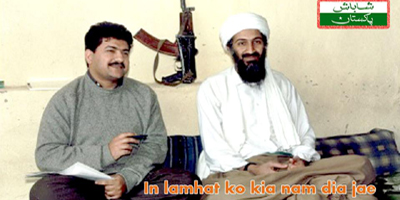
The article discusses criticism directed at Geo TV host Hamid Mir after he shared a photo with Osama bin Laden on Facebook. It argues the post reignited debate about Mir’s past interviews and journalistic neutrality.Summary
ISLAMABAD: Taliban sympathizer, CIA agent, Indian agent, dishonest, liar, provocateur, murderer… these are all accusations hurled at one time or the other at Hamid Mir, host of Geo TV’s Capital Talk. Now add “cheapskate” and “attention monger” to the list.
These are just some of the more reasonable names that have recently appeared alongside his otherwise hallowed name in blogs and Facebook posts.
“This man is Pakistan’s biggest enemy,” a dear fellow journalist shouted over the phone when I asked him his opinion of Hamid Mir, “It’s not because he’s a so-called CIA agent, Taliban chum or whatever, but because he’s ignorant, bull-headed and a moron. He doesn’t know anything about anything.” Whoa!!
Hold on there, this is the man that interviewed the ‘Big O” when nobody else could. Indeed he did so on three separate occasions. BBC and CNN proclaimed he had a global scoop. “Because it was easy for him to do so; he shared the same ideology and still does,” my furious friend said, slamming down the phone.
Further attempts to contact him resulted in zilch until today. Normally, I would ask a dozen people, but his guy has been with and around Hamid for more than 10 years. He knows him like the back of his hand. Then this morning I got a call. “Have you seen Hamid’s latest Facebook post?” he asked. I confessed I hadn’t.
“Please do,” my friend said caustically, “And then get back to me.” So I hurried to my laptop, opened up Facebook and what do I see? Good old Hamid boy grinning like a Cheshire cat seated alongside Osama Bin Laden. There were dozens and dozens of remarks and comments below from Hamid’s horde of fans. A remark from Hamid highlighted the picture.
It said: “How does one define such moments?” Exactly! My first response: “Is he kidding?” Second: “What a loser.” Third: “Who are the idiots who have appreciated this post?” Quite frankly, I was more than a little zonked. It took me some time to gather up enough gumption to call back my friend. “So what is your opinion?” he asked.
“Seems like this guy is infatuated with himself; He’s living in the past,” I started. “There you are. You have it in a nutshell. A nut summarized in a nutshell. What I can’t understand is that this guy calls himself a journalist.
A journalist does not take sides and here he is openly reminiscing on a public forum about the good times he had with the world’s most reviled terrorist, a man directly and indirectly responsible for thousands of deaths worldwide; including those of Pakistani soldiers, innocent bye-standers, women and children… sons and daughters of the soil?” “Yes,” I said.
“Remember,” my friend reminded me zealously, “This is the same guy who said we had lost Wazirstan to the Taliban and that the Pakistan Army could not be seen anywhere. He was sending these reports from Bannu.” I recalled the sensational, mind-boggling reports from Hamid, but I wondered aloud how that fitted in with the picture Hamid had posted on Facebook.
“This is a dangerous man who is forever seeking attention. He thrives on it. Unfortunately those millions of uneducated TV viewers out there don’t know this. They think he is a hero. Little do they know he is just a modern day Don Quixote. He fires up the emotions of people. He distracts them, and misguides them.
Worst of all, this is a man reliving his past…every time the world forgets Hamid interviewed Osama, he reminds them. It’s all about his ego. It’s an ego trip he’s on.” I recalled reading somewhere that Hamid had once confessed he did not know who Walter Cronkite was. I reminded my friend. He clucked angrily.
“Moron.” He reminded me of another incident, “What was that story about that chief reporter and the Indian film actress you used to tell…?” I tried to recall it. Ah yes. I said, “One day the chief reporter happened to be on the location of an Indian film shoot in Sharjah. One of the starlets, I think her name was Sheba, walked up to him and said, ‘It’s hot here.
Is there no place cool?’” The chief reporter was thrilled. No film actress had ever spoken to him before. He said, “Of course there is. Why don’t you sit in my car it has an AC.” The starlet sat in his car for a good half hour during which she chatted with the chief reporter, signed an autograph and gave him a small memento, a peck on the cheek or so the chief reporter claimed.
Best of all, for a month after the incident, the chief reporter would not let anybody sit on the passenger seat up front in his car. “Sheba sat here,” he would say. “Exactly,” my friend said with satisfaction, “Not much of a difference between that chief reporter and Hamid. Only thing I would like to know is if Osama gave Hamid one peck on the cheek or two.
He certainly remembers him with a lot of affection.” (The views expressed by the writer are not necessarily those of JournalismPakistan.com)
Key Points
- The piece lists past accusations and insults aimed at Hamid Mir and notes a surge of recent online criticism.
- It references Mir’s interviews with Osama bin Laden as a widely cited media scoop.
- The author highlights Mir’s Facebook post featuring a photo with bin Laden and comments praising it.
- The article frames the post as fueling questions about journalistic impartiality and public conduct.
Relevant Topics
Ask AI: Understand this story your way
AI EnabledDig deeper, ask anything — get instant context, background, and clarity.
Disclaimer: This feature is powered by AI and is intended to help readers explore and understand news stories more easily. While we strive for accuracy, AI-generated responses may occasionally be incomplete or reflect limitations in the underlying model. This feature does not represent the editorial views of JournalismPakistan. For our full, verified reporting, please refer to the original article.