.png)
Rizwan Razi’s record under scrutiny after PTV suspension
JournalismPakistan.com | Published: 2 September 2025 | JP Special Report
Join our WhatsApp channel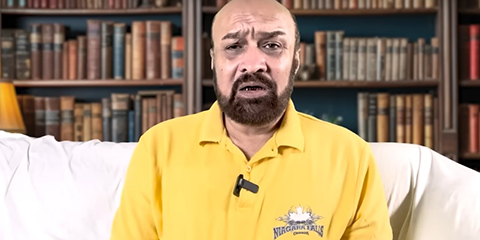
Rizwan Razi has faced scrutiny after being suspended by PTV due to offensive comments. His history includes arrests and criticism for misleading medical claims.Summary
ISLAMABAD — Rizwan Razi, popularly known as Razi Dada, has once again come under scrutiny following a series of controversies that span from derogatory remarks to medical misinformation.
On Tuesday, Pakistan Television (PTV) suspended Razi after a vlog surfaced in which he referred to the people of Sindh as the “offspring of monkeys.” The video, which quickly went viral, drew sharp criticism online and prompted disciplinary action.
This is not the first time Razi has faced official censure. In February 2019, while employed by Din TV, he was arrested by the Federal Investigation Agency (FIA) over what authorities described as “defamatory and obnoxious” comments about the judiciary, government, and intelligence agencies. He was later released on bail. Before that, the FIA had summoned him regarding what it termed “hard-hitting” tweets. At the time, Razi himself acknowledged apologizing to officials and assured them he would exercise restraint.
In July 2024, the FIA’s Cyber Crime Reporting Center again summoned Razi, alleging he was running “a highly obnoxious and intimidating campaign against the highest judiciary of the State of Pakistan” on social media.
Later that year, in December 2024, Razi was criticized for comments on Pakistan Television in which he promoted a purported new Chinese technology for cancer treatment. He claimed the method could “freeze and remove cancer without chemotherapy,” while also making remarks about Shaukat Khanum Cancer Hospital. Medical experts and health professionals publicly dismissed the claims as medically unfounded.
In August 2025, Razi became embroiled in a social media spat with senior journalist Khawar Ghumman. Ghumman had posted a tweet with a video showing flood devastation, writing: “In villages, if someone’s cow or buffalo dies, people formally visit the owner’s house to offer condolences. Due to the recent floods, such scenes of grief are now visible in every household.”
Razi responded sarcastically, suggesting Ghumman had crossed the border in disguise to obtain the video. His remark drew criticism from fellow journalists who viewed it as trivializing the flood tragedy.
Razi’s repeated summons, suspensions, and online disputes have placed him at the center of ongoing debates about journalistic responsibility, professional ethics, and the misuse of public platforms in Pakistan.
Key Points
- Razi's recent derogatory comments about the people of Sindh led to his suspension by PTV.
- He has a history of legal issues related to defamatory remarks since 2019.
- Medical experts debunked Razi's claims about a new cancer treatment technology.
- Razi has been involved in several online disputes trivializing serious national tragedies.
- His actions raise questions about responsibility and ethics in journalism.
Relevant Topics
Ask AI: Understand this story your way
AI EnabledDig deeper, ask anything — get instant context, background, and clarity.
Disclaimer: This feature is powered by AI and is intended to help readers explore and understand news stories more easily. While we strive for accuracy, AI-generated responses may occasionally be incomplete or reflect limitations in the underlying model. This feature does not represent the editorial views of JournalismPakistan. For our full, verified reporting, please refer to the original article.