.png)
PFUJ Islamabad Declaration: Threats to press freedom assume ominous proportions
JournalismPakistan.com | Published: 8 July 2019
Join our WhatsApp channel
The recent PFUJ meeting in Islamabad addressed the escalating threats to press freedom in Pakistan. The declaration emphasizes the need for safeguarding journalists' rights and opposing government censorship efforts.Summary
A meeting of the Federal Executive Council (FEC) of Pakistan Federal Union of Journalists (PFUJ) after three days of deliberations in Islamabad has concluded that the threats to press freedom in Pakistan have assumed ominous proportions.
The FEC meeting was presided over by President PFUJ Afzal Butt and attended by FEC members, presidents and general secretaries of the union of journalists from the four provinces.
Th following declaration was issued after the meeting:
Self-censorship enforced by government quarters has become the norm. Direct arm-twisting of media owners is being resorted to, forcing them to comply with dictated editorial policy. They are also made to keep a close watch on non-compliant media workers and fire them without notice in case they consistently refuse to comply.
The meeting observed that this arm-twisting has resulted in layoffs, ruthless firing of workers and delay in salaries by owners of the media outlets in the name of financial constraints, losses and media becoming a nonprofit business which is just an excuse and not a reality.
Both the print and broadcast media are being micro-managed by the state institutions across the country using the carrot of government advertisements and horrendous pressures of the kind unknown so far. In short, Article 19 of constitution is being continuously violated with complete impunity by the very authorities who are constitutionally obliged to safeguard the Article.
A number of media owners in order to protect and promote their own vested economic interests seem to be collaborating with the government in the latter’s attempts to render the media totally subservient to the illegal advice and directives issued on regular basis. These media owners seem also to have, in their own self-interest, agreed to cooperate with the government in its attempt to promulgate what is called the Pakistan Media Regulatory Authority which in essence aims not at regulating the media but controlling it using coercive methods.
PFUJ considers this attack on the freedom of the press a violation of the Article 19 of the Constitution of Pakistan, which guarantees freedom of speech and expression and which is the basic right of every citizen of this country according to the vision of Quaid-e-Azam Muhammad Ali Jinnah.
By bringing in such laws, the government would only be tarnishing and ruining the Quaid’s vision of a progressive, independent and livable Pakistan for all humans without any discrimination on the basis of cast, creed, color, faith or ethnicity. Such laws would also completely negate the thought contained in Quaid’s speech to the constituent assembly on 11th of August 1947 which gives a complete code of life and guarantees basic fundamental rights, including freedom of speech and expression.
The meeting demands that the government follow in letter and spirit the vision of Quaid- e-Azam and avoid media censorship, retrenchments, attacks and threats to journalists so that they can discharge their professional obligations independently, courageously, fearlessly safeguarding at the same time their integrity and credibility.
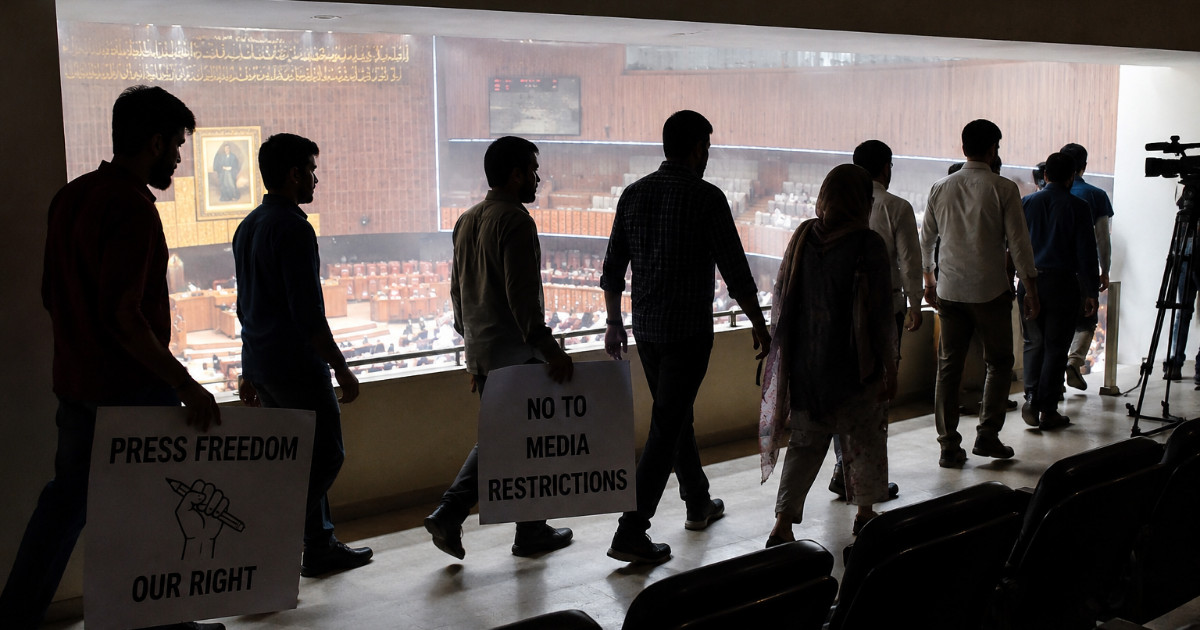
The meeting condemns the decision to ban media discussion, articles, editorials, analyses and public comments on the references moved against judges of the apex court, and harassment of journalists. Such curbs would only encourage undemocratic elements who in the past had abrogated and suspended the constitution on several occasions and undermined basic human rights, imposed martial law and executed political leadership, damaging the very national fabric of the country.
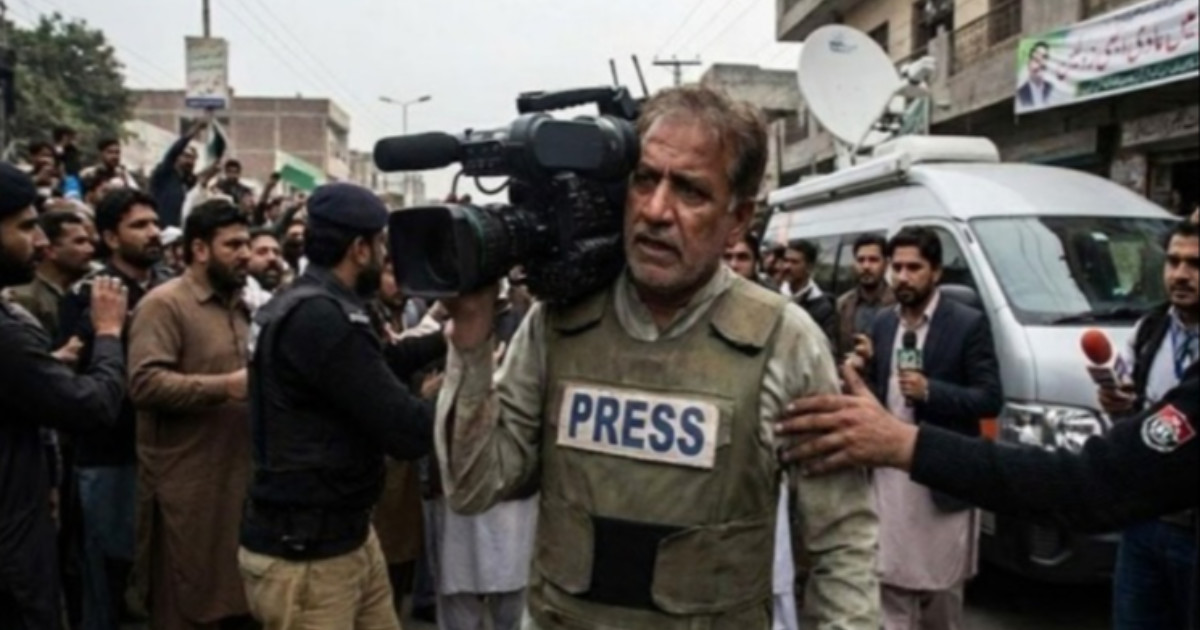
The meeting demands immediate withdrawal of all the press/media advice issued by PEMRA from time to time, stop attacks on media houses, journalists, media workers, avoid arm-twisting through press advice conveyed openly and at times clandestinely through covert telephone calls.
The meeting observed that freedom of expression is also hampered by deliberately disempowering the information commission under the right to information law. The information commission must be strengthened administratively and financially to achieve the objectives of RTI law.
The FEC unanimously rejects the government proposed move for a uniform regulatory body for media.
The meeting demands of the government to revisit the Prevention of Electronic Crimes Act 2016 by amending sections that militate against freedom of expression. The Federal Investigation Agency must place its reports before the Parliament every six months as required under PECA.
The declaration demanded early finalization of legislation for the safety and security of journalists.
It concluded by calling up on the government to ensure freedom of the press, free speech, and expression and to play its constitutional role in strengthening democracy, democratic norms, and democratic institutions in the country.
The meeting finally urged the owners to stay away from the instructions and directions of regulatory bodies by respecting human dignity and responsibility of following international media laws and norms for the progress of media industry in Pakistan, which is in their self-interests and overall business interests and will lead to profits for them and betterment of the media workers and journalists.
The FEC meeting resolved to fight for the rights of media workers and journalists across the country, and said it would take a strong stand against retrenchments and for the establishment of media laws and norms in the best interests of media in Pakistan and will not allow any group, party or hidden hands to destroy the industry in Pakistan which is a watchdog for ensuring governance and transparency.
Key Points
- PFUJ condemns government-enforced self-censorship.
- Demand for withdrawal of restrictive press/media advice.
- Call for legislative protection for journalists.
- Criticism of government collaboration with media owners.
- Opposition to uniform regulatory body for media.
Relevant Topics
Ask AI: Understand this story your way
AI EnabledDig deeper, ask anything — get instant context, background, and clarity.
Disclaimer: This feature is powered by AI and is intended to help readers explore and understand news stories more easily. While we strive for accuracy, AI-generated responses may occasionally be incomplete or reflect limitations in the underlying model. This feature does not represent the editorial views of JournalismPakistan. For our full, verified reporting, please refer to the original article.