
IFJ concerned over possible censorship of TV content in Pakistan
JournalismPakistan.com | Published: 8 April 2015
Join our WhatsApp channel
The IFJ has raised alarms over proposed amendments to empower PERMA to censor TV content in Pakistan. This move threatens freedom of expression and democratic values.Summary
ISLAMABAD: The International Federation of Journalists (IFJ) has expressed concern over reports that the Pakistan government is mulling amendment to a law to empower the Pakistan Electronic Media Regulatory Authority (PERMA) for blocking transmission of TV content.
In a statement, the IFJ said that according to a report published in Dawn, the government had discussed a possible amendment to the PERMA Act 2007 and the amendment had been drafted and shared with some officials and legal experts.
The amendments, if implemented, would empower the PERMA to ‘de-link’ the signals of a specific television channel towards any satellite, which would ensure that no cable operator or television set gets the broadcast.
“The IFJ believes that providing such legal and arbitrary way to a state authority is contradictory to the fundamental principles of democracy and free press,” it said.
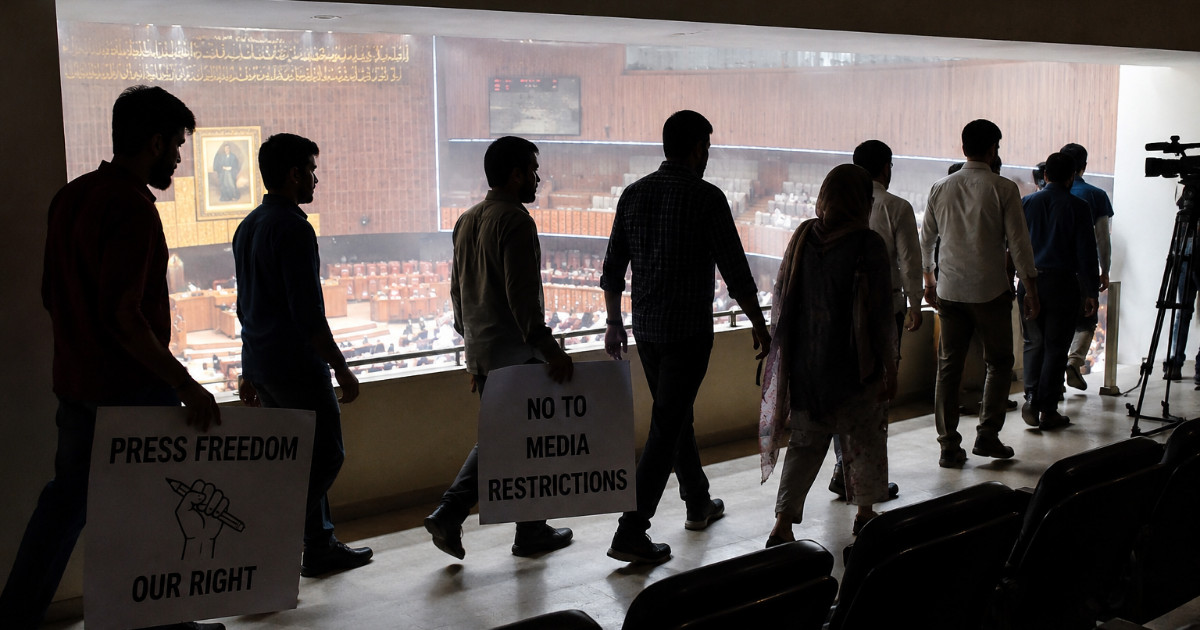
The IFJ said: “Censorship of any kind or in any logic is unacceptable and a gross violation of human rights and democratic principles. Any arbitrary power to block or censor contents of any media is contrary to freedom of expression and will gauge independent media making the democracy in Pakistan suffer.”
Key Points
- IFJ expresses concern over potential censorship in Pakistan.
- Proposed amendments may allow PERMA to block TV signals.
- Censorship contradicts democratic principles and human rights.
- Government's move could stifle independent media.
- Perilous implications for freedom of expression in Pakistan.
Relevant Topics
Ask AI: Understand this story your way
AI EnabledDig deeper, ask anything — get instant context, background, and clarity.
Disclaimer: This feature is powered by AI and is intended to help readers explore and understand news stories more easily. While we strive for accuracy, AI-generated responses may occasionally be incomplete or reflect limitations in the underlying model. This feature does not represent the editorial views of JournalismPakistan. For our full, verified reporting, please refer to the original article.