
Smaller websites see sharp traffic drops after Google AI search rollout
JournalismPakistan.com | Published: 22 October 2025 | JP Special Report
Join our WhatsApp channel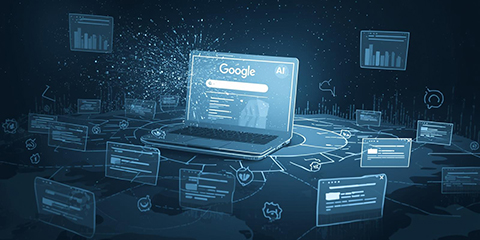
Independent studies indicate that smaller websites have seen substantial traffic declines since Google's introduction of AI search features. The changes have notably affected click-through rates and revenue for these sites.Summary
ISLAMABAD — Traffic to smaller and independent websites has dropped sharply since Google introduced its AI-powered search features, according to multiple independent studies and reports, even as the tech giant disputes the scale of the impact.
A Pew Research Center analysis found that when Google displays an AI-generated summary, known as an “AI Overview”, the click-through rate to external sites is almost halved. Websites received clicks on about 15 percent of searches when no AI summary appeared, but only around 8 percent when one did, Ars Technica reported.
Data from Similarweb also shows a marked rise in “zero-click” searches, where users find their answers directly on Google and never visit a linked website. The share of such searches for news content jumped from roughly 56 percent to nearly 69 percent after the rollout of AI Overviews, Digital Information World reported.
Search Engine Journal found that the click-through rate for the top-ranked organic result dropped by about 32 percent following the introduction of AI-generated summaries, based on data from 30 websites and 200,000 keywords. Meanwhile, some small publishers report devastating declines in both traffic and ad revenue. A DIY home blog, for example, recorded a 70 percent traffic loss within a month and a 65 percent drop in yearly ad income, according to eWeek.
The sites most affected tend to be smaller publishers and informational content creators whose material, such as how-to guides, product reviews, and lifestyle tips, can be easily summarized in a few sentences by AI. Major outlets like Wikipedia, Reddit, and YouTube, often cited directly within AI Overviews, appear to benefit instead.
Google has pushed back against these findings, insisting that total organic clicks from Search to external sites have remained “relatively stable year over year.” A spokesperson told TechCrunch that “traffic to some sites has decreased and to others has increased,” adding that the AI features may generate “more opportunities for websites to surface and get clicked.”
However, smaller publishers argue that these supposed “opportunities” are being captured mainly by larger, better-known platforms, leaving independent voices struggling to maintain visibility.
Analysts warn that the shift could reshape the digital ecosystem by concentrating attention and ad revenue among a few dominant players. For smaller sites dependent on search-driven traffic, the rise of zero-click behavior represents an existential threat.
While Google maintains that AI-enhanced search provides users with faster, higher-quality results, publishers contend it is hollowing out the open web.
Key Points
- Smaller sites experience traffic drops due to AI-generated summaries.
- Click-through rates for external links fell from 15% to 8%.
- Zero-click searches for news content rose from 56% to 69%.
- Top organic search result click-through rate dropped by 32%.
- Larger outlets benefit from AI Overviews, while smaller publishers struggle.
Relevant Topics
Ask AI: Understand this story your way
AI EnabledDig deeper, ask anything — get instant context, background, and clarity.
Disclaimer: This feature is powered by AI and is intended to help readers explore and understand news stories more easily. While we strive for accuracy, AI-generated responses may occasionally be incomplete or reflect limitations in the underlying model. This feature does not represent the editorial views of JournalismPakistan. For our full, verified reporting, please refer to the original article.