Amar Guriro: Journalism's future is human-AI partnership The JournalismPakistan Global Media Brief | Edition 23 | June 5, 2026 As AI reshapes news, publishers seek a sustainable future Every frame at a cost: The safety crisis facing Pakistan's camerapersons Why journalists are increasingly targeted in conflict zones What the 60 Minutes controversy means for TV journalism Zee secures FIFA World Cup rights in India through 2030 How fact-checkers verify viral videos during breaking news Pentagon restrictions on reporters draw media backlash Israel-Lebanon talks proceed as conflict hinders reporting Why governments are tightening controls on foreign journalists China condemns US restrictions on Xinhua reporter Taiwan condemns China over New York Times reporter expulsion The biggest threats facing journalism in Asia today Press freedom review: The many faces of pressure on the press Amar Guriro: Journalism's future is human-AI partnership The JournalismPakistan Global Media Brief | Edition 23 | June 5, 2026 As AI reshapes news, publishers seek a sustainable future Every frame at a cost: The safety crisis facing Pakistan's camerapersons Why journalists are increasingly targeted in conflict zones What the 60 Minutes controversy means for TV journalism Zee secures FIFA World Cup rights in India through 2030 How fact-checkers verify viral videos during breaking news Pentagon restrictions on reporters draw media backlash Israel-Lebanon talks proceed as conflict hinders reporting Why governments are tightening controls on foreign journalists China condemns US restrictions on Xinhua reporter Taiwan condemns China over New York Times reporter expulsion The biggest threats facing journalism in Asia today Press freedom review: The many faces of pressure on the press
Logo
Janu
Press Freedom Tracker 2

Australia to toughen laws on social media

 JournalismPakistan.com |  Published: 31 March 2019

Join our WhatsApp channel
Australia to toughen laws on social media
The Australian government is set to introduce new legislation targeting social media platforms to combat extremist content. Executives may face jail time and companies could be fined billions for non-compliance.

Australia pledged on Saturday to introduce new laws that could see social media executives jailed and tech giants fined billions for failing to remove extremist material from their platforms.

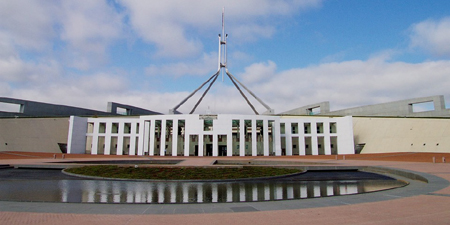
The tough new legislation will be brought to Parliament next week as Canberra pushes for social media companies to prevent their platforms from being “weaponized” by terrorists in the wake of the Christchurch mosque attacks.

Facebook said it “quickly” removed a staggering 1.5 million videos of the white supremacist massacre live-streamed on the social media platform.

A 17-minute video of the March 15 rampage that claimed the lives of 50 people was widely available online, and experts said it was easily retrievable several hours after the attack.

“Big social media companies have a responsibility to take every possible action to ensure their technology products are not exploited by murderous terrorists,” Prime Minister Scott Morrison said in a statement.

Mr. Morrison, who met with some tech firms on Tuesday said Australia would encourage other G20 nations to hold social media firms to account.

Attorney-General Christian Porter said the new laws would make it a criminal offense for platforms not to “expeditiously” take down “abhorrent violent material” like terror attacks, murder or rape. Executives could face up to three years in prison for failing to do so, he added, while social media platforms would face fines of up to 10% of their annual turnover.

“Mainstream media that broadcast such material would be putting their licence at risk, and there is no reason why social media platforms should be treated any differently,” Mr. Porter said. The government was so far “underwhelmed” by the response from tech giants at their Tuesday meeting with Mr. Morrison, Communications Minister Mitch Fifield told reporters Saturday. - AFP

Key Points

  • New Australian laws could jail social media executives for non-removal of extremist content.
  • Tech firms may face fines of up to 10% of annual turnover.
  • Legislation aims to prevent platforms from being exploited by terrorists.
  • Prominent social media companies have struggled with the rapid spread of violent material.
  • Australia encourages G20 nations to hold social media firms accountable.

Ask AI: Understand this story your way

AI Enabled

Dig deeper, ask anything — get instant context, background, and clarity.

Not sure what to choose? Try one of these.

The AI generates results based on your selected options
Your AI-generated results will appear here after you click the button.

Disclaimer: This feature is powered by AI and is intended to help readers explore and understand news stories more easily. While we strive for accuracy, AI-generated responses may occasionally be incomplete or reflect limitations in the underlying model. This feature does not represent the editorial views of JournalismPakistan. For our full, verified reporting, please refer to the original article.

Don't Miss These

Newsroom
Amar Guriro: Journalism's future is human-AI partnership

Amar Guriro: Journalism's future is human-AI partnership

 June 05, 2026 Amar Guriro, founder of Pakistan's first AI-powered news platform, says journalism's future rests on human-AI collaboration to improve reporting while preserving editorial oversight.


The JournalismPakistan Global Media Brief | Edition 23 | June 5, 2026

The JournalismPakistan Global Media Brief | Edition 23 | June 5, 2026

 June 05, 2026 Global Media Brief reviews pressures reshaping journalism, press freedom, AI and platform power, and reports BBC's Emmy, 60 Minutes turmoil and Taiwan's protest.


As AI reshapes news, publishers seek a sustainable future

As AI reshapes news, publishers seek a sustainable future

 June 05, 2026 At the World News Media Congress in Marseille, publishers discussed how generative AI is altering newsroom workflows, audience engagement and content licensing.


Why journalists are increasingly targeted in conflict zones

Why journalists are increasingly targeted in conflict zones

 June 04, 2026 Journalists in conflict zones face rising danger as combatants, states and militias increasingly target independent reporting to control narratives.


What the 60 Minutes controversy means for TV journalism

What the 60 Minutes controversy means for TV journalism

 June 03, 2026 The 60 Minutes controversy at CBS exposes tensions over leadership, editorial independence and pressures on legacy TV journalism amid political polarization.


Popular Stories