
Anti-corruption protesters in Nepal defy curfew, government lifts social media ban
JournalismPakistan.com | Published: 9 September 2025 | Reuters
Join our WhatsApp channel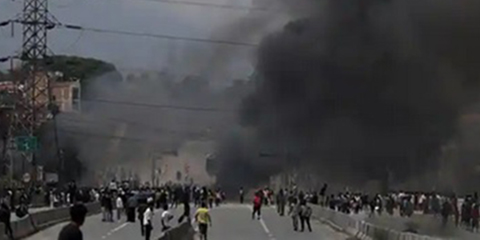
Protesters in Nepal continue to defy an indefinite curfew, protesting against Prime Minister K.P. Sharma Oli. The government lifted a social media ban after violent clashes led to deaths and injuries.Summary
KATHMANDU—Anti-corruption demonstrators in Nepal defied an indefinite curfew on Tuesday, holding demonstrations and shouting slogans against Prime Minister K.P. Sharma Oli, a day after 19 people died in violent protests triggered by a social media ban. Oli's government lifted the social media ban after protests turned violent, killing 19 and injuring more than 100 after police fired tear gas and rubber bullets at protesters trying to storm parliament on Monday.
But anger against the government showed no signs of abating on Tuesday, as protesters gathered in front of parliament and other places in the capital Kathmandu, in defiance of an indefinite curfew imposed by authorities.
Under the curfew, schools and shops are shut, and gatherings are banned indefinitely in Kathmandu.
Protester Manjita Manandhar said Gen Z youth are sitting in peaceful protests at Maitighar Mandala near the Prime Minister's office. A Reuters witness said enraged protesters burnt tyres at different points along the Ring Road, which circles Kathmandu.
Organisers of the protests, which spread to other cities in the Himalayan country, have called them "demonstrations by Gen Z", driven by young people's widespread frustration with the government's perceived lack of action to tackle corruption and boost economic opportunities.
Oli, 73, was sworn in to his fourth term in July last year as the country’s 14th prime minister since monarchy was abolished in 2008. Two of his cabinet colleagues resigned late on Monday, saying they did not want to continue on moral grounds.
Giant neighbour India, which is home to hundreds of thousands of Nepali migrant workers, said it was "closely monitoring" developments in Nepal. "As a close friend and neighbour, we hope that all concerned will exercise restraint and address any issues through peaceful means and dialogue," a statement from India's foreign ministry said.
The government had imposed a social media ban last week, blocking access to several social media platforms including Facebook (META.O), after it said those platforms had failed to register themselves with the government.
"We have withdrawn the shutdown of the social media. They are working now," cabinet spokesperson and Communications and Information Technology Minister Prithvi Subba Gurung told Reuters.
All the apps were available in Nepal on Tuesday morning, Reuters was able to verify.
The indefinite curfew within the Kathmandu city area is aimed at stopping any more protests.
"No protests, mass gatherings, meetings, or assemblies of people will be allowed during the curfew," Kathmandu district administrator Chhabilal Rijal said in a notice. Protesters have also called for people to participate in condolence meetings in memory of those killed in Monday’s protests.
In neighbouring Lalitpur district, authorities imposed a curfew until midnight (1815 GMT) on Tuesday.
Oli said he was saddened by the incidents of violence due to the "infiltration from different selfish centres".
The government would pay relief for the families of the dead and provide free treatment for the injured persons, he added. "An investigation panel will be set up to find out the causes, assess losses and suggest measures within 15 days to ensure that such incidents are not repeated in future," the prime minister said in a late-night statement on Monday.
Key Points
- Protesters defy curfew in Kathmandu.
- 19 dead, over 100 injured from violent protests.
- Govt lifts social media ban amid unrest.
- Demonstrations driven by Gen Z frustrations.
- PM Oli promises investigation into violence.
Relevant Topics
Ask AI: Understand this story your way
AI EnabledDig deeper, ask anything — get instant context, background, and clarity.
Disclaimer: This feature is powered by AI and is intended to help readers explore and understand news stories more easily. While we strive for accuracy, AI-generated responses may occasionally be incomplete or reflect limitations in the underlying model. This feature does not represent the editorial views of JournalismPakistan. For our full, verified reporting, please refer to the original article.