
Journalists face burnout amid nonstop news cycle Why news avoidance may be a bigger threat than misinformation Seven evidence-based media predictions for Pakistan and beyond in 2026 Dawn calls life sentences for journalists an extreme move Arab journalists pledge cooperation to defend media freedom Palestinian rights group flags press access limits Silencing an article in Pakistan makes it louder When telling the story becomes a crime: A warning shot for Pakistani journalism Breaking news alerts then and now: from urgency to overload AI reduces publisher traffic but not newsroom jobs, study finds Palestinian journalists face a wave of detentions in 2025 Journalists face burnout amid nonstop news cycle Why news avoidance may be a bigger threat than misinformation Seven evidence-based media predictions for Pakistan and beyond in 2026 Dawn calls life sentences for journalists an extreme move Arab journalists pledge cooperation to defend media freedom Palestinian rights group flags press access limits Silencing an article in Pakistan makes it louder When telling the story becomes a crime: A warning shot for Pakistani journalism Breaking news alerts then and now: from urgency to overload AI reduces publisher traffic but not newsroom jobs, study finds Palestinian journalists face a wave of detentions in 2025
Logo
Janu
Asia

Journalist Muhammad Hanif seeks guidelines to criticize institutions in satirical column

 JournalismPakistan.com |  Published: 29 May 2017

Join our WhatsApp channel
Journalist Muhammad Hanif seeks guidelines to criticize institutions in satirical column
In his satirical piece, journalist Muhammad Hanif seeks clarity on criticizing sensitive national institutions. He remarks on the public's confusion regarding respect and criticism towards these entities.

ISLAMABAD - Journalist and novelist Mohammad Hanif in a satirical column on bbcurdu.com seeks guidelines to criticize the national institutions, especially the sensitive ones.

Known for his acerbic and understatement style in Urdu, in his article Idaroan per tanqeed kaisay karian, Hanif says: “This unintelligent nation does not really know when and where the insult of (national) institutions, sensitive institutions, and semi-sensitive institutions starts. Where it is not to laugh and what is the right way to show respect. The nation even does not know the difference between institutions and sensitive institutions.”

He answers to make the distinction clear. “The institution is the army and its sensitive part is which performs espionage duties inside and outside the country.”

Then which are the semi-sensitive institutions? “These include judges, ulema and religious vigilantes who become somewhat sensitive just by witnessing the sensitiveness of sensitive institutions.”

As all this is a sensitive issue, Hanif requests the new guard of honor of institutions – the interior minister – to issue guidelines in this regard. However, he has some questions. First, he takes a shot at the retired armed forces men appearing on electronic media. “No one knows should people weep or not after listening to former generals and former air vice marshals?”

He knows that the name of former COAS Ashfaq Pervaiz Kiani should be taken with respect, but asks if his ‘proclaimed’ brother can be criticized.

Hanif also asks about the people who maintain that the armed forces should not be the protector of ideological boundaries of Pakistan. “Should one take such people seriously or dial FIA?”

Without mentioning former President Pervez Musharraf, Hanif says courts summon him but he refuses to come back to face cases against him. “It should be explained that in this instance who has been insulted – judge, general, or the people.”

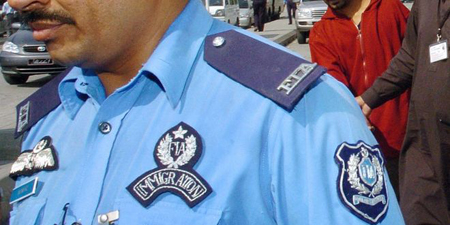
Image: Getty Images

KEY POINTS:

  • Muhammad Hanif critiques the challenges of criticizing sensitive institutions.
  • He distinguishes between sensitive and semi-sensitive institutions.
  • Hanif calls for guidelines from the interior minister regarding criticism.
  • He questions the role of retired military personnel in public discourse.
  • The column addresses the complexities of institutional respect in Pakistan.
Don't Miss These

Newsroom
Journalists face burnout amid nonstop news cycle

Journalists face burnout amid nonstop news cycle

 January 05, 2026 Growing burnout among journalists in the relentless 24/7 news cycle is affecting their mental health, job satisfaction, and retention, driven by stress stemming from excessive workload, long hours, and constant connectivity.


Arab journalists pledge cooperation to defend media freedom

Arab journalists pledge cooperation to defend media freedom

 January 04, 2026 Arab journalist unions from Jordan and Egypt announce deeper cooperation on training and advocacy, stressing media freedom and the role of Arab media in shaping global narratives.


Palestinian rights group flags press access limits

Palestinian rights group flags press access limits

 January 03, 2026 The Palestinian Centre for Human Rights highlights ongoing restrictions on journalists in occupied territories, impacting press freedom and humanitarian reporting.


Breaking news alerts then and now: from urgency to overload

Breaking news alerts then and now: from urgency to overload

 January 03, 2026 The evolution of breaking news alerts highlights a shift from rare, trusted updates to frequent notifications that contribute to audience fatigue.


AI reduces publisher traffic but not newsroom jobs, study finds

AI reduces publisher traffic but not newsroom jobs, study finds

 January 02, 2026 A study reveals that AI has reduced traffic to news publishers but not job levels, challenging fears of mass layoffs in journalism.


Popular Stories