
IFJ survey finds one in two women journalists suffers gender-based violence at work
JournalismPakistan.com | Published: 24 November 2017
Join our WhatsApp channel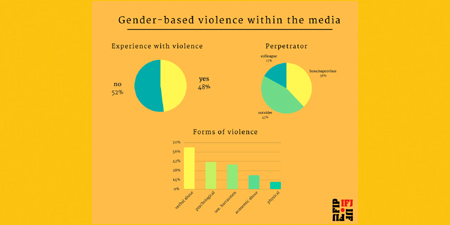
The IFJ survey indicates that 48% of women journalists face gender-based violence in their workplaces. Most report inadequate action against perpetrators and lack of policies for reporting abuse.Summary
BRUSSELS - Almost one in two women journalists have suffered sexual harassment, psychological abuse, online trolling and others forms of gender-based violence (GBV) while working.
A massive 85% say no or inadequate action has been taken against perpetrators and most workplaces do not even have a written policy to counter such abuses or provide a mechanism for reporting them.
The startling statistics are revealed in the results of a survey published Friday by the International Federation of Journalists, the world’s largest journalists’ organization.
The survey of almost 400 women journalists in 50 countries – published on the eve of the UN Day for the Elimination of Violence Against Women - revealed:
- 48% had suffered gender-based violence in their work
- 44% had suffered online abuse
Among the most common forms of gender-based violence suffered by women journalists were verbal abuse (63%), psychological abuse (41%), sexual harassment (37%) and economic abuse (21%). Almost 11% had suffered physical violence.
Forty-five percent of perpetrators were people outside of the workplace – sources, politicians, readers or listeners. Thirty-eight percent was a boss or supervisor.
Thirty-nine percent of those who suffered abuse did so at the hands of anonymous assailants. Two-thirds (66.15%) did not make a formal complaint. Of those who did complain 84.8% did not believe adequate measures had been taken in all cases against the perpetrators. Only 12.3% were satisfied with the outcome.
Only 26% of workplaces had a policy covering gender-based violence and sexual harassment.
IFJ Gender Council Co-Chair Mindy Ran said: “Women journalists from 50 countries tell the same story – gender-based violence in the world of work is widespread and action to combat it is either non-existent or inadequate in virtually every case. We need urgent action to bring the perpetrators to justice and give confidence to women journalists to report such abuses”.
IFJ General Secretary Anthony Bellanger said: “Workplace collective agreements, robust reporting procedures and action against perpetrators are urgently needed to combat the terrible toll of gender-based violence at work. For the IFJ and its unions tackling the violence and abuse suffered by women journalists every day in every continent will be a major priority”.
"The fact women feel free to speak of the abuses of which they are victims should encourage the setting-up or the reinforcement of rules, but foremost their application to put an end to gender-based violence and harassment. Further, even in places where pay-equality is guaranteed by collective agreements, an equity policy of promotion free from harassment should be activated, to also overcome the economic violence of which women journalists are victims," said IFJ President Philippe Leruth.
The IFJ is already backing moves to secure a UN Convention on gender-based violence in the world of work. The results of the second survey on union action against gender-based violence at work will be published later this year. – IFJ media release
KEY POINTS:
- 48% of women journalists have suffered from gender-based violence at work.
- 85% of respondents reported inadequate actions taken against offenders.
- Common forms of abuse include verbal (63%) and psychological (41%).
- Only 26% of workplaces have policies addressing gender-based violence.
- IFJ calls for urgent measures to protect women journalists globally.