
National Assembly Passes Prevention of Electronic Crimes Bill
JournalismPakistan.com | Published: 11 August 2016
Join our WhatsApp channel
The National Assembly has officially passed the Prevention of Electronic Crimes Bill-2016 aimed at addressing cyber crimes in Pakistan. With significant penalties for offenses like cyber terrorism and child pornography, the bill reflects a major step toward enhancing online safety and governance.Summary
ISLAMABAD: The National Assembly Thursday passed the Prevention of Electronics Crimes Bill-2016 with majority votes while members of the opposition opposed its certain clauses.
The bill envisages 14-year imprisonment and Rs5 million fine for cyber terrorism, seven-year imprisonment each for campaigning against innocent people on the internet, spreading hate material on the basis of ethnicity, religion and sect or taking part in child pornography.
The Senate on July 29, 2016 passed this bill unanimously after detailed deliberations and incorporating several amendments proposed by the opposition. The bill will now become a law after assenting by the President. State Minister for Information Technology and Telecommunication Anusha Rahman Khan presented the Prevention of Electronic Crimes Bill-2016 commonly known cyber crime bill in the House.
Speaking on the occasion, the Minister said, the bill was need of the hour as there was no comprehensive law related to prevention of electronics crimes in the country. Defending the bill, she said there was a dark side of the internet which had to be handled.
She said it was introduced during the regime of President Musharraf as an ordinance in 2007 while the PPP government also did the same through ordinance again in 2008-09 but it could not be converted into a law. She said the present government constituted a special committee which worked for two years with all stakeholders to make it a consensus law.
A number of public hearings were held on the bill and later that was approved by the committee of experts, she added. She said around three dozens amendments of the opposition had been made part of the bill and added that it was now not a bill of the government but had become a bill of the Parliament.
The Minister came hard on members of the opposition for opposing the bill again, adding that members belonging to same opposition parties had already supported it in the Senate. She said there were reservations of some people and organizations about the bill but certain amendments had been made in it after consultation with all the political parties so that no innocent person could be given punishment under the law.
The Minister said that after listening to all the stakeholders and recommendations of the Standing Committee had been included in the bill. She added that special courts would be set up for the hearing of these cases, however, she added that except for terrorism-related and taking part in child pornography crimes, no other person could be arrested without court orders.
Opposing the bill, PPP Parliamentary leader in the National Assembly Syed Naveed Qamar said there were a lot of lacunas in the bill and it could be misused. He said certain clauses of the bill were controversial and needed to be corrected.
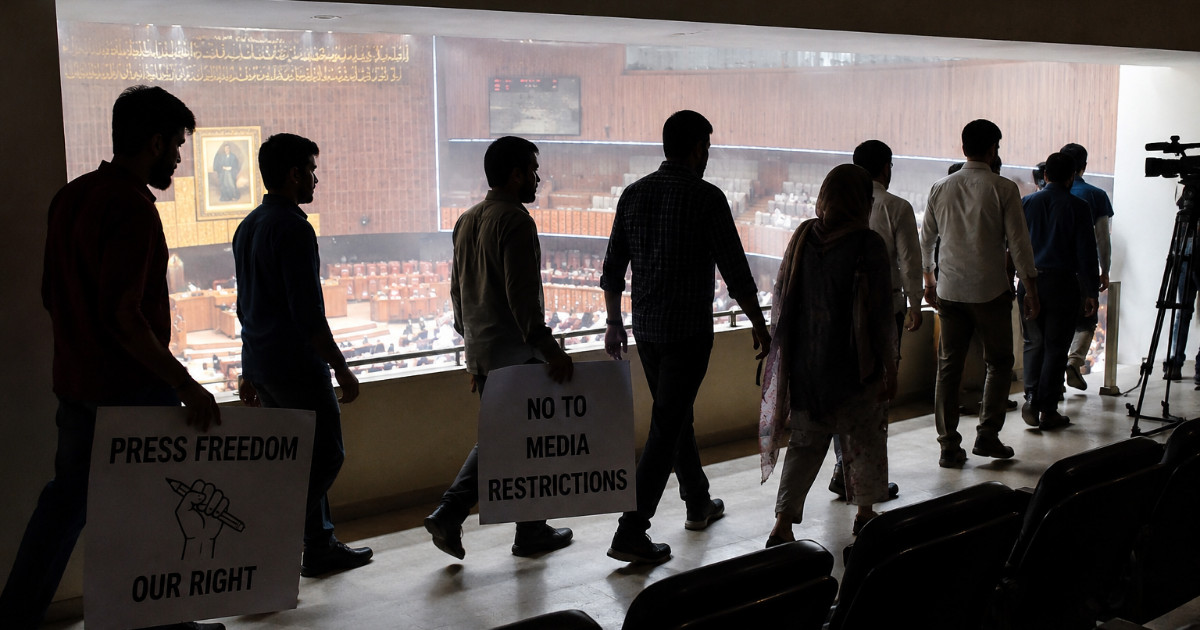
Imran Zafar Leghari of PPP said the bill could affect personal liberty and freedom of expression as power of investigation clauses of the bill could be misused against the opponents. Taking part in the debate, Abdul Waseem of MQM called for further improvement in the bill.
According to certain amendments made by the Senate, terrorism, electronic fraud, exaggeration of forgery, crimes, hate speeches, pornographic materials about children, illegal access of data (hacking) as well as interference with data and information system (DOS and DDOS attacks) specialized cyber related electronic forgery and electronic fraud etc will be punishable acts.
The bill will also apply on the people who are engaged in anti-state activities online from their safe havens in other countries. Illegal use of internet data will result in three-year jail and Rs. 1 million fine. The same penalties are proposed for tampering with mobile phones. Under the bill, a special court in the consultation with High Court will be established for hearing the cases.
The law will also apply to expatriate and electronic gadgets will be accepted as evidence in a special court. With the permission of the court, the government will be able to seek help of other countries for investigation into cyber crimes. Data of internet providers will not be shared without court orders. The cyber crime law will not be applied on the print and electronic media.
Foreign countries will be accessed to arrest those engaged in anti-state activities from there. The IT companies registered with Pakistan Telecommunication Authority (PTA) will be dealt under PTA act. Under this act, imprisonment of up to seven years can be awarded for funding terrorism or terrorist organization through internet.
Under the bill, cyber-terrorism will be punishable upto to 14 years in prison and Rs five million fine. Child pornography will be non-bailable offence besides seven years in jail and Rs 5 million fine. Amendments were also made in Section-15 of the Bill relating to "Unauthorized Issuance of SIM Cards etc".
Whoever sells or otherwise provides Subscriber Identity Module (SIM) card, re-usable identification module (R-IUM) or Universal Integrated Circuit Card (UICC) or other module designed for authenticating users to establish connection with the network and to be used in cellular mobile, wireless phone or other digital devices such as tablets (words in bold are added).
However, the portion stating, "And other portable memory chip designed to be used in cellular mobile or wireless phone for transmitting information" has been removed. Children under the age of 10 years have been given immunity and the proposed legislation will not be applicable to them.
The statement of objects and reasons of the bills says that currently Pakistan has no law to comprehensively deal with the growing threat of cyber-crimes. The centuries old criminal justice legal framework is inadequate and ill equipped to address the sophisticated online threats of the 21st century cyber age. This new age has exacerbated both the existing crimes when conducted with the use of internet.
It has also given birth to completely new types of cyber-crime and criminals which cannot be effectively dealt with through the use of existing legislation. The legislation establishes new offences including illegal access of data (hacking), as well as interference with data and information systems, electronic fraud, cyber terrorism, use of malicious code viruses, identity theft etc.
The bill will effectively prevent cyber crimes and shall also contribute to the security of the nation, the Minister of State said. - APP
Key Points
- The bill includes penalties of up to 14 years in prison for cyber terrorism and fines up to Rs 5 million.
- Special courts will be established for cyber crime cases and internet data will not be shared without court orders.
- The legislation aims to combat various offenses, including hacking, electronic fraud, and hate speech.
- Children under the age of 10 will be immune from the provisions of the bill.
- The law was developed after consultations with stakeholders and incorporates numerous amendments from opposition parties.
Relevant Topics
Ask AI: Understand this story your way
AI EnabledDig deeper, ask anything — get instant context, background, and clarity.
Disclaimer: This feature is powered by AI and is intended to help readers explore and understand news stories more easily. While we strive for accuracy, AI-generated responses may occasionally be incomplete or reflect limitations in the underlying model. This feature does not represent the editorial views of JournalismPakistan. For our full, verified reporting, please refer to the original article.