.png)
Kenyan journalists face violence and detention amid tax protests
JournalismPakistan.com | Published: 26 June 2024
Join our WhatsApp channel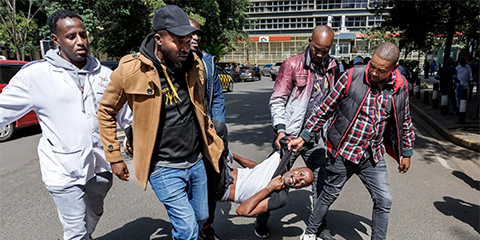
Recent protests in Kenya against proposed tax increases have led to violence against journalists. The Committee to Protect Journalists is calling for investigations and media freedoms.Summary
NAIROBI—The Committee to Protect Journalists (CPJ) urges Kenyan authorities to investigate reports of journalists being attacked while covering recent protests, cease any intimidation of the media, and ensure reliable and secure internet access.
Since June 18, thousands of Kenyans have protested against a proposed law that would significantly increase taxes and address broader governance issues. Local and regional press rights organizations have reported that during these protests, security personnel have acted violently towards journalists and detained several members of the press temporarily. On June 25, the broadcaster KTN, part of the Standard Media Group, reported that authorities had threatened to shut it down.
On Tuesday afternoon, the Internet Outage Detection and Analysis (IODA) and Cloudflare reported internet disruptions in Kenya as protesters breached parliament buildings in Nairobi.
CPJ is actively researching press freedom violations connected to these protests but has been unable to confirm all details due to the ongoing crisis.
"Journalists covering the protests in Kenya are performing a vital public service. Attempts to hinder or silence them through attacks, threats, or detention are unacceptable in a democratic society," said CPJ Africa Program Coordinator Muthoki Mumo. "Authorities should credibly investigate attacks on journalists, desist from intimidation or censorship of the press, and urgently ensure that the Kenyan public has reliable access to the internet."
On June 18, police assaulted or briefly detained at least five journalists covering the protests, according to statements by the Media Council of Kenya and the Kenya Media Sector Working Group. In one incident, police briefly detained Standard Media Group video editor Justus Macharia before pushing him out of a moving vehicle, resulting in non-life-threatening injuries.
On June 25, freelance journalist Collins Olunga was injured by a teargas canister while covering the protests, as reported by the International Press Association of East Africa and the Kenya Broadcasting Corporation (KBC).
IODA and Cloudflare did not indicate the cause of the internet disruption, which also affected Uganda and Burundi. Safaricom and Airtel, two major telecommunication companies, cited outages in undersea cables. The Communications Authority stated that it did not plan to disrupt the internet.
Further protests, termed "7 Days of Rage," are expected later this week.
Photo: AFP
CPJ's inquiries to the Ministry of Interior, Kenya National Police Service, and the Communications Authority have not yet received responses.—A CPJ Statement
Key Points
- Kenyan journalists under attack during tax protests.
- CPJ urges investigations into media violence.
- Internet disruptions reported amid protests.
- Security forces have briefly detained journalists.
- Further protests, "7 Days of Rage," expected.
Relevant Topics
Ask AI: Understand this story your way
AI EnabledDig deeper, ask anything — get instant context, background, and clarity.
Disclaimer: This feature is powered by AI and is intended to help readers explore and understand news stories more easily. While we strive for accuracy, AI-generated responses may occasionally be incomplete or reflect limitations in the underlying model. This feature does not represent the editorial views of JournalismPakistan. For our full, verified reporting, please refer to the original article.