
Japan outraged as video purportedly shows journalist beheaded
JournalismPakistan.com | Published: 1 February 2015
Join our WhatsApp channel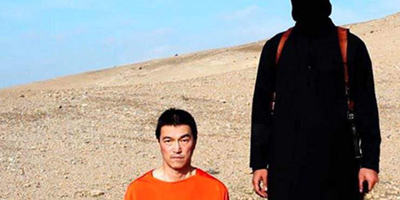
The beheading of Kenji Goto by the Islamic State has outraged Japan and the world, with fears for the safety of another hostage. The incident has prompted heightened security measures in Japanese facilities worldwide.Summary
TOKYO: Japan and other nations condemned with outrage and horror on Sunday the beheading purportedly by the Islamic State group of Kenji Goto, a journalist who sought through his coverage of Syria to convey the plight of refugees, children and other victims of war.
The failure to save Goto raised fears for the life of a Jordanian fighter pilot also held hostage by the extremists. Unlike earlier messages, an online video purporting to show an Islamic State group militant beheading Goto, circulated via social media late Saturday by militant sympathizers, did not mention the pilot.
Goto's slaying shocked this country, which up to now had not become directly embroiled in the fight against the militants.
"I feel indignation over this immoral and heinous act of terrorism," Prime Minister Shinzo Abe told reporters after convening an emergency Cabinet meeting.
"When I think of the grief of his family, I am left speechless," he said. "The government has been doing its utmost in responding to win his release, and we are filled with deep regret."
In light of threats from the Islamic State group, the government ordered heightened security at airports and at Japanese facilities overseas, such as embassies and schools, government spokesman Yoshihide Suga said.
He said it would be "inappropriate" to comment on the status of the Jordanian pilot, Muath al-Kaseasbeh. He was captured in December when his F-16 crashed near the de facto capital of the Islamic State group, which controls about a third of both Syria and neighboring Iraq in a self-declared caliphate.
Goto, 47, was a freelance journalist and father who braved hardship and peril to convey the suffering caused by conflict and poverty.
"Kenji has died, and my heart is broken. Facing such a tragic death, I'm just speechless," Goto's mother Junko Ishido told reporters.
"I was hoping Kenji might be able to come home," said Goto's brother, Junichi Goto, in a separate interview. "I was hoping he would return and thank everyone for his rescue, but that's impossible, and I'm bitterly disappointed."
Japanese expressed shock and horror over Goto's killing.
Yukawa's father, Shoichi, said Goto was trying to rescue his son "only to suffer the worst possible outcome."
According to his friends and family, Goto traveled to Syria in late October to try to save another hostage, Haruna Yukawa, who was captured by the Islamic State group in August and shown as purportedly killed in an earlier video.
The White House released a statement in which President Barack Obama also condemned "the heinous murder" and praised Goto's reporting, saying he "courageously sought to convey the plight of the Syrian people to the outside world."
The White House said that while it isn't confirming the authenticity of the video itself, it has confirmed that Goto has been slain. - AP
Key Points
- Kenji Goto was reportedly beheaded by the Islamic State group.
- Japan's Prime Minister condemned the act as immoral and heinous.
- Goto traveled to Syria to rescue another hostage, Haruna Yukawa.
- The incident has led to increased security at Japanese embassies and schools abroad.
- The White House confirmed Goto's death but did not verify the video's authenticity.
Relevant Topics
Ask AI: Understand this story your way
AI EnabledDig deeper, ask anything — get instant context, background, and clarity.
Disclaimer: This feature is powered by AI and is intended to help readers explore and understand news stories more easily. While we strive for accuracy, AI-generated responses may occasionally be incomplete or reflect limitations in the underlying model. This feature does not represent the editorial views of JournalismPakistan. For our full, verified reporting, please refer to the original article.