
Jahangir Khan's rise from tragedy to squash immortality
JournalismPakistan.com | Published: 30 August 2025 | Dr. Nauman Niaz (TI)
Join our WhatsApp channel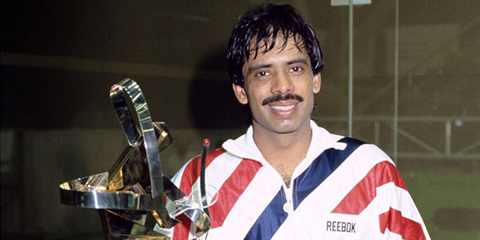
Jahangir Khan is revered as one of the greatest athletes in squash history, achieving an unparalleled unbeaten streak of 555 matches. His journey from overcoming physical challenges to dominating the sport has defined his legacy.Summary
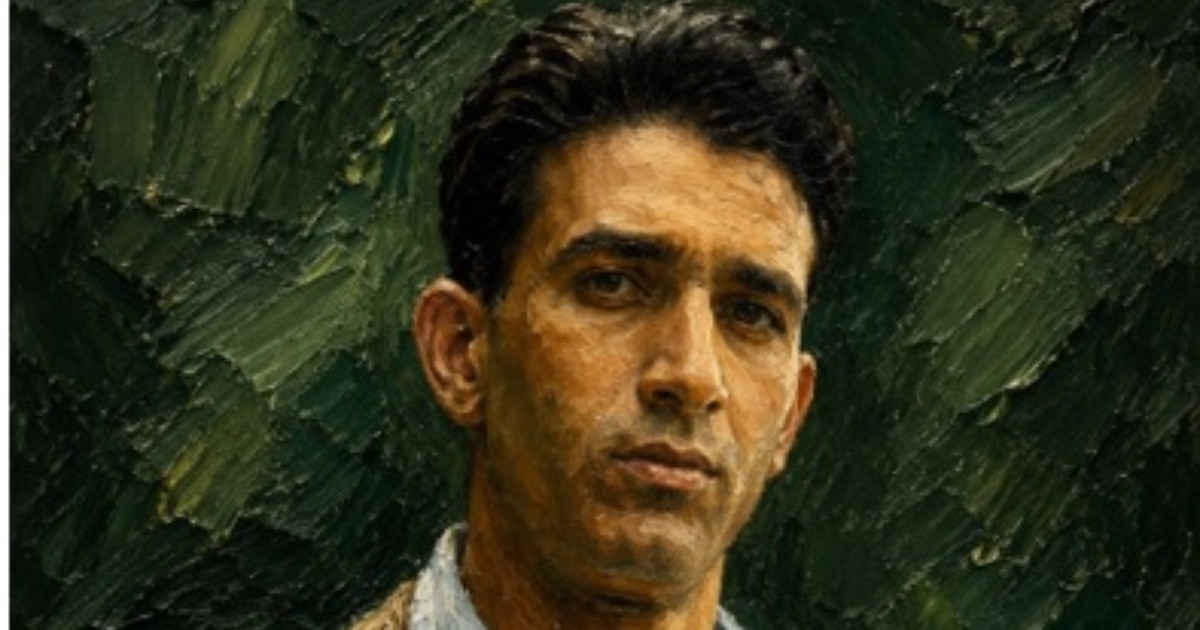
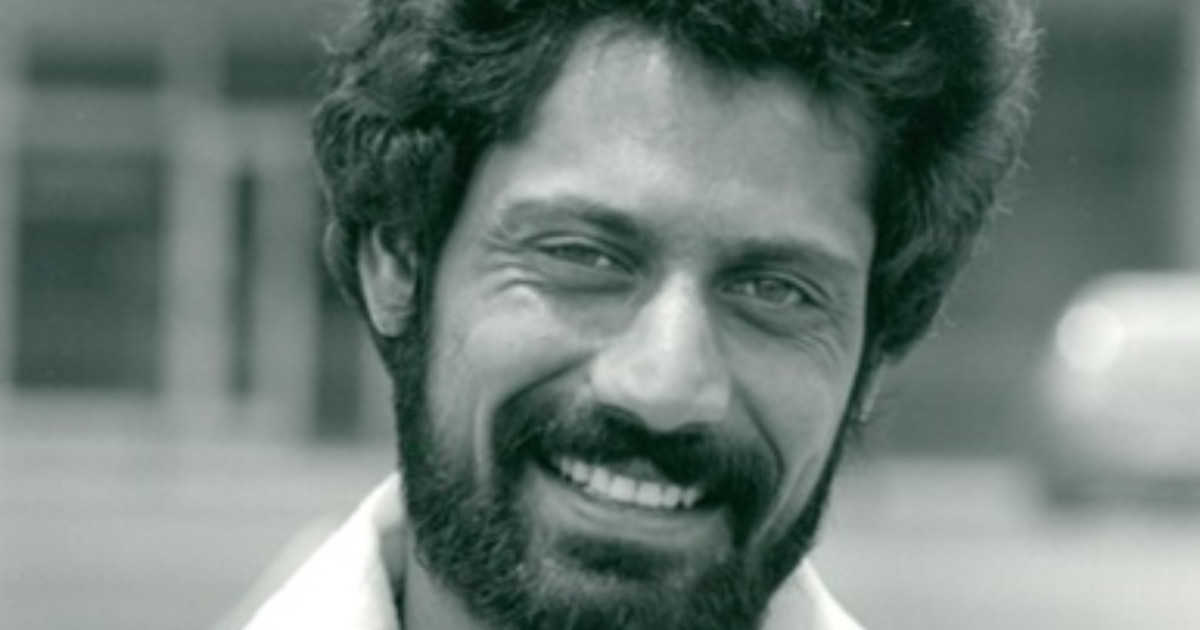
ISLAMABAD —It was on a Sunday of stillness, when the hours lay folded in quiet ease, that the world placed in my hands a memory I knew would never fade. A parcel arrived, carrying within it not just an object, but the weight of legend. Its sender was Jahangir Khan, no ordinary champion, but the finest squash player the world has known, one of the greatest athletes in the history of human endeavour.
Inside lay a poster, grand and commanding, his signature drawn with the same precision with which he once guided his racket through five hundred and fifty-five successive matches, unbeaten, untouchable. And there too was the racket itself, a relic not of wood and string alone, but of myth. Its grip, worn smooth by triumph, had his name, signed by his hand. I stood still, overwhelmed; even for a collector of my kind, this was no ordinary gift.
A Curator of Champions: The Ultimate Sports Collection
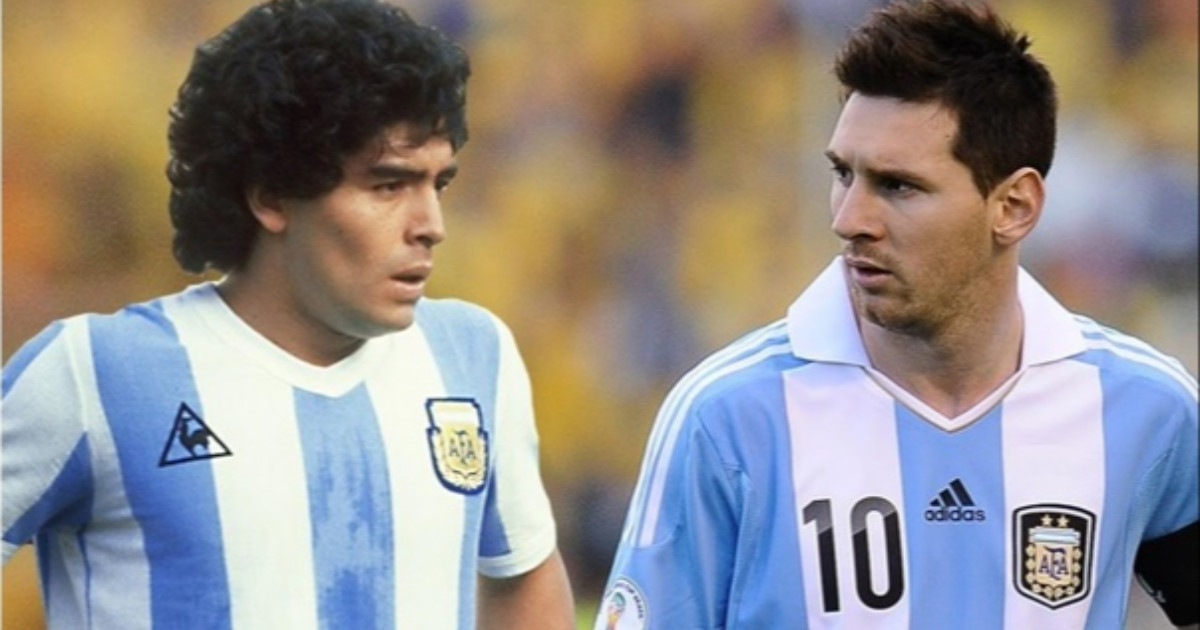
For I have lived my life as a custodian of history, a warder of echoes. My shelves and walls carry the weight of cricket's most hallowed relics: the match-played bats of Victor Trumper, Clem Hill, William Gunn, Sir Donald Bradman, Victor Richardson, Bill Ponsford, Leonard Hutton, Douglas Jardine, Sir Garfield Sobers, Brian Lara, et al. The first autograph sheets, the earliest books inscribed by W.G. Grace and the Lillywhites. Some twenty-eight thousand signatures, each an inked testament stretching back to 1876. Beyond cricket's white-flannelled dream, I have Diego Maradona's boots, Cristiano Ronaldo's, the Argentina shirt signed by both Maradona and Messi. I hold treasures of Federer, Nadal, Djokovic, of golf's masters, of ice hockey, and baseball's immortals. And yet—this was different. This was Jahangir.
The Man Behind the Champion: Jahangir Khan's True Greatness
I placed it with reverence beside Bradman's bat from the summer of 1934. But unlike the others, this was not merely an heirloom of conquest. It was a gift from the man himself—an emblem of humility, a token of grace. Jahangir Khan, the invincible 'Conqueror of the World,' had also been the companion in my darkest days, the friend who reached out when I was weakened by cancer, who lifted me not with trophies but with empathy. He was the man who, at a single call, would leave Karachi and fly to stand by my side, to lend his starlight to the broadcasts I helmed at PTV Sports.
Here, then, was not only the greatest athlete the game had known, but a man whose greatness was carried as lightly as breath, majestic on the court, but greater still in the quiet art of being human.
From Frail Child to World Conqueror: Jahangir's Incredible Journey
The word Jahangir meant 'Conqueror of the World' and, in time, that was what he became. A Pakistani boy, once frail and uncertain, rose to command the world with a regal assurance, holding it in his grasp for five years and eight months, stringing together 555 victories without defeat. It was not a record, so much as a myth, an achievement that lifted him beyond the reach of ordinary men and set him in that rare air where only the greatest of all sport might dwell. His dominance was absolute, week upon week, as he placed his crown at hazard against all challengers and returned each time, unbent and unbroken.
The Six Virtues of a Squash Immortal
He carried with him the six virtues a squash immortal was said to require: strength, stamina, style, sense, suppleness, and speed. Yet beyond them lay the deeper fire: an unquenchable will, a pride born of lineage, a heritage he could neither escape nor deny. Out of this was forged a player his mentor, Rahmat Khan, could only call unsquashable. In his prime it was said, half in jest, that Jahangir simplified the duties of tournament organisers: for whoever drew his name could safely book their journey home, certain of their fate.
Early Life: Overcoming Physical Challenges to Achieve Greatness
Yet the beginnings of this conqueror were fragile, improbable. Born with a double hernia, he was warned against exertion. Doctors counselled caution, and he obeyed. His father, Roshan Khan, himself a champion, the British Open winner of 1957, and a professional at the Pakistan Navy's Fleet Club, saw otherwise. He gave his son his first grounding in the game. Alongside Roshan stood his brothers, Torsam and Hassan, each a player of repute. When Jahangir turned five, surgery repaired his hernia; on his eighth birthday, his father gave him a shortened racket, meant as a toy. But Jahangir treated it as no toy. With it he practised grips and strokes, tracing his own destiny until it became less an object than a companion, the shadow that walked beside him into immortality.
The Making of a Champion: Training Against All Odds
At 10, Roshan began taking him weekly to the Fleet Club. The boy was meant to play lightly, gently, the doctors' warnings still an echo in his father's mind. But Jahangir harboured a quiet rebellion. When the courts were locked in the stillness of afternoon, or lay hushed beneath the fall of dusk, he would slip back inside. There he rehearsed the movements he had once only observed, pressing them into muscle and mind. By twelve, after a second operation had restored his strength, he trained with a rigour that surprised even Roshan. The father, persuaded by the boy's fire, now became his tutor in earnest.
First Taste of Victory: National Junior Championship at 14
The rise was as swift as a flame catching the dry grass. In November of 1978, when still only 14, Jahangir Khan claimed the National Junior Championship, felling Ramshaid Gul upon the courts of Peshawar. A few months onward, in Karachi's National Open, he took down the top seed Mohammad Saleem, before yielding in the quarter-final to Saleem's brother, Maqsood Ahmed. Yet, in those moments, whispers gathered, his name now carried differently, borne on undertones that spoke of promise ripening.
International Breakthrough: The Journey to London
He was chosen for the juniors' tour of Scandinavia, a voyage that ended in London, where his elder brother, Torsam, and cousin, Rahmat, stood waiting. Torsam, steadfast and persuasive, urged him to remain, to steel his resolve and deepen his craft. In their care, Jahangir grew, not only in the measured movements of racket and foot, but in the hidden domains of patience, will, and mind. His English sharpened, his game unfurled like a banner in the wind, and the warmth of brother and cousin became his shield against the world.
World Amateur Champion at 15: A Star is Born
In April 1979, he reached the final of the British Junior Open. There he was, undone by Glen Brumby of Australia, older, stronger, but the impression remained: here stood a boy destined. Hiddy Jahan, years earlier, had spoken with a prescient eye, 'he will be dangerous within two years.' In that moment, the prophecy seemed fulfilled. October took him further still, to Melbourne, to the World Amateur Championship. He had trained in England, returned to Peshawar for trials, but jet lag dulled him, and he was overlooked for the national side. Fate, however, interceded. His name was missing from the draw, but when another player withdrew, Jahangir slipped in as though chosen by some hand beyond sight. From qualifiers to the main draw, he marched relentlessly, dismantling opponents in straight games through quarters and semis alike.
The final brought him face-to-face with Phil Kenyon of Great Britain. Kenyon struck first, claiming the opening game 9–2. But Jahangir, undisturbed, lengthened the rallies, sent Kenyon chasing shadows, drained him of his strength. Then, inexorably, he swept the next three: 9–2, 9–2, 9–5. At fifteen, impossibly young, Jahangir Khan became the world amateur champion, the youngest ever crowned. Through it all, Torsam was his unseen hand, telephoning from London, dissecting adversaries, dictating plans. From the frail child of yesteryear to this moment of first immortality, his journey had begun.
Tragedy Strikes: The Loss That Fueled Greatness
Yet where triumph blazed, tragedy lingered close. In Adelaide, during the Australian Open, Torsam fell mid-match, struck down by a failing heart. With him, Jahangir's world staggered. He thought then of abandoning the game, of walking away from courts that had stolen his brother. But grief turned itself into a vow, he would continue, not for himself, but for Torsam. Rahmat stepped into the breach, forging discipline out of sorrow. The boy's days were welded into ritual: ten-mile runs at dawn, laps and sprints that clawed the lungs, afternoons with weights, evenings cooled by the pool. Five days were for punishment, one for play, one for rest. Out of the furnace of grief emerged not merely a player, but the fittest athlete of his time, his brother's dream now carried upon his own unyielding shoulders.
The Professional Era Begins: Rise to Dominance
By sixteen, the boy who had once been told to shun sport had turned professional. Upon the very courts in Adelaide where his brother Torsam had fallen, he faced Pakistan's finest. Against Qamar Zaman, he faltered, but soon at the PIA Masters in Karachi, he returned, vengeful and ablaze, sweeping the last three games for the loss of but nine points. In that moment, the torch passed, subtly, irrevocably.
Epic Duels with Geoff Hunt: The Changing of the Guard
The trophies began to gather: the British Under-23, the Belgian Open, each one a stepping stone toward the grand citadel where Geoff Hunt, master of his age, still stood sentinel. Their duels became the scripture of the sport—youth and fire clashing with guile and craft. In Munich, Jahangir stunned him. In Northern Ireland, Hunt struck back. At Chichester, their struggle stretched to two hours and eleven minutes, a match of attrition, until Jahangir, relentless, broke through. At Bromley, Hunt returned triumphant, his wisdom outlasting the youth's impatience after two hours and fourteen minutes. But the boy did not break. In Toronto, on the second anniversary of his brother's death, he carved his place among immortals, at seventeen, the youngest World Champion squash had ever crowned.
The Unbeaten Streak: 555 Matches Without Defeat
From that point, he reigned without equal. Five years and eight months passed, 555 matches won without defeat, a number that belonged not to record but to myth, the longest unbeaten run in the history of all sport. Even when Ross Norman, in Toulouse, finally pierced the veil, Jahangir returned, conquered anew, and carried on. His ledger was monumental: six World Opens, ten consecutive British Opens, thirteen Pakistan Opens, five World Team Championships. For ninety-four months he was the world's number one, seventy-two of them without interruption. Later, as President of the World Squash Federation, he presided over the sport's new era of glass courts and global stage, its first true megastar.
Ross Norman: The Man Who Finally Beat the Unbeatable
Ross Norman, who bore the burden of thirty defeats, would often smile when asked how many times he had beaten Jahangir. 'Only once,' he would reply, before adding softly that countless others had never managed even that. His creed was faith in persistence: 'One day, Jahangir will be slightly off his game and I will get him.' He had seen Jahangir break men of the highest class—Gamal Awad, Dean Williams—devouring them not with strokes alone but with the merciless relentlessness of will. Norman himself once led 4–0 in Jersey and never won another point. But unlike others, he would not surrender. He would return, stubborn, again and again, until the day in Toulouse when fortune and ferocity aligned.
The Human Side of a Legend: When Greatness Meets Vulnerability
There came then the crueler image, the giant bowed by the body that once carried him to eternity. Against Peter Marshall, in the World Open, with the score level at two games apiece, his back betrayed him. 'If it was left to me, I would quit now,' he admitted. From the third game onward, he slowed; by the fourth, bent, diminished, he offered his racket and walked away. Marshall, overcome, whispered what many already knew: 'Jahangir is the best player who has ever lived. I thought he was invincible.'
Other Squash Legends: Champions Who Shaped the Game
And yet greatness is never solitary. Beside him rose Jansher Khan, younger, insistent, his sternest rival. Crowned World Junior Champion at seventeen in 1986, he defeated Jahangir the following year in Hong Kong and then strung together eight successive wins against him. For more than a decade, Jansher reigned, gathering 99 titles, eight World Opens, six British Opens, and holding the No.1 mantle for over ten years.
The Scotsman, Peter Nicol, carved a path of his own, wearing first the thistle, then the cross of St. George. In 1998, he became England's first to stand atop the world, World No. 1, a title he held for sixty months, twenty-four of them in unbroken succession. His record spoke not in echoes but in permanence: a World Open, two British Opens, four Commonwealth golds, fifty-two PSA titles from sixty-nine finals.
Before him, in squash's golden age, came Geoff Hunt of Australia, junior champion in 1963, amateur champion in 1965, and the inaugural World Open victor in 1976. He guarded that crown for four years and claimed eight British Opens between 1969 and 1981. Canada produced its own sorcerer in Jonathan Power, hands weaving deception into brilliance, the continent's lone World No. 1. He won the World Open in 1998, the British Open in 1999, and dazzled the PSA circuit with thirty-six titles before bowing out in 2006.
The Greatest Never to Win: Chris Dittmar's Noble Quest
Chris Dittmar of Australia bore the rueful crown of being the finest never to clasp squash's greatest trophies. Five times he reached the World Open final, twice the British, and five times he was undone by Pakistan's giants. Yet his spirit was undiminished; he led Australia to the World Team title in 1989.
Egyptian Pioneers and Pakistani Dynasty: The Sport's Rich Heritage
Earlier still, Egypt's F. D. Amr Bey lit the sport's earliest golden dawn. From ball boy at Gezira Sporting Club, he became the 'Human Streak of Lightning,' sweeping six British Opens in succession from 1933 to 1938, later crowned with the sport's Lifetime Achievement award.
From Pakistan's earth rose Hashim Khan, patriarch of a dynasty. Once a barefoot ball boy to British officers in Peshawar, he seized the All-India crown thrice in the 1940s, then six British Opens in unbroken succession from 1951 to 1956, and another in 1958. He lived a full century, passing in 2014, leaving behind both titles and a lineage that stretched across generations.
Modern Masters: Continuing the Legacy
Jonah Barrington, born in Ireland, became Britain's greatest, winning six British Opens between 1967 and 1973. From Egypt again came Ramy Ashour, prodigy of a later age. At 16, he won the World Junior crown, at 18, he became the first to win it twice, and at 22, he was World No. 1. His artistry brought him two World Opens, a British Open, and titles across continents, until he too was counted among the greats of the modern era.
Jahangir Khan: The Ultimate Squash Supremacy
Yet among these luminous names, Jahangir Khan towered apart. Ten British Opens, six World Opens, and a streak of 555 unbeaten matches—a reign so complete it defied belief. Born in Karachi in December 1963, his roots traced to Nawan Kalli near Peshawar, his bloodline steeped in champions: his father, Roshan, victor of the 1957 British Open; his brother Torsam, president of the International Squash Players' Association, until fate claimed him in Adelaide in 1979. Jahangir, then a boy, nearly abandoned the game. Instead, he bore his brother's dream upon his shoulders.
At fifteen, he was world amateur champion; at seventeen, the youngest ever World Open champion. For over a decade, he was invincible. Even when the torch began, reluctantly, to pass, his light did not dim. He retired not in defeat but in fulfilment—an athlete who had crossed from mortality into the realm of myth.
The Historic 555-Match Winning Streak: Redefining Sports Records
Between 1981 and 1986, Jahangir walked unbeaten, 555 matches in succession, a procession without blemish, etched into Guinness records, yet carried more surely in memory and awe. In 1993 he laid down his racket, his work complete. Later, he bore the game's mantle with equal dignity, serving as President of the World Squash Federation (2002–2008) and later as its Emeritus President.
World Open Dominance: Six Championships of Pure Excellence
In the thespianism of the World Open, he wrote his legend with inevitability. In 1981, the old master Geoff Hunt won the first game, but the boy from Karachi swept the next three—9–1, 9–2, 9–2. Dean Williams took a game the following year, but Jahangir silenced him 9–2, 6–9, 9–1, 9–1. By 1983, Chris Dittmar was brushed aside 9–3, 9–6, 9–0. Qamar Zaman, in 1984, succumbed 9–0, 9–3, 9–4. Ross Norman resisted in 1985, but Jahangir prevailed 9–4, 4–9, 9–5, 9–1. His last crown came in 1988, against Jansher Khan, still unripe, defeated 9–6, 9–2, 9–2.
But even legends must bow. In 1986, Ross Norman, beaten thirty times before, found his moment in Toulouse—9–5, 9–7, 7–9, 9–1. In 1991, Rodney Martin stunned him with brilliance, 17–14, 9–15, 4–15, 13–15. In 1993, in his last World Open final, Jahangir claimed the opener 15–14, then succumbed to Jansher—9–15, 5–15, 5–15. The passing of an era was marked not with noise but with silence.
British Open Mastery: Ten Consecutive Championships
If the World Open carried drama, the British Open was a coronation repeated tenfold. From 1982 to 1991, Jahangir ruled unchallenged, ten crowns in succession. Hiddy Jahan fell first, 9–2, 10–9, 9–3. Gamal Awad followed, 9–2, 9–5, 9–1. Qamar Zaman, 9–0, 9–3, 9–5. Chris Dittmar, 9–3, 9–2, 9–5. Ross Norman, 9–6, 9–4, 9–6. Jansher Khan, 9–6, 9–0, 9–5. Rodney Martin, three times vanquished—1988, 1989, 1990. And in 1991, against Jansher once more, Jahangir closed the chapter, 2–9, 9–4, 9–4, 9–0.
The run began, fittingly, with defeat. In 1981, in his first British Open final, Geoff Hunt beat him 2–9, 7–9, 9–5, 7–9. From that moment sprang ten years of sovereignty, ten crowns, ten years of inevitability.
Global Recognition: Honours and Awards for Pakistan's Greatest Athlete
The story of Jahangir did not end with the court. In 1981, aged seventeen, he became the youngest World Open winner. Three years later, his face adorned a postage stamp of Pakistan. In 1999, France honoured him with the Sport and Youth Award. In 2005, Time named him one of Asia's Heroes of the last sixty years. In 2007, London Metropolitan University conferred an honorary doctorate. In 2017, Japan featured him on a commemorative stamp. In 2018, he was awarded the Asian Award for Outstanding Achievement. And in 2023, he received the Nishan-i-Imtiaz, completing a quartet of national honours: President's Pride of Performance, Sitara-i-Imtiaz, Hilal-i-Imtiaz, and Nishan-i-Imtiaz—making him the most decorated sportsman in Pakistan's history.
Legacy of the Conqueror: From Frailty to Immortality
His medals were more than trophies; they were the reverence of a nation, the acknowledgment of the world, the testimony of history. Out of frailty, he had fashioned strength; out of grief, he had shaped destiny. He became not only the greatest squash player of all time, not only the most decorated athlete his country had borne, but a parable of human will. It was the story of a boy who once thought too weak to play, who conquered the world.
Dr. Nauman Niaz is a civil award winner (Tamagha-i-Imtiaz) in Sports Broadcasting & Journalism, and is the sports editor at JournalismPakistan.com. He is a regular cricket correspondent, having covered 54 tours and three ICC World Cups, and having written over 3500 articles. He has authored 15 books and is the official historian of Pakistan Cricket (Fluctuating Fortunes IV Volumes - 2005). His signature show, Game On Hai, has been the highest in ratings and acclaim.
Key Points
- Jahangir Khan won 555 matches consecutively without defeat.
- He became the youngest World Amateur Champion at 15.
- Khan's achievements include ten consecutive British Open titles.
- He is celebrated for both his athleticism and personal humility.
- Jahangir Khan left a profound impact on the sport and his country.
Relevant Topics
Ask AI: Understand this story your way
AI EnabledDig deeper, ask anything — get instant context, background, and clarity.
Disclaimer: This feature is powered by AI and is intended to help readers explore and understand news stories more easily. While we strive for accuracy, AI-generated responses may occasionally be incomplete or reflect limitations in the underlying model. This feature does not represent the editorial views of JournalismPakistan. For our full, verified reporting, please refer to the original article.