
What the 60 Minutes controversy means for TV journalism RFE/RL journalists persist with Iran war coverage amid risks Zee secures FIFA World Cup rights in India through 2030 How fact-checkers verify viral videos during breaking news Pentagon restrictions on reporters draw media backlash Israel-Lebanon talks proceed as conflict hinders reporting Why governments are tightening controls on foreign journalists China condemns US restrictions on Xinhua reporter Taiwan condemns China over New York Times reporter expulsion The biggest threats facing journalism in Asia today Press freedom review: The many faces of pressure on the press Five warning signs for global journalism in May 2026 Cybercrime, courtrooms, and newsroom cuts: What defined Pakistan media in May Gaza journalists win 2026 Golden Pen of Freedom award When AI writes the news, who checks the facts? What the 60 Minutes controversy means for TV journalism RFE/RL journalists persist with Iran war coverage amid risks Zee secures FIFA World Cup rights in India through 2030 How fact-checkers verify viral videos during breaking news Pentagon restrictions on reporters draw media backlash Israel-Lebanon talks proceed as conflict hinders reporting Why governments are tightening controls on foreign journalists China condemns US restrictions on Xinhua reporter Taiwan condemns China over New York Times reporter expulsion The biggest threats facing journalism in Asia today Press freedom review: The many faces of pressure on the press Five warning signs for global journalism in May 2026 Cybercrime, courtrooms, and newsroom cuts: What defined Pakistan media in May Gaza journalists win 2026 Golden Pen of Freedom award When AI writes the news, who checks the facts?
Logo
Janu
Track Global Media Layoffs

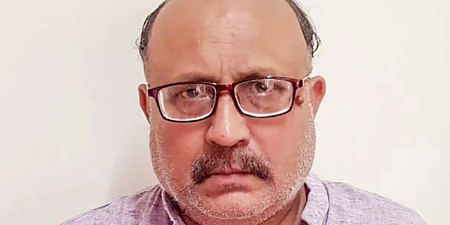
Freelance journalist arrested under Official Secrets Act in India

 JournalismPakistan.com |  Published: 21 September 2020

Join our WhatsApp channel
Freelance journalist arrested under Official Secrets Act in India
Rajeev Sharma was arrested by Indian Police for allegedly passing sensitive information to Chinese officials. The arrest has raised concerns regarding press freedom in India.

Indian Police have arrested journalist Rajeev Sharma over allegations of espionage.

Sharma stands accused of passing ‘sensitive information’ to Chinese officials. The International Federation of Journalists (IFJ) and its Indian affiliate, the Indian Journalists Union (IJU), are concerned by the arrest and urge the authorities to treat Sharma fairly under the law.

Delhi Police revealed on September 19 that the journalist was arrested for allegedly passing sensitive information about ‘India’s border strategy and Army deployment’ to Chinese officials in exchange for money. He was arrested on September 14 under the Official Secrets Act.

According to the Deputy Commissioner of Police (DCP) Sanjeev Kumar Yadav, Sharma received USD 1,000 for each release of information. Police have accused him of receiving 4 million rupees (USD 54,584.96) in one and a half years of delivering information to Chinese officials.

The police stated that it also seized confidential documents related to the Indian defense department from Sharma’s residence. Chinese national Qing Shi and her Nepali associate Sher Singh were also arrested on accusations of espionage against India.

Sharma had been writing on foreign affairs for several Indian media outlets and wrote a weekly column for the Global Times from 2010 to 2014.

Sharma’s arrest comes when tension between China and India has heightened over border disputes in the Himalayan region following a clash in June where 20 Indian troops were said to be killed.

The Indian Journalist Union (IJU) Secretary-General Sabina Inderjit said: “The IJU is saddened to hear of Sharma’s arrest and hopes that Delhi police and other agencies of Indian government will act keeping fairness and objectivity in mind in relation to Sharma’s case.”

The IFJ said: “The IFJ is concerned by the arrest of Rajeev Sharma. We urge the authorities involved to carry out an independent investigation to ensure that the trial process is fair and transparent and there are no adverse impacts on press freedom in the country”.—IFJ media release/Photo: PTI

Key Points

  • Rajeev Sharma accused of espionage under the Official Secrets Act.
  • Allegedly passed sensitive military information to Chinese officials.
  • Received around USD 54,585 for the information over 18 months.
  • International organizations urge fair treatment in Sharma's case.
  • Tensions between India and China have heightened recently.

Ask AI: Understand this story your way

AI Enabled

Dig deeper, ask anything — get instant context, background, and clarity.

Not sure what to choose? Try one of these.

The AI generates results based on your selected options
Your AI-generated results will appear here after you click the button.

Disclaimer: This feature is powered by AI and is intended to help readers explore and understand news stories more easily. While we strive for accuracy, AI-generated responses may occasionally be incomplete or reflect limitations in the underlying model. This feature does not represent the editorial views of JournalismPakistan. For our full, verified reporting, please refer to the original article.

Don't Miss These

Newsroom
What the 60 Minutes controversy means for TV journalism

What the 60 Minutes controversy means for TV journalism

 June 03, 2026 The 60 Minutes controversy at CBS exposes tensions over leadership, editorial independence and pressures on legacy TV journalism amid political polarization.


RFE/RL journalists persist with Iran war coverage amid risks

RFE/RL journalists persist with Iran war coverage amid risks

 June 03, 2026 RFE/RL journalists, including Persian-language reporters, continue covering the Iran-Israel-US conflict despite heightened security risks, restricted access, and significant operational challenges.


Zee secures FIFA World Cup rights in India through 2030

Zee secures FIFA World Cup rights in India through 2030

 June 03, 2026 Zee Entertainment has secured broadcasting and digital rights in India for the 2026 and 2030 FIFA World Cups, reshaping the country's sports media landscape.


How fact-checkers verify viral videos during breaking news

How fact-checkers verify viral videos during breaking news

 June 02, 2026 Fact-checkers use source tracking, metadata, visual analysis and geolocation to verify whether viral videos in breaking news are authentic and timely.


Pentagon restrictions on reporters draw media backlash

Pentagon restrictions on reporters draw media backlash

 June 02, 2026 New Pentagon rules requiring official escorts for reporters in some areas have drawn criticism from press groups and major news organizations over transparency.


Popular Stories