
Bondi Beach attack exposes media failures and TV theatrics
JournalismPakistan.com | Published: 16 December 2025 | Shafaat Yar Khan
Join our WhatsApp channel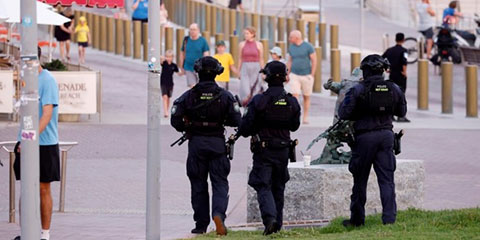
The terrorist attack at Bondi Beach exposed the stark differences in journalistic standards between Australian media and some Indian broadcasters. While Australian outlets showed restraint, many Indian channels resorted to sensationalism and unverified claims regarding potential perpetrators.Summary
SYDNEY — The terrorist attack at Sydney’s Bondi Beach on Sunday was not only a tragedy that shook Australia but also a global test of journalistic responsibility. As details emerged slowly and cautiously, the contrast between responsible reporting and reckless broadcasting became stark, particularly when comparing Australian media with certain Indian television networks that increasingly resemble theatrical stages rather than newsrooms.
In moments of crisis, journalism carries immense responsibility. Words can save lives or endanger them, calm societies or inflame hatred, and preserve diplomatic balance or damage international relations. The Bondi Beach attack demonstrated how easily irresponsible reporting can spiral into misinformation, fear, and geopolitical hostility.
Responsible restraint in Australia
Australian media outlets, along with senior government officials, largely demonstrated restraint and professionalism. Prime Minister Anthony Albanese and New South Wales Premier Chris Minns repeatedly refused to speculate on the identities or origins of the perpetrators, despite intense pressure from journalists. Their stance was clear: no names, no backgrounds, and no assumptions until investigative agencies completed legal and security checks. Media organisations followed a similar path. Information released to the public, numbers of the dead and injured, eyewitness accounts, paramedic responses, hospital updates, and police briefings, was carefully verified. The identities of both victims and perpetrators were withheld until legal protocols were met. This approach was not about secrecy; it was about responsibility.
Avoiding speculation amid public pressure
Perhaps the most sensitive and eagerly awaited question was the origin of the attackers. Once again, Australian authorities resisted speculation. In an age of instant outrage and social media hysteria, this restraint stood out as a model of ethical journalism and governance.
Contrast this with the behaviour of several prominent Indian television broadcasters. Long criticised for sensationalism, some Indian channels wasted no time turning tragedy into spectacle. Within hours of the Bondi Beach attack, screens were filled with aggressive graphics, dramatic music, and speculative accusations, many pointing squarely at Pakistan, without a shred of evidence.
From reporting to performance on Indian TV
Republic TV, under its Editor-in-Chief Arnab Goswami, aired repeated discussions and ran headline tickers suggesting a “Pakistan link,” with studio panels framing the incident through an India–Pakistan security lens despite the absence of verified information. Major (Retd.) Gaurav Arya, a regular defence commentator on Indian television, went further by making on-air statements and social media remarks alleging Pakistani involvement, presenting speculative security theories as near-certainties without supporting evidence.
At the network level, Republic TV sustained this line of coverage through extended debates marked by aggressive language, dramatic visuals, and hypothetical intelligence scenarios that implied Pakistan’s hand in the attack. Similar tendencies appeared on Times Now and its Hindi affiliate Times Now Navbharat, where certain panel discussions featured guests explicitly naming Pakistan, while anchors failed to adequately challenge or fact-check these claims in real time.
Zee News also aired select prime-time segments drawing parallels with past attacks in India and suggesting a Pakistani terror footprint, again without confirmation from Australian police or intelligence agencies. Even within the India Today Group, including Aaj Tak, which generally adopted a more restrained tone, early commentary allowed guests to raise Pakistan’s name as a suspect country before any official findings were released, contributing to premature conclusions and unverified accusations.
This pattern is not new. The Pulwama attack offers a striking precedent, where Pakistan was blamed almost instantly, even before wounded survivors had been evacuated. Despite strong rhetoric, the Indian government failed to provide conclusive evidence to foreign governments linking Pakistan to the incident. Yet the damage to public perception and regional stability had already been done.
When facts arrive too late
In the case of Bondi Beach, the rush to judgment proved deeply embarrassing. Philippine security agencies later disclosed that the two attackers—24-year-old Naveed Akram and his 50-year-old father Sajid Akram—had spent the month of November in the Philippines. Sajid had travelled on an Indian passport, while Naveed held an Australian passport. These verified facts directly contradicted the speculative narratives broadcast earlier with such confidence.
This episode underscores a larger problem: when journalism becomes ideological theatre, facts become optional. Television studios turn into war rooms, anchors into prosecutors, and audiences into juries, without evidence, due process, or accountability.
Irresponsible journalism does not exist in a vacuum. It endangers minorities, fuels racism, and strains diplomatic relations. It can also cost lives. History has repeatedly shown how misinformation during crises can provoke violence, panic, and retaliatory attacks.
Even established global media outlets are not immune to the consequences of misreporting. The BBC World Service, for example, is currently facing legal action over its coverage of former U.S. President Donald Trump. Trump has accused the broadcaster of defamation for allegedly splicing segments of his January 6, 2021, speech, highlighting inflammatory phrases such as “fight like hell” while omitting his call for peaceful protest. Despite issuing an apology, the BBC now faces a defamation lawsuit seeking US$10 billion in damages under Florida law.
The lesson is clear: journalism without accountability is dangerous, regardless of geography or reputation.
As audiences, regulators, and advertisers, the global community must demand higher standards. Newsrooms must choose verification over velocity, facts over frenzy, and responsibility over ratings. When journalism descends into a circus and shouting matches, it ceases to inform and begins to harm.
In an interconnected world, the cost of irresponsible broadcasting is far too high to ignore.
ABOUT THE WRITER: Shafaat Yar Khan is a special correspondent for JournalismPakistan.com in Sydney
Key Points
- Australian media maintained professionalism and avoided speculation post-attack.
- Indian television networks aired unverified claims linking Pakistan to the incident.
- Early narratives contradicted by later disclosures about the attackers' identities.
- The incident underscores risks of sensationalism in crisis reporting.
- Accountability in journalism is crucial for public safety and trust.
Relevant Topics
Ask AI: Understand this story your way
AI EnabledDig deeper, ask anything — get instant context, background, and clarity.
Disclaimer: This feature is powered by AI and is intended to help readers explore and understand news stories more easily. While we strive for accuracy, AI-generated responses may occasionally be incomplete or reflect limitations in the underlying model. This feature does not represent the editorial views of JournalismPakistan. For our full, verified reporting, please refer to the original article.