
Journalists face burnout amid nonstop news cycle Why news avoidance may be a bigger threat than misinformation Seven evidence-based media predictions for Pakistan and beyond in 2026 Dawn calls life sentences for journalists an extreme move Arab journalists pledge cooperation to defend media freedom Palestinian rights group flags press access limits Silencing an article in Pakistan makes it louder When telling the story becomes a crime: A warning shot for Pakistani journalism Breaking news alerts then and now: from urgency to overload AI reduces publisher traffic but not newsroom jobs, study finds Palestinian journalists face a wave of detentions in 2025 Journalists face burnout amid nonstop news cycle Why news avoidance may be a bigger threat than misinformation Seven evidence-based media predictions for Pakistan and beyond in 2026 Dawn calls life sentences for journalists an extreme move Arab journalists pledge cooperation to defend media freedom Palestinian rights group flags press access limits Silencing an article in Pakistan makes it louder When telling the story becomes a crime: A warning shot for Pakistani journalism Breaking news alerts then and now: from urgency to overload AI reduces publisher traffic but not newsroom jobs, study finds Palestinian journalists face a wave of detentions in 2025
Logo
Janu
Unlocking the secrets of the media industry

2016 deadliest year for journalists in Afghanistan: watchdog

 JournalismPakistan.com |  Published: 19 January 2017

Join our WhatsApp channel
2016 deadliest year for journalists in Afghanistan: watchdog
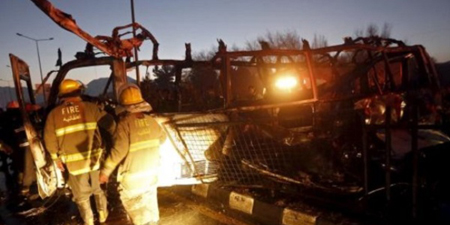
In 2016, Afghanistan became known for its high fatality rate among journalists, marking it as the second most dangerous country for reporters. The report by the Afghan Journalists' Safety Committee reveals a surge in threats and violence against media personnel.

KABUL - Afghanistan suffered its deadliest year on record for journalists in 2016, according to a report released Thursday which said the country is the second most dangerous for reporters in the world after Syria.

At least 13 journalists were killed last year, the Afghan Journalists' Safety Committee (AJSC) said, adding that the Taliban was behind at least 10 of the deaths.

The committee also found 101 cases of violence against the media in 2016, a 38 percent increase on 2015, underscoring the threat against a small band of media workers who put their lives on the line to report events in their war-torn country.

"This increase in violence against journalists has turned Afghanistan into the second most dangerous country for journalists in the world, after Syria," Najib Sharifi, chairman of the committee, told reporters on Thursday.

The report noted that a shift in the Taliban's policy towards the media was the "main driver of the increase in the level of threats and deadly violence against journalists".

In January last year, seven employees of popular TV channel Tolo, often critical of the insurgents, were killed in a Taliban suicide bombing in Kabul in what the militant group said was revenge for "spreading propaganda" against them.

It was the first major attack on an Afghan media organization since the Taliban were ousted from power in 2001 and spotlighted the dangers faced by media workers in Afghanistan as the security situation worsens amid a growing wave of militant attacks.

In June, American journalist David Gilkey and his Afghan translator were killed in a rocket attack by the Taliban in southern Helmand province.

But the report also noted that the majority of violent incidents against journalists were carried out by government forces, with the European Union criticizing the "alarming" trend.

"The government should do its utmost to bring perpetrators of threats, attacks and killing of journalists to justice," the EU delegation to Afghanistan said in a statement.

According to AJSC figures, 28 journalists and media workers have been killed in the past five years in Afghanistan. - AFP

KEY POINTS:

  • 2016 was the deadliest year for journalists in Afghanistan with 13 fatalities.
  • The Taliban was responsible for at least 10 journalist deaths.
  • Violent incidents against media increased by 38% from 2015.
  • Americans and Afghan translators have also been targeted, underscoring widespread danger.
  • The EU has called for justice regarding attacks on journalists.
Dive Deeper

Newsroom
Journalists face burnout amid nonstop news cycle

Journalists face burnout amid nonstop news cycle

 January 05, 2026 Growing burnout among journalists in the relentless 24/7 news cycle is affecting their mental health, job satisfaction, and retention, driven by stress stemming from excessive workload, long hours, and constant connectivity.


Arab journalists pledge cooperation to defend media freedom

Arab journalists pledge cooperation to defend media freedom

 January 04, 2026 Arab journalist unions from Jordan and Egypt announce deeper cooperation on training and advocacy, stressing media freedom and the role of Arab media in shaping global narratives.


Palestinian rights group flags press access limits

Palestinian rights group flags press access limits

 January 03, 2026 The Palestinian Centre for Human Rights highlights ongoing restrictions on journalists in occupied territories, impacting press freedom and humanitarian reporting.


Breaking news alerts then and now: from urgency to overload

Breaking news alerts then and now: from urgency to overload

 January 03, 2026 The evolution of breaking news alerts highlights a shift from rare, trusted updates to frequent notifications that contribute to audience fatigue.


AI reduces publisher traffic but not newsroom jobs, study finds

AI reduces publisher traffic but not newsroom jobs, study finds

 January 02, 2026 A study reveals that AI has reduced traffic to news publishers but not job levels, challenging fears of mass layoffs in journalism.


Popular Stories