
Taliban to Adnan Bhitani: 'Keep your coffin and grave ready'
JournalismPakistan.com | Published: 20 January 2018 | Myra Imran & Imran Naeem Ahmad
Join our WhatsApp channel
Adnan Bhitani, a freelance journalist, has faced severe threats from the Taliban due to his reporting in high-risk areas. This article explores his harrowing experiences and the broader context of journalist safety in Pakistan.Summary
This story is one of 10 case studies highlighting the economic condition of slain journalists’ families and the displaced reporters. Journalist Myra Imran traveled to remote and high-risk districts in Khyber Pakhtunkhwa and FATA to interview family members, their relatives, displaced journalists, and office-bearers of press clubs and journalist unions. The stories are part of a field study report Surviving the Story, launched on January 8, 2018, a collaborative initiative of JournalismPakistan.com and Communications Research Strategies (CRS).
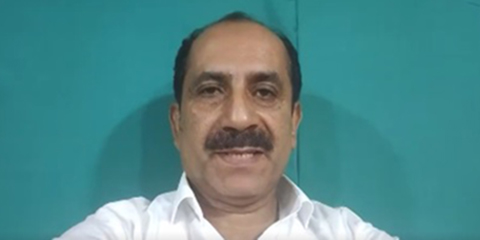
Keep your coffin and grave ready, a Taliban phone caller told Adnan Bhitani, a freelance journalist working out of Frontier Region Tank.
The threat was real. “We have followed what you have been writing for three months and it is causing us damage,” the caller made it clear. “Malala Yousufzai has not caused us so much harm as your reporting.”
Bhitani, associated with Voice of America Deewa Radio, was later told by his boss to move out of the region. He complied. On May 28, 2014, he left for Islamabad and kept hopping from one city to the other; such were the threats to him.
Although his family is currently in D.I.Khan, he himself keeps changing locations. “I cannot stay in one place and cannot tell you where I am based.”
Bhitani points out that gathering news in a militant-infested and war-torn region is like trying to catch fish in a lake full of crocodiles. “Journalists face threats from all sides – state agencies, unidentified people, Al-Qaeda, Taliban and the Haqqani Network. All have their own interests and want us to report what they want. We have to tread very cautiously.”
Citing an example he says if a journalist got news of a drone strike, or talks with the Taliban from his own sources and ran that story, he would start getting threats. “Both sides do not like such news aired or published.”
During his displacement, Bhitani’s organization continued to pay him although he had stopped reporting. He was even allowed to live in the Islamabad office for two months.
The Freedom Network funded one of his stints in Islamabad during which he stayed in a guest house. “It was a secure place and I kept a low profile all the time I was there.”
While in Islamabad, he had a chance to meet Pervaiz Rasheed, the federal information minister at that time. Bhitani told him about the threats and what he was going through but the minister excused himself. “Whoever it is, the civilian government is helpless in this regard. We cannot do anything for you,” he quoted the minister as saying. Prominent journalists Najam Sethi, Saleem Safi and Hamid Mir were also present in that meeting.
The federal government thus expressed its helplessness; the provincial Khyber Pakhtunkhwa government could offer nothing to resolve the matter.
The Tribal Union of Journalists held a protest in Peshawar after the Taliban released a hit-list of three journalists. Bhitani was one of them. The journalists later met the then governor but his response was disappointing.
Bhitani recalls that when he first received threats in 2011-12, he was inexperienced and decided to live in Peshawar. He stayed there for one year, bearing all his expenses himself.
In 2015, following fresh threats, he headed to interior Sindh to briefly seek refuge in Sukkur and Rohri before returning to Islamabad.
Today, life for Bhitani is an ordeal; he cannot go back to his native region. “FR Tank still remains a no-go area. If you have to go there, you have to seek permission which is not easy.”
Related: It is a miracle I am still alive: Anwar Shakir
KEY POINTS:
- Bhitani received direct threats from a Taliban caller regarding his reporting.
- Displacement forced Bhitani to move frequently, jeopardizing his safety.
- The federal government expressed its helplessness towards journalist safety issues.
- Bhitani's organization continued to support him financially despite his displacement.
- A protest was held by the Tribal Union of Journalists after a Taliban hit-list was released.