
The JournalismPakistan Global Media Brief | Edition 1 | January 2, 2026
JournalismPakistan.com | Published: 1 January 2026 | JP News Desk
Join our WhatsApp channel
The inaugural Global Media Brief by JournalismPakistan.com provides insights into significant global media trends. This week's focus includes political scrutiny, regulatory changes, and the challenges faced by journalists worldwide.Summary
Editor’s note
Welcome to the first edition of the Global Media Brief by JournalismPakistan.com. This weekly briefing is designed to keep journalists, editors, and media professionals in Pakistan and beyond informed about key developments shaping newsrooms, press freedom, and digital media globally. This week, we cover political scrutiny of public media in France, tensions over online speech between Europe and the U.S., regulatory and technological shifts in Asia and the Middle East, and emerging ethical and safety challenges for journalists worldwide.
Global media power shifts
French inquiry targets state media neutrality before 2027 vote – France’s right-wing UDR party has launched a parliamentary inquiry into the editorial neutrality, governance, and funding of public broadcasters, including France Télévisions and Radio France, ahead of the 2027 presidential election. Critics say the move politicizes public media oversight, while supporters argue it is necessary to preserve trust in state-funded outlets.
Europe criticizes US visa bans over digital speech dispute – The U.S. imposed visa restrictions on five European digital policy figures, including former EU commissioner Thierry Breton, citing restrictions on American viewpoints online. France and Germany warned that the measures risk undermining freedom of expression and politicizing regulatory debates tied to the EU Digital Services Act.
Media warn Democratic bill could chill press freedom – U.S. media groups and press freedom advocates expressed concern over a proposed Democratic bill that would expand defamation liabilities for news outlets, potentially discouraging investigative reporting and sensitive coverage of powerful individuals or institutions.
Asia media watch
Bangladesh politicians allege state inaction in media attacks – Political figures claim the interim administration did not act decisively to prevent mob attacks on media houses. Press freedom advocates highlight the government’s duty to protect journalists and media infrastructure. Several news offices were reportedly damaged, creating fear among newsroom staff and freelancers.
Indonesian journalists urge fair policies to support media – The Indonesian Journalists Association called on the government to implement fair and non-discriminatory policies that sustain journalism while protecting editorial independence, warning that poorly designed interventions could undermine public trust.
India rejects Bangladeshi media reports amid tensions – Indian officials called recent Bangladeshi media reports misleading, emphasizing the need for factual accuracy amid already strained bilateral ties, reflecting how cross-border reporting is increasingly contested in South Asia.
Middle East media
Saudi Arabia fines and suspends social media accounts in crackdown – Multiple accounts were penalized for violating content regulations as online discussions about economic reforms intensified, signaling the state’s readiness to enforce anti-cybercrime laws.
Israel reaffirms Gaza entry ban for foreign journalists – Restrictions remain in place, preventing most foreign journalists from independently entering Gaza, limiting newsgathering and independent reporting.
UAE creates National Media Authority under new law – The UAE consolidated the Media Council, National Media Office, and Emirates News Agency into a single federal body tasked with media regulation, policy development, licensing, and strategic guidance domestically and internationally.
Platforms and technology
Indian media grapples with AI ethics in newsrooms – News organizations are adopting AI tools for content production, transcription, translation, and data analysis, raising questions about accuracy, editorial oversight, and ethical standards in journalism.
Independent media outlets expand influence as trust in news erodes – Research indicates niche and community-focused publishers are gaining audiences as mainstream media struggle with declining trust and economic pressures, emphasizing depth and engagement over scale.
Press freedom and journalist safety
South Korea passes tougher penalties for false media reports – Legislation imposes heavier fines and punitive damages for outlets publishing false information, increasing legal and financial risks for news organizations in the digital age.
Kashmiri journalist Irfan Mehraj marks 1,000 days jailed – Mehraj has completed more than 1,000 days in detention by Indian authorities. Press freedom groups call for his immediate release, citing a broader pattern of legal actions used to restrict independent reporting.
Why this matters
Journalists worldwide face a rapidly evolving environment shaped by political scrutiny, state regulation, and technological innovation. Public media oversight in France, visa restrictions between the U.S. and Europe, and new legal liabilities in South Korea and the U.S. underscore the growing intersection of politics, law, and press freedom.
In Asia, government inaction, cross-border reporting disputes, and economic pressures challenge editorial independence, while Middle East regulatory moves highlight state influence over digital platforms and media governance. Meanwhile, the rise of AI and independent media points to both opportunity and ethical responsibility in newsrooms.
For Pakistani journalists, these developments reinforce the need to:
- Monitor global press freedom trends and emerging legal risks
- Adapt to technology responsibly without compromising editorial independence
- Learn from independent and niche media models to maintain audience trust
- Recognize how regional politics can shape international reporting environments
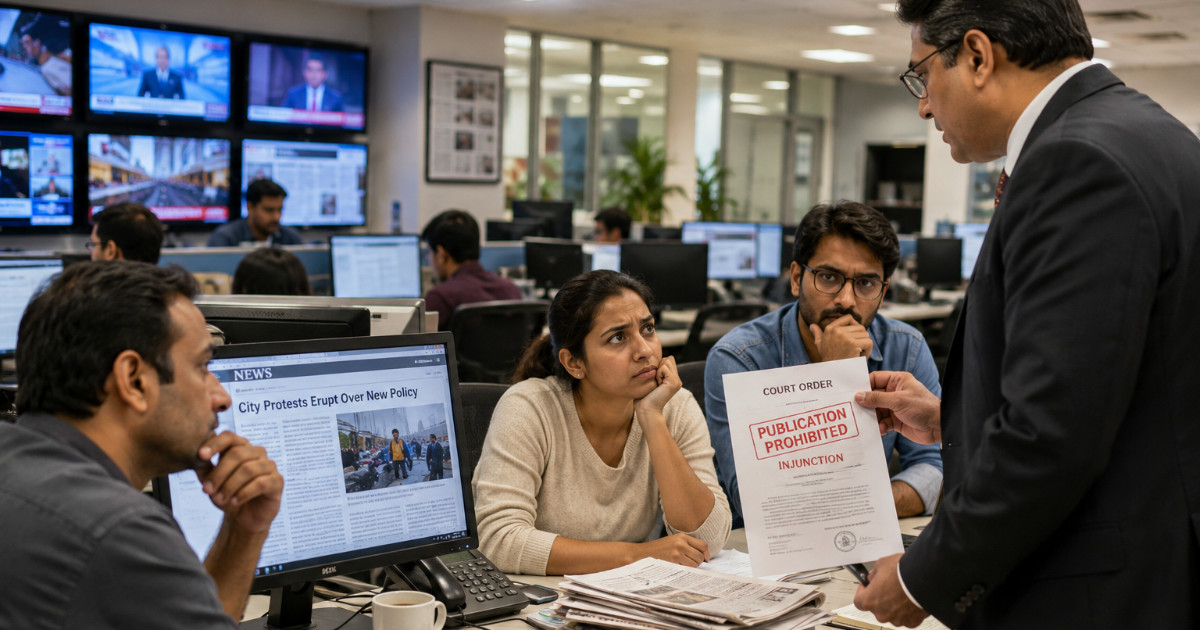
PHOTO: By Gerd Altmann from Pixabay
Key Points
- Political scrutiny of public media in France impacts state broadcaster funding.
- U.S. visa bans fuel tensions over online speech with Europe.
- Regulatory shifts in Asia highlight concerns for journalist safety.
- The rise of AI in newsrooms raises ethical questions.
- Independent media outlets are gaining traction amidst declining trust in mainstream media.
Relevant Topics
Ask AI: Understand this story your way
AI EnabledDig deeper, ask anything — get instant context, background, and clarity.
Disclaimer: This feature is powered by AI and is intended to help readers explore and understand news stories more easily. While we strive for accuracy, AI-generated responses may occasionally be incomplete or reflect limitations in the underlying model. This feature does not represent the editorial views of JournalismPakistan. For our full, verified reporting, please refer to the original article.