
Amar Guriro: Journalism's future is human-AI partnership The JournalismPakistan Global Media Brief | Edition 23 | June 5, 2026 As AI reshapes news, publishers seek a sustainable future Every frame at a cost: The safety crisis facing Pakistan's camerapersons Why journalists are increasingly targeted in conflict zones What the 60 Minutes controversy means for TV journalism Zee secures FIFA World Cup rights in India through 2030 How fact-checkers verify viral videos during breaking news Pentagon restrictions on reporters draw media backlash Israel-Lebanon talks proceed as conflict hinders reporting Why governments are tightening controls on foreign journalists China condemns US restrictions on Xinhua reporter Taiwan condemns China over New York Times reporter expulsion The biggest threats facing journalism in Asia today Press freedom review: The many faces of pressure on the press Amar Guriro: Journalism's future is human-AI partnership The JournalismPakistan Global Media Brief | Edition 23 | June 5, 2026 As AI reshapes news, publishers seek a sustainable future Every frame at a cost: The safety crisis facing Pakistan's camerapersons Why journalists are increasingly targeted in conflict zones What the 60 Minutes controversy means for TV journalism Zee secures FIFA World Cup rights in India through 2030 How fact-checkers verify viral videos during breaking news Pentagon restrictions on reporters draw media backlash Israel-Lebanon talks proceed as conflict hinders reporting Why governments are tightening controls on foreign journalists China condemns US restrictions on Xinhua reporter Taiwan condemns China over New York Times reporter expulsion The biggest threats facing journalism in Asia today Press freedom review: The many faces of pressure on the press
Logo
Janu
Press Freedom Tracker

Pakistan retains unwanted position

 JournalismPakistan.com |  Published: 18 December 2013

Join our WhatsApp channel
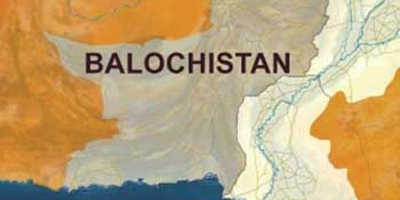
Pakistan retains unwanted position
The annual report highlighted that Pakistan is among the top five deadliest countries for journalists. The number of fatalities slightly decreased, but the risks remain high.

The annual toll of journalists killed in connection with their work was again very high in 2013, although this year’s number, 71, was a slight fall (-20%) on last year’s, says Reporters without Borders.

Syria, Somalia and Pakistan retained their position among the world’s five deadliest countries for the media.

They were joined this year by India and the Philippines, which replaced Mexico and Brazil, although the number of journalists killed in Brazil, five, was the same as last year.

Two journalists were killed in Mexico, while three others disappeared. The return of the Institutional Revolutionary Party (PRI) to power and new government pressure on the media contributed to a sharp increase in self-censorship in Mexico. An increase in self-censorship was probably also the reason for the fall in the number of journalists killed in other countries.

Thirty-nine percent of the deaths occurred in conflicts zones, defined as Syria, Somalia, Mali, the Indian province of Chhattisgarh, the Pakistani province of Balochistan and the Russian republic of Dagestan. The other journalists were killed in bombings, by armed groups linked to organized crime (including drug trafficking), by Islamist militias, by police or other security forces, or on the orders of corrupt officials.

Of the 71 journalists killed in 2013, 37% worked for the print media, 30% for radio stations, 30% for TV and 3% for news websites. The overwhelming majority of the victims (96%) were men.

Read more

Key Points

  • 71 journalists killed worldwide in 2013
  • Pakistan, Syria, and Somalia remain perilous for media
  • 39% of killings occurred in conflict zones
  • Self-censorship increased in response to government pressure
  • 96% of victims were male journalists

Ask AI: Understand this story your way

AI Enabled

Dig deeper, ask anything — get instant context, background, and clarity.

Not sure what to choose? Try one of these.

The AI generates results based on your selected options
Your AI-generated results will appear here after you click the button.

Disclaimer: This feature is powered by AI and is intended to help readers explore and understand news stories more easily. While we strive for accuracy, AI-generated responses may occasionally be incomplete or reflect limitations in the underlying model. This feature does not represent the editorial views of JournalismPakistan. For our full, verified reporting, please refer to the original article.
Dive Deeper

Newsroom
Amar Guriro: Journalism's future is human-AI partnership

Amar Guriro: Journalism's future is human-AI partnership

 June 05, 2026 Amar Guriro, founder of Pakistan's first AI-powered news platform, says journalism's future rests on human-AI collaboration to improve reporting while preserving editorial oversight.


The JournalismPakistan Global Media Brief | Edition 23 | June 5, 2026

The JournalismPakistan Global Media Brief | Edition 23 | June 5, 2026

 June 05, 2026 Global Media Brief reviews pressures reshaping journalism, press freedom, AI and platform power, and reports BBC's Emmy, 60 Minutes turmoil and Taiwan's protest.


As AI reshapes news, publishers seek a sustainable future

As AI reshapes news, publishers seek a sustainable future

 June 05, 2026 At the World News Media Congress in Marseille, publishers discussed how generative AI is altering newsroom workflows, audience engagement and content licensing.


Why journalists are increasingly targeted in conflict zones

Why journalists are increasingly targeted in conflict zones

 June 04, 2026 Journalists in conflict zones face rising danger as combatants, states and militias increasingly target independent reporting to control narratives.


What the 60 Minutes controversy means for TV journalism

What the 60 Minutes controversy means for TV journalism

 June 03, 2026 The 60 Minutes controversy at CBS exposes tensions over leadership, editorial independence and pressures on legacy TV journalism amid political polarization.


Popular Stories