.png)
Journalists injured in Mogadishu hotel attack
JournalismPakistan.com | Published: 26 January 2017
Join our WhatsApp channel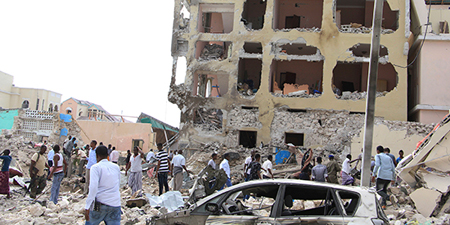
A hotel in Mogadishu was attacked by militants, injuring multiple journalists. Al-Shabab claimed responsibility for the attack, which also resulted in numerous casualties.Summary
NAIROBI - At least four journalists were wounded in an attack on a hotel in the Somali capital Mogadishu Wednesday, according to media reports and Somali journalists.
Four militants rammed a car packed with explosives into the gate of the Dayah hotel, near the presidential palace, leaping out before the explosives detonated and exchanging fire with security guards, according to media reports.
A second bomb went off after medics and journalists arrived at the scene, Hassan Ali Gesey, chairman of the Somali Independent Media Houses Association, told the Committee to Protect Journalists. At least 28 people were killed in the attack, Reuters reported. The militant group Al-Shabab claimed responsibility, according to news reports.
"Targeting medics and journalists arriving at the scene of an attack is a particularly cowardly, loathsome-and sadly, common-tactic of violent extremists," CPJ Africa Program Coordinator Angela Quintal said from New York. "Journalists covering the aftermath of similar attacks should be aware of the risk of secondary attacks, and should proceed with extreme caution."
Early reports varied on the number of journalists injured in the second blast. The BBC reported seven journalists were injured. A Somali journalist, speaking to CPJ on condition of anonymity because militants often target journalists in Somalia, said that six journalists were injured. Agence France-Presse reported that at least four journalists were injured. Gesey, of the Somali Independent Media Houses Organization, told CPJ that the injured journalists were in hospital, and in stable condition.
CPJ research indicates 62 journalists have been killed in Somalia since 1992, making it one of the world's most dangerous places to be a reporter.
CPJ's Journalist Security Guide includes a section on covering the scene of a terrorist attack. - Committee to Protect Journalists/Image: AP
Key Points
- At least four journalists wounded in Mogadishu hotel attack.
- Militants rammed a car filled with explosives into the Dayah hotel.
- A second bomb detonated as medics and journalists arrived.
- At least 28 people reported killed, according to media sources.
- CPJ emphasizes risks for journalists covering such events.
Relevant Topics
Ask AI: Understand this story your way
AI EnabledDig deeper, ask anything — get instant context, background, and clarity.
Disclaimer: This feature is powered by AI and is intended to help readers explore and understand news stories more easily. While we strive for accuracy, AI-generated responses may occasionally be incomplete or reflect limitations in the underlying model. This feature does not represent the editorial views of JournalismPakistan. For our full, verified reporting, please refer to the original article.